Crested Gecko Enrichment and Climbing Setup Ideas
This post contains affiliate links. As an Amazon Associate, I earn from qualifying purchases at no extra cost to you.
Crested geckos are arboreal animals. In the wild, they spend nearly their entire lives moving through the vertical structure of New Caledonian rainforests, climbing, perching, hunting, and hiding among branches and leaf litter. Most captive enclosures give them the basics: a branch here, a vine there, maybe a fake plant tucked in the corner. That is rarely enough. When crested geckos lack real vertical complexity and sensory variety, they become less active, eat inconsistently, and can develop stress-related behaviors like glass surfing or hiding for days at a time.
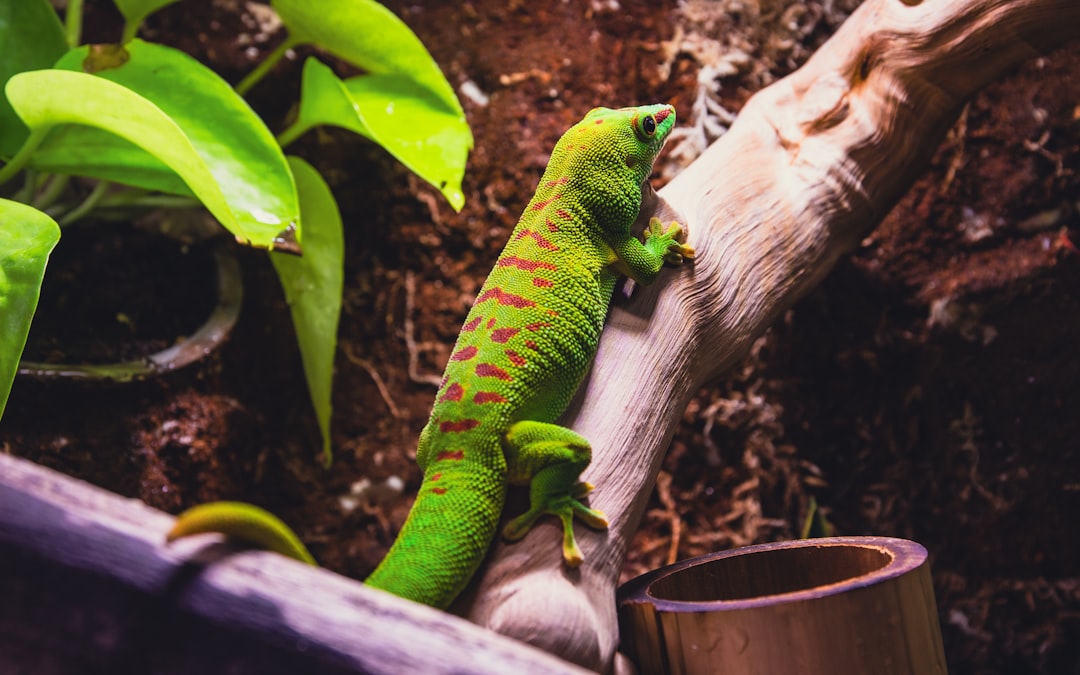
Photo by martin lea on Unsplash
This guide covers the enrichment materials and layout strategies that actually make a difference, from cork bark and flexible vines to magnetic ceiling accessories and the difference between live and artificial plants. We have tested most of these approaches in our own enclosures and will tell you what holds up and what is mostly aesthetic.
Why Enrichment Matters for Crested Geckos
Crested geckos are more cognitively active than most keepers expect. Research on reptile cognition increasingly supports the idea that these animals benefit from novel stimuli, choice in how they navigate their environment, and the ability to express natural foraging and climbing behaviors. Research published in Applied Animal Behaviour Science found that enriched housing improved activity levels, cognitive performance, and behavioral diversity in geckos compared to barren enclosures, and a 2023 study in Animals (MDPI) specifically confirmed that leopard geckos housed in complex terrariums showed significantly higher well-being markers than those kept in rack systems.
In practical terms, this means a barren enclosure is not just aesthetically underwhelming. It is a welfare issue. Crested geckos that lack enrichment tend to cluster in one spot, lose interest in food more readily, and in breeding situations, lay fewer eggs or stop cycling altogether. Enrichment is not a luxury feature for an already-functional setup. It is part of the foundation.
The goal of enrichment for a crested gecko breaks down into three categories. The first is structural enrichment: the physical climbing surfaces, hides, and spatial complexity that give your gecko routes to travel, elevation to reach, and cover to retreat into. The second is sensory enrichment: smells, textures, and visual variety that make the environment feel active and changing rather than static. The third is feeding enrichment: how food is offered and from where, which can be adjusted to encourage natural foraging movement rather than simply waiting at a dish.
This post focuses primarily on structural enrichment since that is where most keepers have the most room to improve, but we will touch on feeding enrichment as well because the two are closely linked.
The Best Climbing Structures for Your Crested Gecko Enclosure
The backbone of any good climbing setup is natural or naturalistic hardscape. The materials you choose affect not just how the enclosure looks but how well your gecko can grip, how humidity is retained, and how easy the enclosure is to clean over time.
Cork Bark
Cork bark is one of the most practical and versatile enrichment materials available. It is lightweight, naturally antimicrobial, humidity-tolerant, and provides a highly textured surface that crested geckos can grip with ease. You can use it flat as a wall-mounted background, curved as a hide or hollow, or layered to create ledges at different heights. In our experience with cork-heavy builds, geckos spend significantly more time in the upper two-thirds of the enclosure when cork structures give them something to press against and perch on at multiple levels.
The DECHOUS Natural Cork Bark for Reptiles comes as a pack of irregular flat pieces in different sizes, which is useful for custom arrangements. The variation in shape means you are not stuck with identical rectangles. We have used similar cork flat packs to build layered ledge systems along the back wall of a bioactive build, and they hold up well even when consistently misted.
Flexible Vines and Branches
Bendable vines allow you to create diagonal and horizontal pathways between structural elements, which is critical for a fully connected vertical space. Crested geckos use these routes constantly, particularly in low-light hours when they are most active. A vine that runs diagonally from a mid-level cork ledge up toward the top of the enclosure gives your gecko a route to follow rather than forcing them to leap between disconnected perches.
The BNOSDM Reptile Climbing Branch Flexible Bend-A-Branch Jungle Vines attach via suction cups directly to glass, which means no drilling and easy repositioning. The 17.9-inch length is enough to span most mid-to-large enclosures diagonally. We have found these hold their position well as long as the glass is clean and dry at the attachment point before installing.
Magnetic Ledges and Ceiling Accessories
One of the most underused areas in any crested gecko enclosure is the ceiling zone. Crested geckos actively use overhead surfaces, especially when the enclosure lid is mesh. Magnetic accessories that attach to the lid provide a natural ceiling perch that your gecko can cling to just as they would grip the underside of a leaf in the wild.
The Gecko Root Grip Magnetic Hanger is designed specifically for this purpose. The twisted, textured surface gives good grip for gecko toe pads, and the magnet is strong enough to stay put even when a gecko is climbing on it actively. It installs in seconds with no modifications to the enclosure.
Comparison: Natural vs. Artificial Climbing Structures
| Material | Grip Quality | Humidity Tolerance | Cleanability | Aesthetic | Cost |
|---|---|---|---|---|---|
| Cork bark (natural) | Excellent | High | Moderate | High | Low-mid |
| Driftwood/branches (natural) | Good | Moderate | Moderate | High | Low |
| Flexible vine (artificial) | Good | High | Easy | Medium | Low |
| Resin decor (artificial) | Variable | High | Easy | Medium-high | Mid |
| Magnetic ledge (artificial) | Good | High | Easy | Medium | Mid |
Natural materials like cork and real wood integrate better into bioactive setups and tend to look more convincing. Artificial vines and magnetic accessories are easier to clean and reposition, which makes them practical for keepers who rearrange enclosures frequently or who run multiple setups and need consistency.
How to Arrange Enrichment in a Crested Gecko Enclosure Step by Step
Layout matters as much as the materials themselves. A cork tube dropped in the bottom corner provides much less enrichment than the same tube positioned strategically as part of a connected vertical system. Here is the approach we use when setting up or redesigning a crested gecko enclosure.
Step 1: Define Three Zones
Divide the enclosure into a lower zone (bottom third), a mid zone (middle third), and an upper zone (top third). Most feeding and ground activity will happen in the lower zone. Sleeping and daytime hiding tend to happen in the upper zone. The mid zone is the transit area where climbing structures need to connect the other two.
Step 2: Anchor the Back Wall First
Place your largest cork or hardscape elements against the back of the enclosure before anything else. This gives you a flat mounting surface for vines and branches later. A full-height cork flat pinned or siliconed to the back wall creates a consistent grip surface your gecko can use from any height.
Step 3: Create Diagonal Routes
Add vines, flexible branches, or real branches in diagonal lines running from lower-left to upper-right or lower-right to upper-left. Avoid a layout where everything runs strictly horizontal or vertical. Diagonal pathways encourage more movement and more varied positions.
Step 4: Add Cover at Each Zone Level
Every zone needs at least one hide or covered area. Lower zone: a humid hide at or below substrate level, or a cork tube resting on the substrate. Mid zone: a larger cork flat angled to create a pocket behind it. Upper zone: a magnetic ledge or a branch positioned near the back wall with a plant providing overhead cover.
Step 5: Leave Open Lanes
Do not fill every inch. Crested geckos use open airspace too. Leave at least one clear diagonal lane through the enclosure so your gecko has room to drop from height quickly if startled, which is a natural escape behavior. An overfull enclosure creates stress rather than reducing it.
Step 6: Mist and Observe Before Finalizing
Set up the enrichment, mist the enclosure normally, and watch where your gecko actually goes. After two to three nights of observation you will see which routes they prefer, which hides they use, and which areas they avoid. Adjust accordingly. This observation step is often skipped but it is the most informative thing you can do.
Live Plants vs. Artificial Plants for Crested Gecko Climbing
Both live and artificial plants serve a legitimate role in a crested gecko enrichment setup, and the right choice depends on your experience level, how your enclosure is lit, and how much maintenance you want to take on.
Live plants provide the best sensory enrichment. The textures, scents, and humidity interaction are closer to a natural environment, and many crested geckos will investigate and interact with live foliage far more actively than artificial equivalents. Species like Pothos, Peperomia, Bromeliads, and Ficus pumila are safe, hardy choices that also contribute to the bioactive nitrogen cycle if you are running a live substrate. We have covered specific species and care requirements in detail in our guide to live plants for crested gecko vivariums.
The downsides to live plants are primarily practical. They require sufficient lighting to thrive (UVB-adjacent intensity or dedicated grow LEDs), some knowledge of watering vs. misting regimes, and occasional management when a plant outgrows its space or a gecko damages it through climbing.
Artificial plants are maintenance-free, repositionable, and available in a wider variety of shapes. Dense artificial foliage placed in the upper zone creates effective visual cover that reduces stress from above, which crested geckos are particularly sensitive to (they evolved as prey animals and remain alert to movement overhead). High-quality silk plants look convincing enough and provide grip points similar to real foliage.
A mixed approach works well for most keepers: live plants in the lower and mid zones where humidity and substrate interaction benefit them most, artificial foliage in the upper zone for reliable cover. This combination gives you the sensory and environmental benefits of live plants without gambling your top zone coverage on whether a particular plant is thriving this week.
Common Crested Gecko Enrichment Mistakes to Avoid
Even with the right materials, there are a few setup patterns we see repeatedly that undercut the effectiveness of an otherwise good enrichment plan.
Using only horizontal perches. Crested geckos are not parrots. They do not primarily perch on horizontal branches looking around. They move diagonally across surfaces and press their bodies against vertical planes. A perch at a 30-45 degree angle is far more useful than a purely horizontal one. If your enclosure has only horizontal branches, your gecko will use them but will use the glass and walls more.
Overcrowding with decor. More is not always better. An enclosure packed with so many fake plants and resin caves that there is no clear movement path is more stressful than enriching. Crested geckos need unobstructed routes as much as they need cover.
Placing the food dish in the same spot every feeding. This is a feeding enrichment point worth mentioning here. Moving the crested gecko meal replacement dish to a new position every few feedings encourages your gecko to actively search for food rather than simply waiting in one spot. It is a simple change that noticeably increases activity levels. We have tested both fixed-position and rotating-position feeding in side-by-side setups and the rotating group consistently showed more enclosure exploration in the hours following feeding.
Using toxic or inappropriate materials. Not every branch or plant is safe. Cedar and pine wood are toxic to reptiles. Many tropical plants sold at garden centers are unsafe (Pothos is the exception, not the rule). Pressure-treated lumber should never go into an enclosure. When in doubt, source branches from known-safe species (oak, maple, grape vine) or buy commercially prepared reptile-safe hardscape.
Ignoring the ceiling zone. The top of the enclosure is prime real estate for an arboreal gecko and the most commonly neglected zone. A magnetic ledge or a dense plant near the top of a tall enclosure can be the most-used enrichment item in the whole setup. Do not build from the ground up and then forget the top third.
Rearranging too frequently. Novel enrichment is good. Constant instability is stressful. Introducing new elements or changing layout every two to four weeks gives your gecko something new to investigate without eliminating the familiar landmarks they rely on for orientation and security.
Frequently Asked Questions
How many climbing structures does a crested gecko need?
There is no exact number, but the goal is a connected vertical space rather than a collection of isolated elements. At minimum, a setup should include at least one major background or vertical surface running the height of the enclosure, two to three perches or branches at different heights, at least one diagonal vine or route connecting zones, and at least one hide in each of the three vertical zones. For a standard 18x18x24 enclosure, that typically means five to eight distinct structural elements plus plant coverage.
Can crested geckos be injured by falls in an enriched enclosure?
Crested geckos can and do fall, and they are generally well-adapted to it. They can right themselves mid-fall and land safely from reasonable heights. However, falls onto hard substrate from the very top of a tall enclosure can occasionally cause injury, particularly in juveniles. A loose coconut fiber or bioactive substrate is softer than bare glass or a hard decor element. In our builds we avoid placing any hard, pointed decor items directly below the highest perch points for this reason.
Is it okay to put multiple hides in different spots?
Yes, and we recommend it. A single hide gives your gecko one option. Multiple hides at different temperature and humidity gradients give them the ability to thermoregulate and seek comfort on their own terms, which is a meaningful form of behavioral enrichment. Do not assume your gecko will use only the “designated” hide. Observe where they actually go and offer choices in those preferred zones.
Do crested geckos get bored with the same enrichment layout?
Over weeks and months, a fixed layout becomes familiar rather than stimulating. Rotating in one new element every few weeks, whether a new cork piece, a different plant arrangement, or a repositioned magnetic ledge, is enough to maintain novelty without causing disorientation. Full layout overhauls are stressful and should be avoided except when redesigning the enclosure from scratch.
What is the safest way to anchor natural branches in an enclosure?
Natural branches can be wedged between enclosure walls, siliconed to a background, or held in place with a small amount of aquarium-safe silicone at the contact points. Never use hot glue (not safe at reptile temperatures over time) or metallic fasteners that can rust. If using silicone, allow it to fully cure for 48-72 hours before introducing your gecko.
Take the Next Step
If you want to go deeper on the natural, long-term version of this setup, our bioactive crested gecko enclosure guide walks through substrate layering, drainage, live plant integration, and custodian populations that keep the whole system running.
Bookmark this guide as a reference when you redesign your next build, or drop a comment below with how your gecko actually uses its current enclosure. The keeper observation notes are some of the most useful data we have.
Related reading: Building a Bioactive Crested Gecko Enclosure