Crested Gecko Calcium Supplementation Guide
This post contains affiliate links. As an Amazon Associate, I earn from qualifying purchases at no extra cost to you.
Metabolic bone disease is one of the most common serious health problems in captive crested geckos, and the frustrating part is that it is almost entirely preventable. The root cause is calcium deficiency, or more precisely, a failure to absorb and metabolize calcium properly. Yet calcium supplements are inexpensive, widely available, and simple to use once you understand the logic behind them.
The confusion usually comes from the calcium-with-D3 vs. calcium-without-D3 distinction. Get that wrong and you either under-supplement or create a D3 toxicity problem. This guide covers every aspect of calcium supplementation for crested geckos: which product to choose, how to use it, how often, and the mistakes that quietly undermine even keepers who think they’re doing everything right.
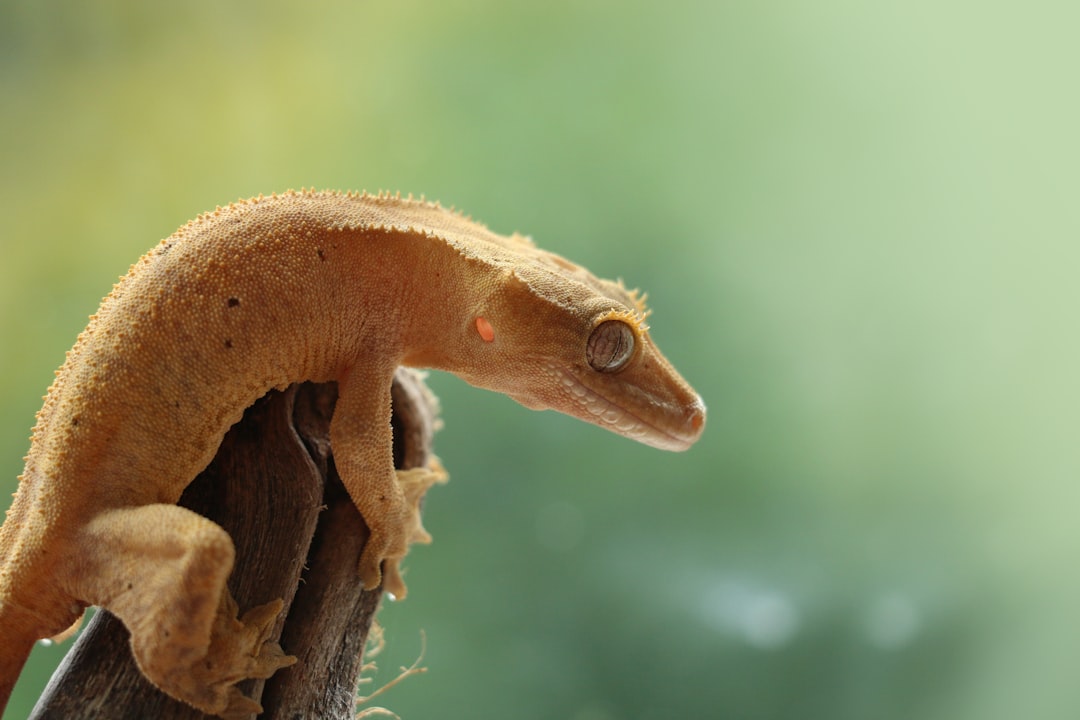
Photo by Pierre Bamin on Unsplash
Health note: If your crested gecko is already showing signs of metabolic bone disease (rubbery jaw, limb tremors, deformity), do not attempt to self-treat with calcium alone. Contact a reptile-experienced veterinarian. Severe MBD requires professional intervention.
Why Calcium Matters for Crested Geckos
Calcium is involved in far more than bone structure. In crested geckos, it plays a central role in muscle contraction, nerve signal transmission, egg production in females, and normal metabolic function. Bone is essentially a calcium reservoir the body draws from when dietary intake is insufficient, which is why skeletal deformity is the most visible symptom of deficiency but not the earliest one.
In the wild, crested geckos in New Caledonia obtain calcium through prey insects (which themselves eat mineral-rich plant matter) and, to a lesser extent, plant nectar. Captive insects raised on commercial gut-load diets are typically calcium-poor relative to wild prey. The calcium-to-phosphorus ratio matters as much as raw calcium intake: phosphorus blocks calcium absorption, and most feeder insects are naturally high in phosphorus. This is the core reason supplementation is not optional in captivity.
The dietary shortfall is compounded by the D3 problem. Vitamin D3 is the hormone that allows the gut to absorb calcium from food. Without adequate D3, a gecko can consume plenty of calcium and still develop deficiency because most of it passes through unabsorbed. D3 can be synthesized from UVB light exposure or obtained from supplementation, which leads directly to the most important decision in a calcium protocol.
Calcium Without D3 vs. Calcium With D3
This is the question that causes the most confusion, and the answer depends entirely on your lighting setup.
Use calcium without D3 if your enclosure has a UVB light. When a crested gecko is exposed to appropriate UVB (2.0-5.0 UV Index in their basking zone), their skin synthesizes D3 the same way humans do in sunlight. The body self-regulates this process and will not produce more D3 than it needs. Supplementing additional D3 on top of UVB synthesis creates a genuine risk of hypervitaminosis D, which causes soft tissue calcification and kidney damage.
Use calcium with D3 if your enclosure has no UVB. Without UVB exposure, the gecko has no way to produce D3 endogenously and relies entirely on dietary sources. In this case, the D3 in a supplement like Zoo Med Repti Calcium with D3 fills that gap directly.
In our experience keeping crested geckos under both setups, the shift to low-output UVB (T5 HO 2.0) substantially improved activity levels and feeding response compared to purely supplemented, no-UVB enclosures. We now recommend UVB as the baseline. See our full breakdown of whether crested geckos need UVB lighting for fixture recommendations and placement guidelines.
The all-in-one alternative. A third category exists: products like Repashy Calcium Plus combine calcium, D3, and a multivitamin complex in a single powder. This simplifies the protocol to one product but reduces your ability to fine-tune D3 intake. Repashy Calcium Plus is popular with crested gecko breeders running large collections where a streamlined protocol matters more than fine control.
How to Supplement Calcium: Step-by-Step
Calcium supplementation in crested geckos is delivered through two primary routes: dusting live feeder insects and/or mixing it into powdered meal replacement diet (CGD like Repashy or Pangea). The approach differs by feeding style.
If You Feed Live Insects
- Put your live feeders (crickets, dubia roaches, black soldier fly larvae) in a clean, dry container.
- Add a small amount of calcium powder, roughly 1/8 teaspoon per 10-15 insects.
- Gently shake or roll the container until insects are lightly coated. Do not over-coat; insects should look dusty, not caked.
- Add insects to the enclosure immediately. Calcium powder rubs off within minutes, so freshly dusted insects matter.
- For live feeder frequency, see the schedule section below.
If You Feed Powdered CGD Only
Repashy and Pangea formulas contain calcium, but the levels are calibrated for the CGD as a complete diet. Do not add extra calcium powder to pre-mixed CGD; you risk upsetting the formula’s nutrient ratios. Instead, offer a small pinch of plain calcium powder in a bottle cap inside the enclosure 2-3 times per week as a free-choice supplement. Many geckos will lick from a calcium dish voluntarily.
Supplementation Schedule
| Supplement Type | Frequency |
|---|---|
| Plain calcium (no D3), feeders dusted | Every insect feeding (2-3x/week) |
| Calcium with D3, feeders dusted | Every 2nd or 3rd insect feeding |
| All-in-one (e.g. Repashy Calcium Plus), feeders dusted | Every insect feeding |
| Calcium dish (bottle cap in enclosure) | Replenish 2-3x/week; allow free-choice access |
| Multivitamin powder (separate from calcium) | 1-2x/month, separate from calcium dustings |
In our experience, most problems arise not from wrong product choice but from inconsistent application. Feeding 10 crickets once a week with one calcium dusting is not adequate. Crested geckos fed primarily CGD with only occasional insects often have better calcium intake consistency than those on erratic insect-heavy schedules.
The Best Calcium Supplements for Crested Geckos
Zoo Med Repti Calcium Without D3
Zoo Med Repti Calcium Without D3 is a fine calcium carbonate powder with no additives. It is the correct choice for UVB-lit setups and is our standard feeder dust. The powder adheres well to insects and does not clump badly. At the 8 oz size, it lasts a typical one-gecko keeper well over a year.
Zoo Med Repti Calcium with D3
Zoo Med Repti Calcium with D3 is the same base product with added vitamin D3. It is the correct choice for no-UVB setups or for supplementing the calcium dish in a low-UVB enclosure where you want an insurance dose of D3. Do not use this as your only calcium powder if you also run strong UVB.
Repashy Calcium Plus
Repashy Calcium Plus is a combined calcium, D3, and multivitamin powder. The 17.6 oz container is well-suited to breeders or multi-gecko keepers who want a single-product protocol. It is used at every feeding rather than alternating calcium and vitamin dustings. The trade-off is that you cannot adjust calcium and D3 levels independently.
Comparison Table
| Product | D3 | Vitamins | Best for | D3 overdose risk with UVB |
|---|---|---|---|---|
| Zoo Med Repti Calcium w/o D3 | No | No | UVB setups, free-choice dish | None |
| Zoo Med Repti Calcium w/ D3 | Yes | No | No-UVB setups | Moderate at high frequency |
| Repashy Calcium Plus | Yes | Yes | Simplified protocol, breeders | Moderate at high frequency |
Common Calcium Supplementation Mistakes
Using D3 calcium under strong UVB. This is the most common error we see. If your gecko is under a T5 HO 5.0 or similar fixture for several hours per day, using D3 calcium at every feeding stacks on top of that endogenous synthesis. Over months, this can contribute to D3 accumulation. Switch to no-D3 calcium as your primary duster and reserve D3 calcium for rare use.
Inconsistent dusting. Dusting every third feeding or skipping weeks creates boom-bust calcium availability. Bones in growing juveniles and egg-producing females need a steady supply. Set a consistent schedule and stick to it.
Over-dusting. Coating insects until they are white and coated is not better than a light dust. Heavy coating changes the taste and texture enough that some geckos, especially picky juveniles, will refuse coated insects. A light dusting is all that is needed for the powder to adhere.
Using liquid calcium as a primary supplement. Liquid calcium products are sometimes marketed for reptiles, but the bioavailability data for crested geckos is weak, and the application method (adding to water that geckos may or may not drink) makes dosing unpredictable. Stick to powder.
Ignoring phosphorus in the gut-load. Calcium supplementation is undermined if your feeders are loaded with high-phosphorus gut-load. Avoid citrus, grains, and high-oxalate greens in gut-load. Dark leafy greens like collard greens, dandelion leaf, and mustard greens are good gut-load staples that complement rather than compete with calcium absorption.
Not offering a calcium dish. A bottle cap of plain calcium powder left in the enclosure gives the gecko a self-regulation option. Many keepers skip this entirely. We’ve found that geckos that appear uninterested in the dish for weeks will suddenly use it heavily after egg-laying or a stressful shed, which suggests they are regulating intake to some extent.
Signs of Calcium Deficiency and Metabolic Bone Disease
Recognizing early signs of calcium deficiency matters because MBD progresses quickly in juveniles and is significantly harder to reverse once bone deformity occurs.
Early warning signs include muscle tremors or spasms (especially after handling), a slightly soft or flexible lower jaw, sluggishness that is inconsistent with normal temperature-related torpor, and reduced appetite not explained by shedding or environmental stress.
Advanced MBD presents as visible jaw deformity (the lower jaw appears rubbery or curves), limb bowing or swelling at the joints, difficulty climbing surfaces the gecko previously navigated easily, and in severe cases, fractures from minimal impact.
If you observe any of the early signs, review your supplementation protocol immediately. If you see jaw deformity or limb changes, or if soft tissue symptoms persist after correcting the protocol, consult a reptile veterinarian. A herp vet can assess calcium and phosphorus blood levels and, if necessary, provide injectable calcium or calcitonin to halt active bone resorption. The Association of Reptilian and Amphibian Veterinarians maintains a searchable directory of qualified reptile vets by location.
FAQs
How often should I dust feeders for crested geckos?
Every insect feeding session if using plain calcium (no D3). If using calcium with D3 or an all-in-one like Repashy Calcium Plus, every session is still appropriate but use a light dust. The primary concern with no-D3 calcium is under-dosing rather than overdosing, so consistency matters more than precision.
Can crested geckos get too much calcium?
Pure calcium carbonate in excess is generally excreted and rarely causes problems at normal supplementation rates. The real risk is excess D3, which causes hypervitaminosis D and soft tissue calcification. If you are using both UVB lighting and D3-containing supplements heavily, monitor your gecko for lethargy, swollen eyes, or unusual weight loss, and reduce D3 supplementation frequency.
Do crested geckos need calcium supplementation if I feed them Repashy or Pangea CGD?
Repashy and Pangea CGDs are formulated to be nutritionally complete when fed as the primary diet. However, a free-choice calcium dish in the enclosure is still recommended, especially for breeding females who have higher calcium demands. Do not add extra calcium powder directly to pre-mixed CGD. If you are also feeding live insects alongside CGD, dust the insects as described above. For more on balancing insects with powdered diet, see our crested gecko feeding guide.
What is the difference between Repashy Calcium Plus and plain calcium powder?
Plain calcium (Zoo Med with or without D3) contains calcium carbonate and, in the D3 version, cholecalciferol only. Repashy Calcium Plus adds a complete vitamin complex including vitamin A, vitamin E, and trace minerals. It is designed to replace both calcium dusting and multivitamin dusting in a single product. Plain calcium is better when you want independent control over D3 and vitamin intake. Repashy Calcium Plus simplifies the protocol at the cost of that flexibility.
How long does a container of calcium powder last?
An 8 oz container of Zoo Med calcium powder lasts most single-gecko keepers one to two years when used as directed. For breeders with multiple animals, the 17.6 oz Repashy Calcium Plus or bulk Zoo Med containers are more practical. Calcium powder does not degrade quickly if stored with the lid sealed and kept dry.
Conclusion
A complete crested gecko calcium protocol has two parts: choosing the right calcium product for your UVB setup, and applying it consistently every feeding. The distinction between D3 and no-D3 formulas is not a minor detail; it determines whether you are supplementing appropriately or working against your lighting system. Get that right, maintain a calcium dish for free-choice access, and the supplementation side of crested gecko husbandry is genuinely low-effort.
If you are just building out a new enclosure and want to understand the full lighting and humidity picture before finalizing your supplement protocol, our crested gecko vivarium setup guide walks through the full process from substrate to lighting to supplement stations.
Bookmark this guide so you have the dosing table handy when you stock up on supplements or adjust your feeding schedule.
Related reading: Pangea vs. Repashy: Which CGD Is Right for Your Crested Gecko?