Leopard Gecko Care Guide for Beginners
This post contains affiliate links. As an Amazon Associate, I earn from qualifying purchases at no extra cost to you.
Leopard geckos are often cited as the gold standard for beginner reptiles, and for good reason. Their calm temperament, manageable size, and relatively simple care requirements make them an ideal choice for anyone looking to enter the world of herpetology. Unlike many other lizards, these geckos have a unique “smiling” facial expression and beautiful spotted patterns that vary wildly between different color morphs. When we set up our first leopard gecko enclosure years ago, we were amazed at how quickly they adapted to their new home and began showing off their curious personalities.
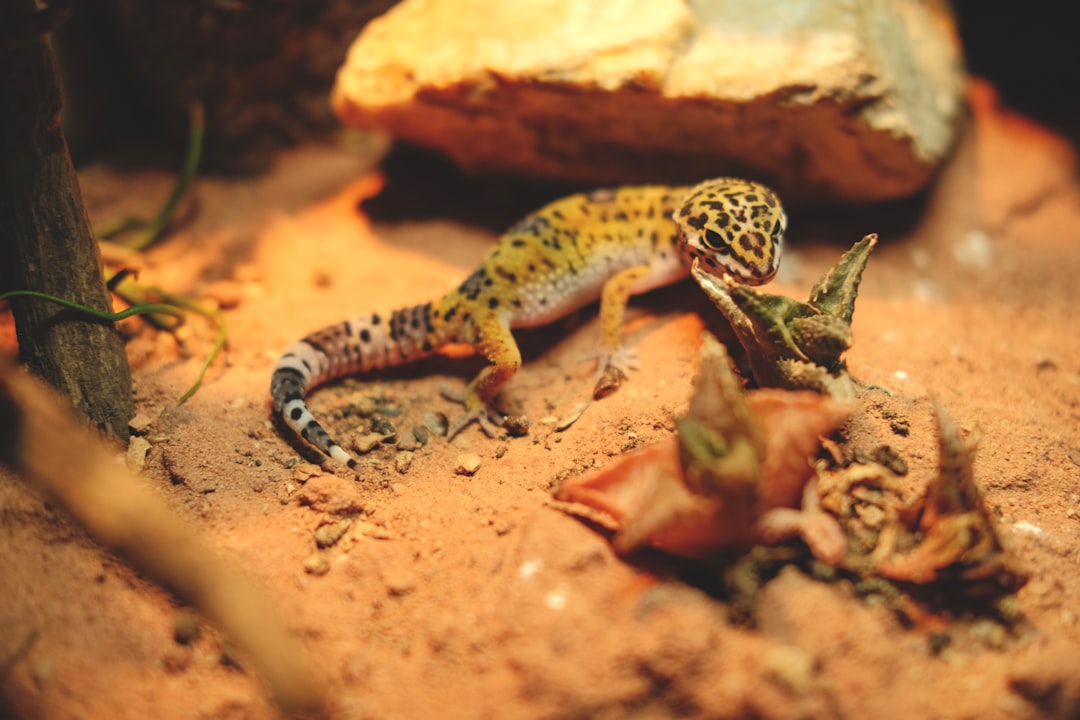
Photo by Laura Cleffmann on Unsplash
Why Leopard Geckos Make Great Starter Reptiles
The popularity of the leopard gecko (Eublepharis macularius) stems from its hardy nature. These geckos are native to the arid regions of Afghanistan, Pakistan, and northwestern India, which means they are built to survive in environments that are not overly complex to replicate. They are nocturnal or crepuscular, meaning they are most active during the twilight hours, which often aligns perfectly with a keeper’s schedule after work or school.
Furthermore, leopard geckos are one of the few lizard species that possess eyelids, allowing them to blink and sleep with their eyes closed. This gives them a very expressive look compared to other geckos. They are also terrestrial, so you do not need to worry about them escaping by climbing up smooth glass walls like their arboreal cousins. Their slow movements and lack of sticky toe pads make them very easy to handle, even for younger keepers who are still learning how to interact with reptiles safely. With a lifespan that can reach twenty years or more in captivity, they are a long-term companion that truly grows with you.
Setting Up a Leopard Gecko Enclosure
Creating the perfect home for your gecko is the most important step in ensuring their long-term health. We recommend starting with a minimum of a 20-gallon long tank for a single adult, though a 40-gallon breeder provides much more room for enrichment and a proper thermal gradient. For a high-quality, all-in-one solution, the Exo Terra Glass Natural Terrarium Kit is an excellent choice that offers front-opening doors for easy access and maintenance.
When you first bring your pet home, we suggest quarantining a new gecko on paper towels for the first 30 to 60 days. This allows you to monitor their droppings and ensure they are eating properly without the risk of them ingesting loose substrate. Once the quarantine period is over, you can move to more permanent options like textured slate tile or a specialized arid bioactive mix. Avoid using calcium sand, as this can cause life-threatening impaction if swallowed.
The layout of the enclosure must include at least three hides. One hide should be placed on the warm side of the tank, one on the cool side, and a third “moist hide” should be placed in the middle or on the warm side. The moist hide is crucial for helping your gecko shed its skin properly. You can fill this hide with damp sphagnum moss or paper towels. In our experience, providing plenty of clutter like fake plants, cork bark, and rocks will make your gecko feel much more secure, encouraging them to spend more time out in the open rather than hiding all day. Ensure that all heavy decorations are placed directly on the bottom of the tank so the gecko cannot dig under them and cause a collapse.
Heating and Lighting Requirements for Leopard Geckos
Leopard geckos are ectotherms, meaning they rely on external heat sources to regulate their body temperature. Because they are terrestrial and spend much of their time in burrows, they benefit greatly from “belly heat” to help them digest their food. We highly recommend the Zoo Med ReptiTherm Under Tank Heater placed on one side of the enclosure. This heater must always be connected to a thermostat to prevent it from overheating and burning your gecko.
The temperature gradient is vital for their survival. You should aim for a warm side surface temperature of 88-92 degrees F for proper digestion. The ambient air temperature in the middle of the tank should stay between 75-80 degrees F, while the cool side should drop to 70-75 degrees F. At night, it is perfectly safe for temperatures to dip into the high 60s, as this mimics the natural cooling of the desert.
Humidity is another critical factor. Unlike tropical geckos, leopard geckos are an arid species and require a humidity level between 30-40%. If the humidity stays too high for too long, they can develop respiratory infections. You can monitor these levels using a digital hygrometer. While they do not strictly require UVB lighting to survive if given proper vitamin D3 supplements, providing a low-strength 5% to 7% UVB linear bulb can greatly benefit their overall health and activity levels. Always ensure the light is on a 12-hour cycle to simulate day and night.
Leopard Gecko Diet, Feeders, and Supplements
Leopard geckos are strict insectivores, meaning they only eat bugs. A varied diet is the key to a healthy gecko. The best staple insects include dubia roaches, crickets, and mealworms. For treats, you can offer silkworms or hornworms, but avoid waxworms and superworms as daily staples because they are very high in fat.
A proper feeding schedule is essential. Hatchlings and juveniles should be fed every day, while adults only need to eat two to three times per week. Before feeding any insect to your gecko, you must “gut-load” the bugs by feeding them high-quality vegetables like carrots or squash for 24 hours. This ensures the nutrients are passed on to your reptile. To make feeding time easier and provide a naturalistic look, the Exo Terra Gecko Cave works well as a feeding station or a secure spot for them to wait for prey.
Supplements are non-negotiable. You must dust your insects with a high-quality calcium powder at every feeding. If you are not using UVB lighting, you must use calcium that includes Vitamin D3. Once a week, replace the calcium with a multivitamin powder to ensure they receive essential minerals. In our experience, keeping a small bottle cap filled with calcium (without D3) inside the enclosure allows the gecko to self-regulate their calcium intake as needed.
Common Leopard Gecko Mistakes and How to Avoid Them
Even with the best intentions, new keepers often run into common pitfalls. Here are five mistakes to avoid – and what to do instead.
Co-habitation: Never house two leopard geckos together, even if they appear to coexist peacefully at first. They are solitary animals that compete fiercely for basking spots, food, and territory. Stress from a cagemate suppresses the immune system over time, and injuries from biting are common even when no visible aggression is observed. The only exception is short-term pairing for breeding, which should always be supervised.
Using Sand or Loose Particle Substrate: Many big-box pet stores sell calci-sand or reptile sand as a recommended product. In reality, loose substrate is a leading cause of impaction, where ingested particles block the digestive tract. For new keepers, paper towels or non-adhesive shelf liner is the safest option. Once you are confident your gecko is eating and defecating normally, textured slate tile is a great long-term choice – it holds heat well and is easy to clean.
Running a Heat Mat Without a Thermostat: An unregulated under-tank heater can reach surface temperatures well over 100 degrees F. Burns to the ventral (belly) surface are painful, slow to heal, and sometimes fatal. A simple on/off thermostat with a probe placed on the floor of the warm side keeps the surface in the safe 88-92 degree F range.
Neglecting the Moist Hide: Without a humid microclimate, leopard geckos cannot shed their skin cleanly. Retained shed – called dysecdysis – is most dangerous on the toes and tail tip, where it constricts blood flow and can lead to necrosis and digit loss. Check the moist hide weekly and remoisten the moss or paper towels as needed. If you notice retained shed, soak your gecko in a shallow dish of lukewarm water for 15-20 minutes and gently assist the shed with a damp cotton swab.
Skipping Supplements: Leopard geckos fed unsupplemented insects will develop calcium deficiency over time. Metabolic Bone Disease (MBD) causes the skeletal system to weaken and deform, resulting in rubbery limbs, tremors, and jaw problems. It is painful and largely irreversible once advanced. Dusting every feeder insect with calcium powder and rotating in a multivitamin once a week costs almost nothing and prevents one of the most common causes of early death in captive leopard geckos.
Leopard Gecko FAQ
How long do leopard geckos live? With proper care, leopard geckos are very long-lived. Most will live between 15 and 20 years, though some individuals have been known to reach 25 years or more. This makes them a significant commitment, so ensure you are prepared for a long-term pet.
Why is my leopard gecko’s tail so fat? The tail is where leopard geckos store their fat and water reserves. A plump tail is a sign of a healthy, well-fed gecko. If the tail becomes thinner than the gecko’s neck, it may be a sign of illness or parasites, and you should consult a reptile veterinarian.
Do leopard geckos drop their tails? Yes, they can drop their tails as a defense mechanism if they feel threatened or if the tail is grabbed. While the tail will eventually grow back, the new tail will look different - usually smoother and more bulbous - and the process is very stressful for the animal.
How often should I handle my gecko? When you first bring your gecko home, give them at least two weeks to settle in before handling. Once they are comfortable, you can handle them for 10-15 minutes a day. According to the Association of Reptile and Amphibian Veterinarians, consistent, gentle handling helps reduce stress and builds trust between the pet and the owner.
Conclusion
Mastering leopard gecko care is a rewarding journey that starts with a solid foundation. By focusing on the correct temperature gradient, a varied insect diet, and a secure enclosure layout, you are setting your new pet up for a long and happy life. Remember to keep a close eye on their behavior and shedding cycles to catch any potential issues early.
If you found this guide helpful, please bookmark this page for future reference or leave a comment below with your favorite leopard gecko morph!
Related reading: how to clean and disinfect your reptile enclosure