Leopard Gecko Morphs and Color Guide
This post contains affiliate links. As an Amazon Associate, I earn from qualifying purchases at no extra cost to you.
Choosing a leopard gecko used to be simple. You went to a pet store and bought a yellow lizard with black spots. Today, the hobby has exploded into a dizzying array of “morphs” that look nothing like their wild ancestors. You are no longer just choosing a pet. You are choosing a genetic package that dictates everything from the color of the gecko’s eyes to the shape of its spots and even its eventual adult size. This variety is the primary reason leopard geckos remain the king of the pet reptile world, but it also creates a minefield for the uninitiated. Buying a gecko based solely on a pretty picture is a mistake. You need to understand the underlying genetics because some morphs carry baggage that can affect the animal’s quality of life. Whether you want a high-contrast “Bandit” or a jet-black “Black Night,” you must know what you are looking at before you open your wallet.
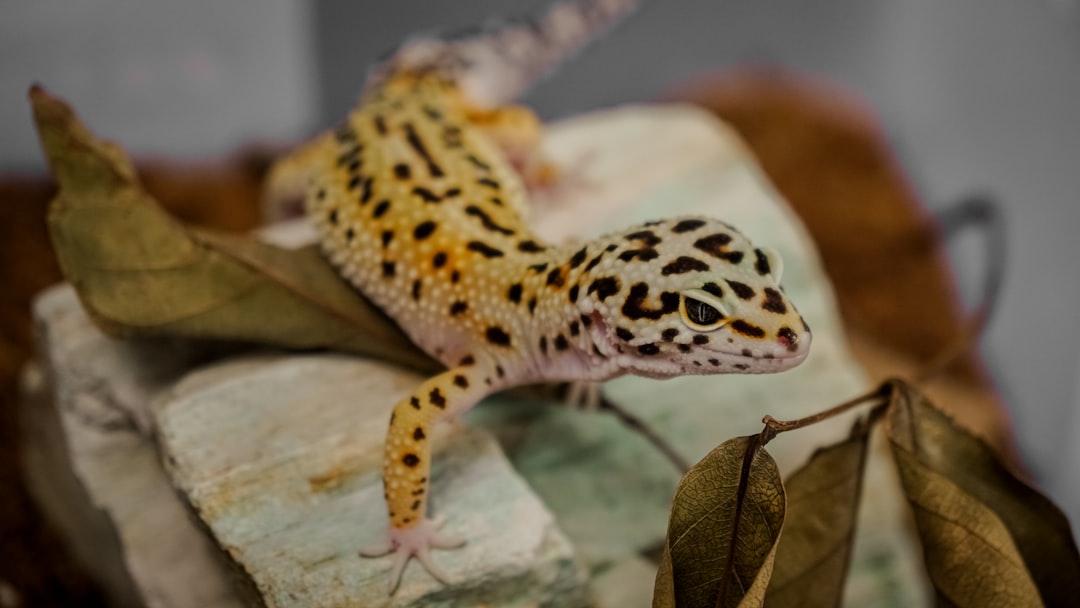
Photo by verdian chua on Unsplash
The Science of Leopard Gecko Morphs and Genetics
To understand morphs, you have to understand how traits are passed down. A morph is simply a visual mutation that has been stabilized through selective breeding. In the wild, most leopard geckos are “Normals” or “Wild Types.” They feature a dull yellow base with heavy black spotting. Breeders have isolated specific mutations to create the vibrant animals we see today. These traits generally fall into three categories: dominant, co-dominant, and recessive.
Dominant traits only require one parent to pass the gene for the offspring to show the trait. Co-dominant traits, like the Mack Snow, work similarly but produce a “super” form if the gecko inherits the gene from both parents. Recessive traits are more complex. A gecko must inherit the gene from both parents to physically show the trait. If it only has one copy, it is “heterozygous” (or “het”) for that trait. This means the gecko looks normal but carries the hidden blueprints for something else. This is why you will see geckos listed as “Normal 100% Het Tremper Albino.” The gecko looks like a standard yellow lizard, but it can produce albino babies if paired correctly.
When you are starting out, do not get bogged down in the math of Punnett squares, but do pay attention to the lineage. A reputable breeder will provide a full genetic breakdown of the animal. If a seller cannot tell you what the gecko is “het” for, they are not a serious breeder. This matters because crossing certain recessive lines can lead to “muddy” looking geckos or, worse, neurological issues. In our experience, starting with a well-documented gecko makes the hobby much more rewarding because you know exactly what to expect as the animal matures. Many leopard geckos change color drastically as they grow, so knowing the genetics is your only way to predict the adult’s appearance.
The Three Albino Strains and Why They Never Mix
Albinism is one of the most popular traits in the hobby, but it is also the most misunderstood. In leopard geckos, there are three distinct strains of albinism: Tremper, Bell, and Rainwater (also known as Las Vegas). These are all recessive traits, and they are genetically incompatible with one another. If you breed a Tremper Albino to a Bell Albino, you will end up with a clutch of “Normal” looking babies that carry both genes. You have essentially “reset” the look of the gecko while creating a genetic mess for future generations.
The Tremper Albino was the first to be discovered and remains the most common. These geckos often have silver eyes with visible red veins and tend to show more brownish or tan markings rather than true black. Bell Albinos are the most distinct, featuring light pink eyes and often a more vivid, lavender-toned body color. Rainwater Albinos are generally smaller and have darker eyes than the other two strains, with a “cleaner” yellow body.
Because albinos lack melanin (black pigment), they are much more sensitive to light. If you are housing an albino morph, you must be careful with your lighting choices. High-intensity UVB or bright overhead lights can cause these geckos to squint or hide constantly. We recommend providing plenty of opaque hides to ensure they can escape the light whenever they need to. For heating, a Zoo Med ReptiTherm Under Tank Heater is often a better primary heat source for albinos than a bright basking lamp, as it provides the necessary belly heat for digestion without hurting their sensitive eyes.
Safety Warning: Whenever you use an under-tank heater, you must connect it to a high-quality thermostat. These heaters can reach temperatures well over 100 degrees Fahrenheit if left unregulated, which can cause severe thermal burns to your gecko’s underside. Always place the thermostat probe directly over the heater, either inside the tank under the substrate or sandwiched between the heater and the glass.
Patternless and Blizzard Morphs
While some keepers want high-contrast spots, others prefer a clean, solid-colored lizard. This is where the Patternless and Blizzard morphs come in. These are also recessive traits that completely strip away the gecko’s spots, but they do so in different ways.
The Murphy Patternless (often just called Patternless) is born with a faint, mottled pattern that fades as the gecko ages. By the time they hit adulthood, they are a solid, matte color ranging from pale yellow to a dusty olive green. They often have a very clean, pinkish tail. Blizzards, on the other hand, are patternless from birth. They can be white, yellow, or even a smoky grey (often called “Midnight Blizzards”). Unlike Patternless geckos, Blizzards do not have a “faded” look; they are uniformly one color.
A unique feature of Blizzards is their eyes. Many Blizzards have “snake eyes” (where the iris is partially solid black) or “eclipse eyes” (where the iris is completely solid black). This gives them a very alien, striking appearance. However, Blizzards are notoriously more “flighty” or aggressive than other morphs. In our keepers’ circles, Blizzards have a reputation for being the “divas” of the leopard gecko world. If you are a first-time owner, a Blizzard might be a bit more of a challenge to handle than a laid-back Mack Snow or a standard Tangerine.
When setting up a home for these solid-colored beauties, an Exo Terra Glass Terrarium provides the perfect viewing platform. The front-opening doors are particularly helpful for flightier morphs like Blizzards, as reaching in from the front is less threatening than reaching down from the top like a predator. For more on choosing the right enclosure, see our guide on the best leopard gecko enclosures and heating setups.
High-End Designer Morphs and Color Intensity
If you have a larger budget and a desire for the most vibrant colors possible, you will eventually find yourself looking at designer morphs. These are usually not the result of a single “switch” in the genetics but rather years of selective line-breeding. The most famous of these is the Tangerine. A Tangerine gecko is simply a gecko that has been bred for intense orange coloration.
Within the Tangerine umbrella, you will find names like “Blood Tangerine,” “Inferno,” and “Electric.” These are brand names created by specific breeders to denote their specific lineage of high-color geckos. When you buy a Tangerine, you are paying for the intensity of the orange. The best specimens have orange that extends all the way down their legs and into their tails (often called “Carrot Tail” if the orange covers at least 15 percent of the tail).
On the opposite end of the spectrum is the “Black Night.” This is currently one of the most expensive and sought-after morphs in the world. Black Nights are melanistic, meaning they have an overabundance of black pigment. A “high-quality” Black Night is solid jet black with a white belly. Because this is a line-bred trait and not a simple recessive gene, breeding them is difficult. You can pair two solid black geckos and still end up with babies that have spots or are merely dark brown. This rarity drives the price into the thousands of dollars.
Regardless of the color intensity, all high-end morphs require the same nutritional foundation. To keep those colors vibrant and ensure the gecko’s bone structure remains strong, we use Repashy SuperVeggie at every feeding. This is an all-in-one supplement that provides calcium, vitamin D3, and essential trace minerals. Without proper supplementation, even the most expensive Black Night will develop Metabolic Bone Disease, which is irreversible and tragic.
Structural Morphs and Giant Genetics
Most morphs deal with color and pattern, but some affect the physical structure of the gecko. The “Giant” and “Super Giant” morphs are the most prominent examples. Discovered by Ron Tremper, this is a co-dominant trait that results in a significantly larger animal. A standard leopard gecko usually tops out around 50 to 80 grams. A Giant can easily reach 100 grams, and a Super Giant can exceed 150 grams and 11 inches in length.
Owning a Giant is a different experience. They are generally more docile because of their size, but they also require more space and more food. You cannot keep a Super Giant in a standard 20-gallon tank and expect it to thrive. They need room to move. The genetics of the Giant are interesting because they are “incomplete dominant.” This means if you have one copy of the gene, you have a Giant. If you have two copies, you have a Super Giant.
Be wary of sellers who label any large gecko as a “Giant.” Without proof of lineage, a large gecko is just a large gecko. True Giants have a specific genetic marker that allows them to grow that large without becoming obese. Overfeeding a normal gecko until it weighs 100 grams does not make it a Giant; it makes it an unhealthy lizard with a fatty liver. Always ask for the hatch weight and the genetics of the parents when buying a structural morph.
Comparison of Common Leopard Gecko Morphs
Choosing between morphs often comes down to a trade-off between visual “wow factor” and price or care requirements. The following table breaks down the most common categories to help you decide which fits your lifestyle and budget.
| Morph Category | Genetic Type | Primary Visual Feature | Care Consideration |
|---|---|---|---|
| Normal / Wild Type | N/A | Yellow with black spots | Hardiest, best for beginners |
| Albino (Tremper/Bell) | Recessive | No black pigment, light eyes | Sensitive to bright light |
| Mack Snow | Co-dominant | White/Pale yellow base | Colors may yellow with age |
| Murphy Patternless | Recessive | Solid yellow/green, no spots | Very consistent adult look |
| Blizzard | Recessive | Solid white/grey/yellow | Can be more aggressive/flighty |
| Tangerine | Line-bred | Intense orange/red hues | High-quality specimens are pricey |
| Eclipse | Recessive | Solid black or “snake” eyes | Affects pupil shape/color |
| Giant | Co-dominant | Increased body mass and length | Requires larger enclosure |
This framework should be used as a starting point. Remember that many geckos are “combos,” meaning they carry multiple traits. For example, a “Sunglow” is actually a combination of Tangerine and Albino. A “Super Stealth” is a combination of Mack Snow, Bell Albino, and Eclipse. The more traits you stack, the more complex the care and the higher the price tag.
Ethical Considerations and Common Mistakes
The pursuit of the “perfect” looking gecko has led to some ethical dark corners in the hobby. There are certain morphs that carry inherent health defects linked directly to their appearance. As an educated keeper, you should be aware of these before making a purchase.
The most famous example is the Enigma morph. Enigmas have a beautiful, blotchy pattern and unique eyes, but the gene is linked to a neurological disorder called “Enigma Syndrome.” Affected geckos may “star-gaze” (staring straight up for no reason), circle their enclosure incessantly, or have seizures. They often have trouble catching prey because their equilibrium is permanently off. In our opinion, breeding or purchasing Enigmas is something to avoid, as it encourages the propagation of a known defect.
Similarly, the “White and Yellow” (W&Y) morph can sometimes show similar neurological issues, though not as consistently as the Enigma. Another one to watch out for is the “Lemon Frost.” These geckos have a stunning, bright yellow color, but almost all of them eventually develop malignant tumors (iridophoromas). The hobby is currently moving away from Lemon Frosts because the health trade-off is simply too high.
Beyond ethical concerns, the biggest mistake new keepers make is buying a “mystery morph” from a big-box pet store. These stores rarely know the genetics of their animals. You might buy a gecko that looks like a normal, only to have it develop the light sensitivity of an albino because it is a low-expression “het.” Or you might buy a gecko that is sold as a “fancy” morph but is actually just a poorly bred normal. If you want a specific morph, buy directly from a breeder who can provide a hatch certificate. This ensures you are getting a healthy animal with a known history. For more on the basics of getting started correctly, check out our leopard gecko care guide for beginners.
FAQ
Why is my leopard gecko’s color fading or turning white?
This is almost always a sign that your gecko is about to shed. Leopard geckos go through a process where their top layer of skin loosens from the new skin underneath. A few days before the actual shed, the gecko will look very dull or “ghostly.” This is not a change in their morph. Once they peel off the old skin (and usually eat it), their colors will be brighter than ever. If the paleness persists for weeks and the gecko is not shedding, it could be a sign of illness or poor nutrition, but 99 percent of the time, it is just a normal shed cycle.
Can I house two different morphs together in the same tank?
No, and this has nothing to do with the morphs themselves. Leopard geckos are solitary animals. Housing them together, regardless of their color or pattern, leads to stress, bullying, and physical injury. One gecko will always become the “alpha,” hogging the best heat spots and food, while the other withers away. Even if they seem to be “cuddling,” they are actually competing for resources. Keep each gecko in its own enclosure to ensure they live a long, stress-free life. The only exception is for short-term breeding purposes by experienced keepers.
Do certain morphs have different temperaments?
While there is no scientific proof that a gene for “color” also controls “personality,” there are strong anecdotal trends in the hobby. As mentioned earlier, Blizzards are widely considered to be more defensive and prone to biting or running. Conversely, Mack Snows and Normals are often cited as the most “tame” and easy to handle. Much of this comes down to the individual gecko’s upbringing and how often they were handled by the breeder, but if you want a guaranteed “lap lizard,” a standard Mack Snow or a line-bred Tangerine is usually a safe bet.
Conclusion
The world of leopard gecko morphs is a fascinating intersection of biology and art. From the deep, velvety blacks of a Black Night to the glowing oranges of a high-end Tangerine, there is a gecko for every aesthetic preference. However, your priority should always be the health and welfare of the animal. Avoid morphs with known neurological issues like the Enigma, and always ensure you have the correct setup, including a regulated heat source and proper supplementation, before bringing your new gecko home. By understanding the genetics and history behind these colors, you can make an informed decision that results in a healthy, beautiful companion for the next twenty years.
If you found this guide helpful, consider bookmarking it for your next trip to a reptile expo.