Best Digital Thermometers and Hygrometers for Reptile Enclosures
This post contains affiliate links. As an Amazon Associate, I earn from qualifying purchases at no extra cost to you.
Reptile keeping lives or dies by two numbers: temperature and humidity. Unlike mammals, reptiles are ectothermic - they depend entirely on their environment for thermoregulation. A crested gecko sitting at 83°F when its safe ceiling is 78°F is experiencing chronic heat stress. A ball python at 45% humidity during shed will retain eye caps and skin patches - predictable outcomes of inaccurate or missing instrumentation that show up in reptile vet visits every week.
The good news is that reliable monitoring is inexpensive. You’ll need at least one combination thermometer-hygrometer per enclosure, and the Govee Bluetooth Thermometer Hygrometer handles both measurements with wireless data logging for under $20. That unit is the default recommendation for most keepers running one to five enclosures. You pay more for extended probe reach, gateway WiFi connectivity, or tighter calibration tolerance - not for better fundamental accuracy at the sensor level.
This guide covers the three instrument types that belong in every reptile room: digital probe units, Bluetooth data loggers, and infrared spot thermometers. It includes specific product reviews, a species-by-species reference table, and a placement walkthrough so your readings actually mean something.
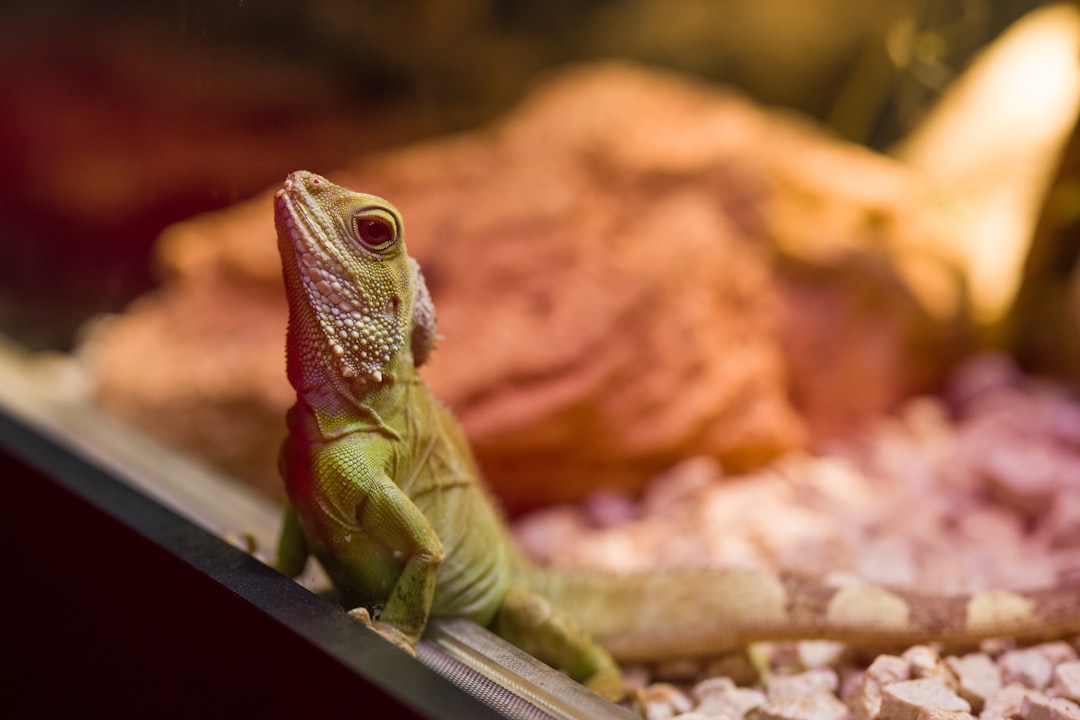
Photo by engin akyurt on Unsplash
Why Temperature and Humidity Monitoring Is Non-Negotiable in Reptile Enclosures
Every piece of reptile husbandry traces back to what conditions you are actually maintaining. You cannot evaluate your heating setup without verified temperature readings, troubleshoot a retained shed without humidity history, or make good decisions with bad data - no matter how carefully you selected your equipment.
The thermoregulation problem is especially acute because reptile physiology depends on access to a full temperature gradient. A crested gecko needs ambient temperatures between 72°F and 78°F (22°C to 26°C), with anything above 80°F becoming stressful and above 85°F posing real lethal risk over extended exposure - guidance consistent with the Association of Reptilian and Amphibian Veterinarians (ARAV). A leopard gecko needs a warm-side surface reaching 90-95°F for proper digestion, a cool-side ambient around 75-80°F, and a dedicated humid hide at 70-80% RH. These are distinct conditions that require distinct measurement points, not one probe positioned somewhere in the middle of the enclosure.
Humidity adds another layer of complexity. Crested geckos want 60-80% ambient humidity with overnight spikes to 90% after misting, but humidity must cycle back down during daytime hours - sustained high humidity creates respiratory infection risk. Ball pythons want a 60-80% baseline with the ability to spike near 90% during shed cycles. Bearded dragons require dry ambient conditions of 30-40% and will develop respiratory issues in chronically humid enclosures.
A hygrometer with data logging catches patterns a spot-check never will: overnight humidity creep signaling substrate saturation, or a daytime humidity floor dropping since you added ventilation panels. A combination unit with logging tells you the full range your animal experienced over 24 hours - what lets you keep animals thriving across seasons and equipment changes. Dial thermometers and gut estimates are not instrumentation. Your entire husbandry chain - feeding schedules, health assessments, equipment decisions - depends on accurate, ongoing measurement.
Types of Digital Thermometers and Hygrometers for Reptile Enclosures
Three categories of instrument matter for reptile enclosures, each serving a different function. Using only one type consistently produces blind spots in your data.
Digital Probe Combination Units
Digital probe combination units are the baseline instrument every keeper starts with. They measure ambient temperature and relative humidity at the probe tip, display current readings, and store daily min/max values. The probe sits inside the enclosure while the display unit mounts on the outside. Accuracy for reputable brands runs within ±1-2°F and ±2-4% RH - sufficient for all standard reptile husbandry decisions.
The main limitation is memory - only current reading and daily min/max, with no way to review what happened at 3am. For most single-enclosure keepers, a daily min/max check is acceptable. For multiple enclosures, tight-tolerance species, or active health troubleshooting, Bluetooth logging is worth the modest cost premium.
Bluetooth Data Loggers
Bluetooth thermometer-hygrometers pair to a smartphone app and log readings continuously, typically at intervals of 2 to 10 minutes. The app stores historical graphs, lets you configure alert thresholds, and pushes notifications when conditions go out of range. The Govee Bluetooth Thermometer Hygrometer and Inkbird IBS-TH2 Plus are both in this category, and it is where most serious keepers land once they have run an enclosure through a seasonal temperature swing.
The one limitation is range. Most units maintain stable connections within 100 feet in open air, shorter through walls and dense tank panels. A basement rack with your phone upstairs needs a Bluetooth-to-WiFi gateway; both Govee and Inkbird offer compatible units for this purpose.
Infrared Spot Thermometers
An infrared (IR) thermometer measures surface temperature without contact. You point it at a basking rock, substrate surface, or under-tank heater hot spot and get an instant reading. This is the only accurate way to verify surface temperature: digital probes measure air temperature at the probe tip, not the surface temperature your animal is actually sitting on. Those two numbers are often significantly different, and for basking species, the surface temperature is the number that determines whether your animal can properly thermoregulate.
IR thermometers function as a secondary verification instrument, not a replacement for ambient logging - use them for setup checks, bulb changes, and routine surface temperature confirmation.
Top Digital Thermometers and Hygrometers for Reptile Enclosures
Govee Bluetooth Thermometer Hygrometer
The Govee Bluetooth Thermometer Hygrometer is the default choice for most keepers. At under $20, it logs temperature and humidity every two minutes via Bluetooth to the Govee Home app, stores up to two years of data, and lets you set high/low alert thresholds with push notifications to your phone. Stated accuracy is ±0.54°F and ±3% RH.
The display shows current readings plus daily min/max, so the unit remains useful when your phone is out of Bluetooth range. The Govee Home app is well-built: historical graphs by hour, day, or week; CSV data export for deeper analysis; and per-device alert thresholds when running multiple units across a rack.
The one limitation to know before purchasing: this model has no external probe option. The sensor is housed inside the unit, measuring conditions at the device’s physical location. For tall arboreal enclosures where you want a reading at a specific interior point, or for monitoring a discrete microhabitat like a humid hide, you will need multiple units positioned at different locations or the Inkbird instead.
Inkbird IBS-TH2 Plus Bluetooth Temperature Humidity Sensor
The Inkbird IBS-TH2 Plus is the right choice when you need an external probe jack - its primary differentiator. You can route the probe into a humid hide, a substrate layer, or any enclosed microhabitat while keeping the main display unit mounted on the enclosure exterior. Bluetooth 5.0 provides stronger signal and better wall penetration than the older 4.x units in many competing products. Accuracy is ±1.8°F and ±3% RH. The Inkbird Pro app is functional but less polished than Govee’s interface. Gateway support via the Inkbird IBS-TH3 extends the system to WiFi for full remote monitoring outside Bluetooth range.
Choose the Inkbird when you need an external probe, when your enclosures sit far from your phone, or when you want gateway-based remote access. Choose the Govee when app quality, simplicity, and a lower per-unit price matter more than probe flexibility.
Zoo Med ReptiTemp Digital Infrared Thermometer
The Zoo Med ReptiTemp Digital Infrared Thermometer is a permanent fixture in every reptile room. For any basking species, it is not optional equipment. The ReptiTemp reads from -76°F to 932°F (-60°C to 500°C) with ±2°F accuracy, covering every scenario from ambient floor-level substrate checks to high-intensity basking spots under T5 or mercury vapor bulbs.
The use case is straightforward: any time you change a bulb, adjust a fixture height, or move an enclosure, verify the resulting surface temperature directly. A bulb that produced a 108°F basking surface in your previous enclosure may produce 90°F or 130°F in a new setup depending on reflector geometry and enclosure dimensions. The IR thermometer resolves that uncertainty in five seconds - always measure the substrate or rock your animal basks on, not the enclosure glass.
Species-Specific Temperature and Humidity Targets
| Species | Basking Surface Temp | Warm Side Ambient | Cool Side Ambient | Humidity |
|---|---|---|---|---|
| Crested Gecko | None required | 72-78°F | 68-74°F | 60-80% ambient; overnight spike to 90% |
| Leopard Gecko | 90-95°F | 80-88°F | 75-80°F | 30-40% ambient; 70-80% in humid hide |
| Ball Python | 88-92°F | 80-85°F | 76-80°F | 60-80%; up to 90% during shed |
| Bearded Dragon | 100-110°F | 90-100°F | 75-85°F | 30-40% |
| Blue-Tongued Skink | 100-105°F | 80-85°F | 75-80°F | 40-60% (subspecies-dependent) |
Crested geckos are unusual in that they do not use a dedicated basking spot for thermoregulation - their thermal regulation relies on ambient temperature gradients rather than a high-intensity focal heat source. This means ambient thermometer placement matters more for crested geckos than for basking species: a reading at the floor of a tall crested gecko enclosure is not representative of conditions in the upper third where the animal spends most of its time.
Ball python humidity warrants specific attention. As noted in the Ball Python Morph Guide, animals carrying certain genetic morphs may show heightened sensitivity to suboptimal husbandry conditions. A ball python at 50% humidity will shed poorly; at 40%, retained sheds and secondary infections follow. Setting a low-humidity alert at 55% RH on your logger catches this before it becomes a health event.
Blue-tongued skink humidity requirements vary meaningfully by subspecies. Northern blue-tongued skinks tolerate the drier end of the 40-60% range; Indonesian species like the Merauke require closer to 60-80%. For detailed subspecies-specific guidance, consult the Reptile Database or your veterinarian. Verify subspecies-specific requirements before applying the table value to a specific animal.
Setup Best Practices and Common Mistakes
Best Practices for Thermometer and Hygrometer Placement
Placement determines whether your readings mean anything. A probe sitting directly under a heat lamp reads radiant heat from the source, not enclosure ambient. A hygrometer positioned next to the water dish reads localized evaporation. Bad placement produces bad data, and bad data is worse than no data because it creates false confidence.
-
Map all measurement zones before placing any instrument. Every enclosure has at minimum a warm side and a cool side, plus any microhabitats relevant to your species - humid hides, basking surfaces, burrowing substrate layers. A leopard gecko setup needs warm-side ambient, cool-side ambient, basking surface temperature (via IR check), and humid hide humidity. Identify all measurement points before you place anything in the enclosure.
-
Place your combination probe or Bluetooth logger at animal height on the cool side, away from heat sources and standing water. For arboreal species like crested geckos in tall screen-top enclosures, place the probe at mid-height on the cool-side panel rather than on the floor. Temperature stratification in a tall enclosure can create a 5-8°F difference between floor level and the upper third.
-
Run a full infrared surface check of all critical surfaces after the enclosure has been at operating temperature for at least one hour. Heating equipment requires time to stabilize. Check the basking surface your animal will use, any UTH hot spots, and the cool-side floor surface. Record these alongside your ambient probe readings to understand the full thermal gradient.
-
Configure Bluetooth alert thresholds immediately after confirming your baseline. For a crested gecko enclosure: low temperature at 70°F, high temperature at 79°F, low humidity at 55%, high humidity at 90%. Calibrate thresholds to your specific species’ safe range, not generic app defaults.
-
Log a full 24-hour cycle before treating your setup as established. Overnight temperatures drop as ambient room temperature falls, heating equipment cycles on and off, and humidity patterns shift with misting schedules. A 24-hour log shows whether your overnight low hits safe minimums, whether your heating system maintains temperature through the coldest point, and whether daytime humidity drops appropriately after misting. A setup that looks correct at noon can fail completely at 4am.
Common Mistakes to Avoid
Using dial thermometers as primary instruments. The analog dial thermometers packaged with many beginner reptile kits show consistent deviations of 5-10°F from calibrated reference instruments placed in the same enclosure. A crested gecko keeper who reads 76°F on a dial may be maintaining 82°F in practice - continuous heat stress. Replace any dial thermometer with a Govee Bluetooth Thermometer Hygrometer.
Measuring glass surface temperature with your infrared thermometer. Glass surface temperature is heavily influenced by ambient room temperature and does not represent what your animal experiences on the basking surface inside the enclosure. Always measure the actual surface your animal sits on - a UTH-heated substrate surface can run 10-15°F warmer than the glass panel directly above it. Measure the right surface every time.
Relying on min/max readings without timestamps or context. A daily minimum of 69°F means something different for a crested gecko enclosure that briefly dips at 4am versus a ball python enclosure sustaining that floor all night. The second is a serious problem that compromises digestion, immune function, and long-term health. Bluetooth logging’s hourly graph shows when the temperature dropped, for how long, how far it fell, and whether it recovered - that context is what makes a reading actionable.
Placing humidity probes near water dishes or misting nozzle spray paths. A probe positioned three inches from a water bowl in a dry-species enclosure can show 60% RH while the rest of the enclosure sits at 35%. Place humidity sensors away from direct water sources and misting spray paths, at a representative location on the cool side at animal height.
Skipping surface temperature verification after any equipment change. Ambient air temperature and basking surface temperature are independent variables. A 75-watt bulb positioned six inches from a slate tile can produce anywhere from 90°F to 130°F depending on reflector geometry and enclosure dimensions. The Zoo Med ReptiTemp takes five seconds to verify. Run this check every time you change a bulb, adjust fixture height, or move an enclosure.
Never cross-checking instruments against each other. Digital thermometers and hygrometers drift over time, particularly humidity sensors exposed to sustained high humidity in regularly misted enclosures. Cross-check your instruments annually by placing two units at the same location and height for 30 minutes. More than 2°F temperature divergence or more than 5% RH divergence is a signal to investigate calibration.
Frequently Asked Questions
Do I need a separate thermometer and hygrometer, or is a combination unit sufficient?
Combination units are sufficient for the vast majority of reptile keeping setups. The Govee and Inkbird both deliver accurate temperature and humidity from a single device at a price point where one per enclosure is practical. The one scenario where two combination units help is when you need temperature and humidity measured at different interior locations simultaneously - two units accomplish exactly what dedicated separate instruments would. Buy combination units, place them correctly, and cross-check annually.
How many thermometers do I need per enclosure?
At minimum: one combination thermometer-hygrometer for ambient monitoring and one IR thermometer shared across all enclosures for surface spot checks. For large enclosures with significant thermal gradients - adult ball pythons, bearded dragons, or any enclosure over 48 inches long - a second ambient logger at the warm end independently verifies both the warm-side setpoint and the cool-side retreat temperature. For arboreal species like crested geckos in tall enclosures, two loggers at different heights show the actual temperature range available to your animal throughout the day. The cost of a second unit is well under $20 and trivial compared to the diagnostic clarity it provides.
Are Bluetooth thermometers reliable for reptile enclosures, or do they lose connection frequently?
Govee and Inkbird units are reliable within their rated range. The limitation is physical range rather than connection stability - most maintain stable connections within 30 feet through one standard interior wall. When your phone moves out of range, these units continue logging locally and sync accumulated data when you reconnect, so brief absences produce no gaps in your historical record. For reliable alert delivery when away for extended periods, add a gateway hub to bridge Bluetooth to WiFi.
Can these units handle high-humidity enclosures like crested gecko setups?
Yes, with placement precautions. Govee and Inkbird units are rated for high-humidity environments but are not waterproof - do not allow misting spray to contact the unit housing directly. Repeated high-humidity exposure accelerates sensor drift, which is a second reason to cross-check units annually. Units used in crested gecko enclosures misted twice daily accumulate more sensor wear than units in dry-species setups. Budget for replacing combination units every two to three years in high-humidity applications.
Conclusion
Accurate temperature and humidity data is the foundation of every sound husbandry decision. Pick up a Govee Bluetooth Thermometer Hygrometer for ambient logging in each enclosure, add an Inkbird IBS-TH2 Plus where you need external probe capability or gateway connectivity, and keep a Zoo Med ReptiTemp infrared thermometer on the shelf for surface verification. Place everything correctly using the steps above, log a full 24-hour cycle before trusting your setup as established, and configure alert thresholds that match your specific species’ documented safe range. The animals will show the difference.
If this guide saved you time, bookmark it for reference the next time you set up a new enclosure or troubleshoot a husbandry problem.