Ball python morph guide: popular genes and combos
This post contains affiliate links. As an Amazon Associate, I earn from qualifying purchases at no extra cost to you.
The explosion of the ball python hobby over the last three decades is almost entirely due to the incredible genetic plasticity of the species. What started as a modest brown and tan snake from West Africa has been transformed into a living canvas of neon yellows, stark whites, and deep purples. For a newcomer, entering this market is overwhelming. There are now over 7,500 recorded combinations of genes, making it difficult to distinguish between a simple color variation and a high value investment. Choosing the right snake requires moving beyond aesthetic preference and understanding the underlying mechanics of how these traits are passed from one generation to the next.
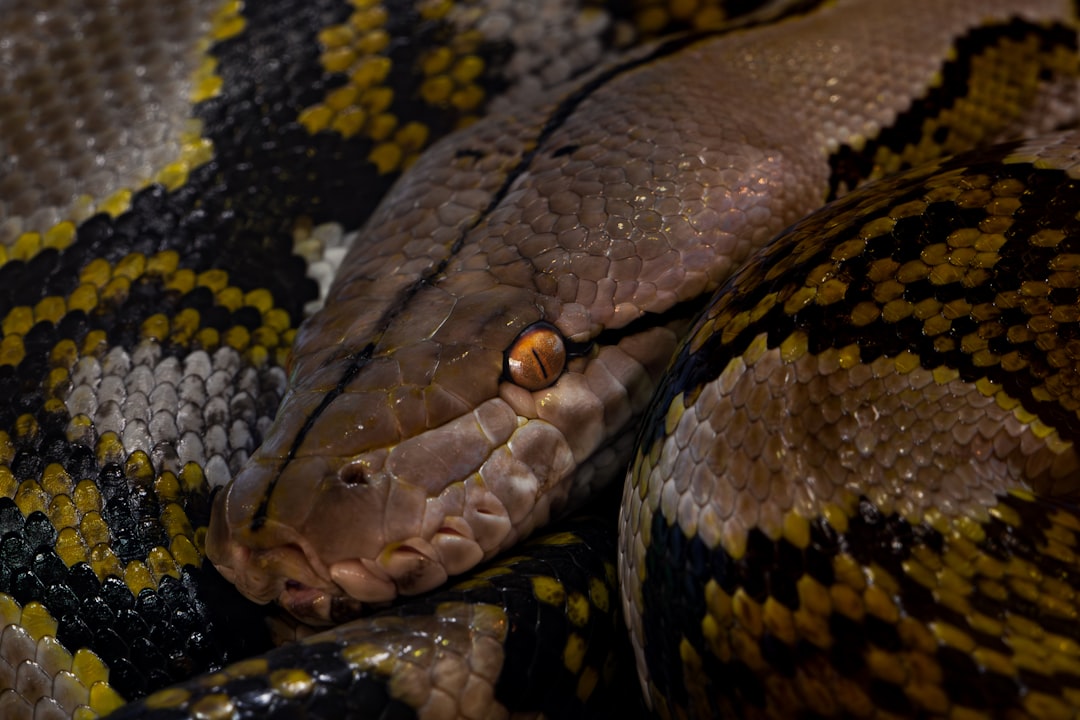
Photo by Husam Harrasi on Unsplash
Fundamentals of Ball Python Genetics
To navigate any ball python morph guide, you must first grasp the basic terminology used by breeders. Most traits fall into three categories: dominant, co-dominant (often more accurately described as incomplete dominant), and recessive. A dominant trait only requires one parent to pass on the gene for it to be visible in the offspring. However, in the ball python world, true dominant traits are rare. Most “dominant” looking traits are actually incomplete dominant. This means that if a snake carries one copy of the gene (heterozygous), it looks one way, but if it carries two copies (homozygous), it produces a “super” form that looks entirely different. For example, a Pastel snake has one copy of the gene, but a Super Pastel has two, resulting in a much brighter, more faded appearance.
Recessive traits are the wild cards of the industry. These genes are invisible unless the snake carries two copies. A snake with only one copy is called “heterozygous” or “het” for that trait. It looks like a normal ball python but carries the hidden potential for something spectacular, like the Piebald or Albino morph. This creates a secondary market for “100% Het” animals, which are visually normal but genetically valuable for breeding programs. Understanding this distinction is vital because it dictates the price. You might see two snakes that look identical, but one costs five times more because it is “66% Het Clown,” meaning there is a statistical chance it carries a hidden recessive gene.
The complexity increases when you realize that these genes are not mutually exclusive. You can stack multiple incomplete dominant genes and recessive genes into a single animal. This is what breeders refer to as a “combo.” A snake might be a Pastel Mojave Ghost, combining two incomplete dominant traits with one recessive trait. For a deep dive into the history and science of these variations, The Ball Python Manual by Philippe de Vosjoli remains a foundational text that explains how the hobby evolved from wild imports to the current captive-bred marvels.
Popular Base Genes in a Ball Python Morph Guide
When building a collection or selecting your first pet, certain base genes serve as the building blocks for almost every famous combination. The Pastel gene is perhaps the most widespread. It increases yellow pigmentation and reduces the black “alien heads” on the snake’s sides, often giving the animal green eyes. While common, a high quality Pastel is essential for brightening up darker combos. Another staple is the Mojave gene. On its own, a Mojave has a distinct “keyhole” pattern and a yellowish-brown hue. However, its true value lies in the “Blue Eyed Leucistic” (BEL) complex. When you breed a Mojave to another Mojave, or to a Lesser or Phantom, you produce a solid white snake with striking blue eyes.
The Enchi gene is a powerhouse for pattern manipulation. It tends to reduce the complexity of the pattern, creating wider, cleaner bands of color and increasing the intensity of oranges and yellows. Breeders often use Enchi to “clean up” messy combinations. Similarly, the Pinstripe gene is a dominant trait that replaces the traditional blotches with thin, vertical lines along the spine. It is a very “strong” gene, meaning it often dominates the visual look of any combo it is part of. If you are looking for a snake with a more geometric, structured appearance, Pinstripe is the standard choice.
Finally, we must mention the Yellowbelly gene. At first glance, a Yellowbelly looks like a normal ball python with a slightly brighter underside and some “flaming” along the lower scales. However, it is part of the “Ivory” complex. When two Yellowbellies are bred together, they produce an Ivory, which is a nearly all-white snake with a yellow stripe down the back. Yellowbelly is often used as a “secret sauce” in high end combos because it has a subtle way of boosting the colors of other genes, making oranges “pop” and blacks appear deeper. For more information on basic care requirements that apply regardless of the morph, see our Ball Python Care Guide.
Recessive Traits and the Visual Impact of Piebald
Recessive genes are the “holy grail” for many keepers because they offer the most dramatic visual departures from the wild type. The Piebald (or “Pied”) gene is arguably the most famous. It causes the snake to have irregular patches of solid white unpigmented scales mixed with patches of normal or enhanced color. No two Pieds are exactly alike, which makes them highly collectible. Some are “low white,” with only a small patch near the tail, while others are “high white,” with only a few spots of color on the head and neck. The unpredictability of the pattern is part of the appeal.
The Albino morph was the first recessive trait ever proven in ball pythons, and it remains a classic. By removing all black pigment (melanin), you are left with a bright yellow and white snake with red eyes. While Albinos are stunning, they are sensitive to bright light, so their enclosure should provide ample shade and hides. Another major recessive player is the Clown gene. Clown is a pattern mutation that reduces the side markings to a minimal, tear-drop shape and creates a wide, bold stripe down the spine. It also changes the head transformation, often giving the snake a “mask” look.
The challenge with recessive traits is the breeding timeline. To produce a visual Piebald, both parents must at least carry the gene. If you breed a visual Piebald to a normal snake, all the babies will look normal but will be “100% Het Pied.” You then have to breed those babies back to a Pied or to each other to see the visual trait again. This multi-year process is why visual recessives and even “double recessive” combos (like a Pied-Clown) command prices in the thousands of dollars. They represent years of dedicated selective breeding and genetic tracking.
Common Mistakes to Avoid When Selecting a Morph
The excitement of buying a designer snake often leads to oversight regarding health and ethics. The most significant mistake in the ball python hobby is ignoring “lethal” or “detrimental” gene links. Certain morphs are tied to neurological issues, most notably the Spider gene. Snakes with the Spider gene (and related genes like Champagne, Hidden Gene Woma, and Woma) often exhibit a “wobble,” which is a lack of equilibrium. This can range from a slight head tilt to a complete inability to strike at prey or stay upright. While some keepers argue that these snakes live full lives, many others advocate for avoiding these genes entirely to discourage the breeding of neurologically compromised animals.
Another common pitfall is purchasing a “low expression” version of a high end morph. Not all genes are created equal in every individual. A “low quality” Pastel might turn muddy and brown as it ages, a process known as “browning out.” When buying a morph, look for “high expression” individuals that show the best possible version of that trait. This usually means brighter colors, higher contrast, and cleaner patterns. If a breeder is selling a morph at a price that seems too good to be true, it is likely because the animal is a poor visual representation of that gene.
Finally, beginners often underestimate the importance of source vetting. Buying a snake from a “big box” pet store is a gamble. These animals are often mass produced, poorly started on food, and their genetic lineage is unknown. A snake labeled “Fancy Ball Python” at a chain store is usually just a low grade Pastel or Mojave with no record of its parents. Instead, use platforms like MorphMarket to find reputable breeders who provide detailed genetic histories and feeding records. For advice on ensuring your new morph actually eats once you get it home, refer to our Ball Python Feeding Guide.
Step-by-Step Selection Process for Healthy Designer Snakes
Choosing a ball python based on looks is easy, but choosing one that will thrive for 30 years requires a systematic approach. Follow these steps to ensure your investment is sound:
- Research the Gene’s Stability: Before falling in love with a specific look, check if the gene is associated with health issues. Use a database like World of Ball Pythons to see if the morph has known issues like the Spider wobble, the “duckbilling” (deformed snouts) sometimes seen in Super Cinnamons, or the small eyes associated with some Super Lesser combinations.
- Verify the Feeding History: Ball pythons are notorious for hunger strikes. A reputable breeder should provide a record of at least 5 to 10 consecutive unassisted feedings. Ask specifically if the snake is eating live, pre-killed, or frozen-thawed prey. Transitioning a snake from live to frozen can be difficult, so it is better to buy one already established on the prey type you intend to use.
- Perform a Visual Health Check: Look for physical markers of health that transcend morph colors. The snake should have a firm, muscular body shaped like a rounded triangle, not a sharp “V” (which indicates underweight). The vent should be clean, the eyes clear (unless in shed), and there should be no clicking or wheezing sounds when the snake breathes, which could indicate a respiratory infection.
- Confirm the Genetic Pedigree: If you are paying a premium for a “Het” trait, ask for a photo of the parents and a signed genetic guarantee. In the high end hobby, documentation is everything. A snake without a paper trail is just a pet, not a breeding prospect.
- Assess the Temperament: While ball pythons are generally docile, some individuals are more high-strung. Ask the breeder about the snake’s typical reaction to handling. A healthy snake should be curious and flick its tongue frequently, not remain in a tight, frozen ball for hours or strike defensively at every movement.
Managing Environmental Needs for High End Morphs
A common misconception is that designer morphs require different care than standard ball pythons. While their biology is the same, the financial and emotional investment in a rare morph often leads keepers to seek more advanced equipment. The most critical piece of hardware for any ball python enclosure is a high quality thermostat. Without one, heating elements can malfunction and cause fatal burns or house fires. The Vivarium Electronics Thermostat is a gold standard in the industry, offering proportional heating that maintains a steady temperature rather than the fluctuating “on-off” cycle of cheaper models.
Safety Warning: All heating elements, including heat mats, ceramic heat emitters, and deep heat projectors, must be regulated by a thermostat. Unregulated heat mats can reach temperatures exceeding 120 degrees Fahrenheit, which will cause severe thermal burns to your snake’s ventral scales. Additionally, always maintain a working carbon monoxide detector in any room where gas-fired appliances are used near your reptiles.
When it comes to housing, there is a divide between glass tanks and PVC enclosures. While many beginners start with a glass tank, maintaining the required 60% to 80% humidity can be a struggle due to the mesh top. Some keepers attempt to use the Zoo Med ReptiBreeze LED Deluxe Habitat, but it is important to note that this is a full-mesh enclosure designed for chameleons or arboreal geckos. For a ball python, a full-mesh cage will lose heat and humidity almost instantly. If you use a mesh-topped enclosure, you must cover most of the screen with HVAC tape or acrylic sheets to trap moisture. For a more detailed comparison of housing options, see our guide on Ball Python Enclosure Setup Tubs Vs Tanks Vs Pvc.
FAQ
What is the difference between a “Morph” and a “Locality”?
A morph refers to a specific genetic mutation that affects the color or pattern of a snake, typically discovered in the wild and then selectively bred in captivity. Examples include Pastel, Albino, or Clown. These mutations can occur in any population. A locality, on the other hand, refers to a population of snakes from a specific geographic region that may have a unique look due to natural selection and isolation, but not necessarily a single identifiable “gene” like a morph. In the ball python hobby, almost everything you see is a morph. Locality-specific ball pythons are much rarer in the trade because the designer morph market is so dominant. When you buy a ball python morph, you are buying a product of human-directed evolution rather than a snapshot of a specific African ecosystem.
Do certain morphs have different temperaments?
There is a long-standing debate in the reptile community regarding whether certain genes correlate with behavior. For instance, many keepers suggest that “Enchi” or “Pinstripe” combos are more flighty or “nippy” as hatchlings. However, there is no peer-reviewed scientific evidence to support the idea that color mutations significantly alter the temperament of a ball python. Most behavioral differences are likely due to individual personality, the environment in which the snake was raised, and how much it was handled by the breeder. A snake kept in a high-traffic, loud area will be more stressed and defensive than one kept in a quiet, dark rack system. Focus on the individual snake’s behavior during a handling session rather than making assumptions based on its genetic makeup.
Why do some ball python morphs change color as they get older?
This phenomenon is known as “ontogenetic color change,” and it is very common in ball pythons. Most morphs are at their most vibrant immediately after their first shed as hatchlings. As the snake grows and develops more layers of scales and pigment, colors often “muddy” or “brown out.” The Pastel gene is the most notorious for this; a bright yellow hatchling can become a dull, tan adult. Some genes, however, actually improve with age. The “Enchi” and “Desert Ghost” genes are highly prized because they tend to hold their color or even get brighter as the snake matures. When looking at a ball python morph guide, always try to find photos of adult examples of the gene you are interested in so you aren’t disappointed by the natural aging process.
Conclusion
Navigating the world of ball python morphs is a journey into the intersection of biology and art. While the sheer variety of genes like Pastel, Mojave, and Piebald allows for endless customization, the health and well-being of the animal must remain the priority. By understanding the basics of Mendelian genetics, avoiding genes linked to neurological issues, and sourcing your animals from reputable breeders, you can enjoy the beauty of these designer snakes without the common pitfalls of the hobby. Remember that regardless of how much a snake costs or how rare its genes are, it still requires the same meticulous attention to humidity, temperature, and security.
Bookmark this guide for your next trip to a reptile expo to ensure you make an informed decision on your next addition.