Best gram scales for weighing geckos and small reptiles
This post contains affiliate links. As an Amazon Associate, I earn from qualifying purchases at no extra cost to you.
A crested gecko can drop 10% of its body weight before you notice anything visually wrong. By the time sunken eyes, a shrunken caudal base, or reduced activity become obvious, the animal has been in decline for weeks. A reliable gram scale is the single piece of equipment that closes that gap. If you track your gecko’s weight weekly for hatchlings, or every two to four weeks for adults, you will catch problems during a window when intervention is still straightforward.
Kitchen scales that display in one-gram increments are useless for this task. A three-gram hatchling could lose 20% of its body weight and your kitchen scale would never register the change. You need a scale that reads to at least 0.1g for adult animals and to 0.01g or better for anything under 10g.
The three scales reviewed here span the full weight range of common gecko species: from hatchling crested and mourning geckos that barely tip one gram, to adult leopard geckos, gargoyle geckos, and chahoua geckos in the 50-100g range. None of them are marketed specifically as reptile scales, and that is fine. The reptile community has long borrowed from jewelry, lab, and espresso markets to find accurate, affordable options that outperform anything sold in a pet store, and that pattern holds here.
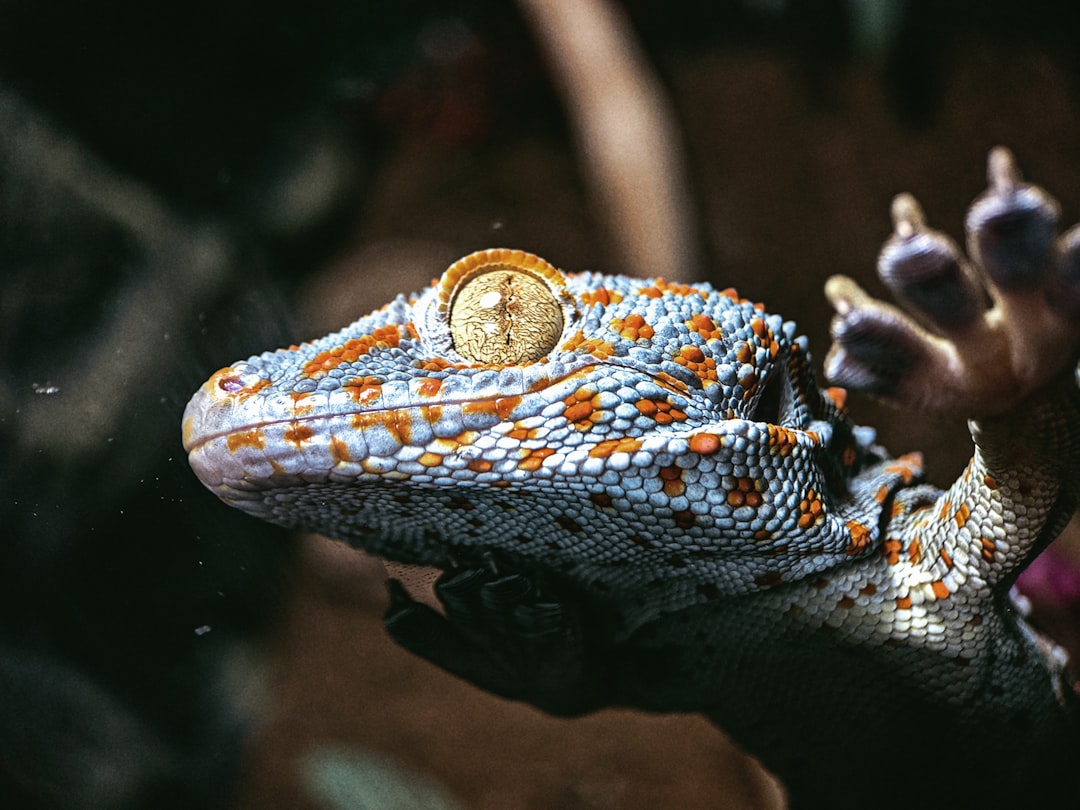
Photo by August Black on Unsplash
Why Weight Tracking Is the Best Early-Warning System for Gecko Health
Weight is objective. It does not depend on your ability to read gecko body language, recognize subtle color changes, or judge whether an animal is “acting right.” A number on a scale is a number. When that number trends downward across three consecutive weigh-ins, you have actionable information even if the animal still looks healthy and is eating normally.
Reptiles are expert at masking illness. Wild prey animals that display visible weakness attract predators, so the instinct to conceal symptoms runs deep. A gecko with early-stage parasites, a developing infection, or the onset of metabolic bone disease will often continue to eat and behave normally while quietly losing condition. By the time visible symptoms appear - lethargy, a sunken caudal base, reduced grip strength, or dull coloration - the animal has typically been unwell for some time and the treatment window has narrowed.
The weight thresholds that experienced reptile keepers and reptile veterinarians use as monitoring guidelines:
- A 5% weight loss from a documented baseline in an adult gecko warrants increased monitoring frequency and a thorough husbandry audit.
- A 10% weight loss from baseline is a signal to contact a reptile-experienced veterinarian, even if behavior appears normal.
- Failure to gain weight in a hatchling over a two-week period is abnormal and should prompt an immediate feeding and husbandry review.
These thresholds represent working guidelines widely referenced in the keeper community and broadly consistent with the health monitoring approach supported by the Association of Reptilian and Amphibian Veterinarians (ARAV), the primary professional body for reptile and amphibian veterinary medicine.
To apply these thresholds, you need a documented baseline. Weigh your gecko at the same time relative to its feeding schedule - consistently before a meal, not after - and at the same general time of day. Crested geckos are crepuscular and most active in the evening, so a late-afternoon weigh-in before the nightly misting is a natural routine point. Record every measurement with the date. A spreadsheet, a notes app, or a handwritten notebook all work. Consistency in timing matters far more than the recording tool you choose.
For expected growth benchmarks to pair with your scale data, the guidance in our Baby Crested Gecko Care post covers weight ranges at each development stage worth comparing against your logged readings.
What to Look for in a Gram Scale for Weighing Geckos and Reptiles
Not every affordable scale is adequate for reptile health monitoring. These are the specifications that actually determine whether a scale is useful:
Readability (precision)
Readability is the smallest increment the scale can display. For adult geckos and small lizards above 20g, a readability of 0.1g is the practical minimum. For juveniles between 5g and 20g, 0.01g is noticeably more useful. For hatchlings and small species under 5g, 0.01g is the functional floor and 0.001g (milligram precision) is ideal. A milligram-precision scale can detect a 5% weight loss in a 2g hatchling; a 0.1g scale cannot resolve that change at all and will display the same reading before and after the loss.
Capacity
Capacity caps the maximum weight the scale can measure. For most crested gecko and day gecko keepers, a 200-500g maximum is more than enough. If you also keep larger lizards, juvenile ball pythons, or blue-tongue skinks, aim for 1000g or more. The tradeoff is real: high-capacity scales typically sacrifice readability. A scale rated for 5kg will often display only to 1g, which is too coarse for monitoring small geckos accurately.
Tare function
The tare function is non-negotiable. You will never weigh a gecko directly on a scale platform. You will always use a small container - a deli cup, a measuring cup, a small plastic tub - tare its weight to zero, then read only the animal’s weight. Without tare, every measurement requires you to subtract the container weight manually, which introduces consistent opportunities for error. Every scale reviewed here has a reliable tare function.
Auto-off behavior
Many consumer scales auto-off after 60-120 seconds to conserve battery. This is genuinely frustrating when a gecko is exploring a container and the scale goes dark before you get a stable reading. Look for scales where the auto-off interval can be extended or disabled. If it cannot be configured, plan to work quickly and have the container already on the platform before the gecko is in your hands.
Platform size and stability
A wide, flat platform is more practical than a small or recessed one. A deli cup placed off-center on a narrow platform will rock and produce erratic readings. Espresso and drip-coffee scales are designed to accommodate wide, heavy vessels - part of why they adapt so well to the weighing-in-a-cup method gecko keepers rely on.
Calibration access
All electronic scales drift over time, particularly after being dropped, moved repeatedly, or stored in humid conditions. The NIST Office of Weights and Measures provides guidance on proper scale calibration practices that apply to any precision weighing application. A scale that ships with calibration weights, or that accepts standard NIST-traceable calibration weights, gives you an independent way to verify accuracy rather than simply trusting the display.
The Best Gram Scales for Weighing Geckos: Three Picks for Different Needs
The three scales below cover the full range of gecko life stages and species sizes. Here is how they compare at a glance before diving into the specifics of each:
| Scale | Readability | Capacity | Best For |
|---|---|---|---|
| AWS Gemini-20 | 0.001g | 20g | Hatchlings, micro species |
| Maestri House S2 | 0.1g | — | Adult geckos, daily monitoring |
| Hario V60 Drip Scale | — | — | Mixed collections, wide platform |
AWS Gemini-20: The Right Tool for Hatchlings and Micro Species
The AWS Gemini-20 Milligram Scale is the correct choice for any gecko under approximately 10g. Its 0.001g readability means you can detect very small weight changes in hatchlings — the kind of resolution that makes early failure-to-thrive visible before it becomes a crisis. The 20g maximum capacity is a hard ceiling, making this a single-use-case tool: very small animals only. It ships with calibration weights, tweezers, and a tray, which covers the calibration requirement out of the box. Once a juvenile gecko approaches the capacity limit, transition to a higher-capacity scale before you reach the measurement ceiling.
Maestri House S2: The Daily-Driver for Most Adult Gecko Keepers
The Maestri House S2 Espresso Coffee Scale offers 0.1g precision, which is appropriate for adult crested geckos, adult leopard geckos, gargoyle geckos, and most other small-to-medium lizard species. The integrated timer is not relevant for gecko weighing. At 0.1g resolution, a 50g adult gecko needs to lose approximately 2.5g before a 5% decline shows clearly — which is why the Maestri S2 is not the right tool for juveniles under 20g, where that same threshold translates to a weight change the scale may not display accurately.
Hario V60 Drip Scale: A Solid Option for Mixed Collections
The Hario V60 Drip Scale is appropriate for adult geckos and slightly larger reptiles, making it a practical choice for mixed collections, like the Maestri S2. If you keep a mixed collection including both small geckos and slightly larger species, this scale is a solid option at the adult end of the weight range. For any animal under 10g, the AWS Gemini-20 remains the correct tool regardless of which adult-sized scale you choose.
Matching Your Gram Scale to Your Gecko’s Life Stage and Species
Scale selection should follow the animal’s current weight, not the species it will eventually become. A crested gecko hatchling at 1.8g and a breeding-weight adult crested gecko at 58g need different tools even though they are the same species. Buying only one scale and using it across all life stages is a common and avoidable error.
Hatchlings and adult micro species (under 5g)
This group includes crested gecko hatchlings in the first four to eight weeks, mourning gecko adults (which max out around 2-3g), day gecko hatchlings, and most other New Caledonian species at their smallest life stage. Milligram precision at 0.001g is the correct standard for animals this size. Of the three scales reviewed here, only the AWS Gemini-20 meets this requirement. Its 20g ceiling is not a limitation for these animals - none of them will exceed it.
Juveniles (5-20g)
Growing crested geckos at the three-to-six month mark, juvenile leopard geckos, and many smaller gecko species at adult size fall into this intermediate bracket. A 0.01g scale at 100–300g capacity would be ideal for this group. Note a gap in the current selection: the AWS Gemini-20 has the precision but the capacity ceiling cuts off at 20g, while the Maestri’s 0.1g readability and the Hario’s readability each fall short of the 0.01g floor this weight class requires. Keepers with significant numbers of animals in the 5-20g range may benefit from a separate 0.01g jewelry or lab scale to bridge this middle tier.
Established adults (above 20g)
Most adult geckos in common keeping — crested geckos, leopard geckos, gargoyle geckos, chahoua geckos, and similar species — sit comfortably in the range where the Maestri House S2 or Hario V60 Drip Scale is appropriate. The Maestri delivers 0.1g readability. For adult ball pythons or blue-tongue skinks pushing 500g or more, confirm the specific capacity of whichever scale you purchase before relying on it.
How to Weigh a Gecko Without Causing Stress
Weighing should take under two minutes and cause minimal disruption. A consistent technique reduces stress over repeated sessions as the animal begins to recognize the routine.
-
Set up the container before the gecko leaves the enclosure. Place your deli cup or small container on the scale platform, press tare, and confirm the display reads 0.0g. The scale should be fully ready before the gecko is in your hands.
-
Choose the right time of day. For crepuscular species like crested geckos, early evening aligns with their natural activity window. An animal that is already active and alert settles into a container more readily than one pulled from deep sleep mid-afternoon.
-
Approach from the side, not from above. An overhead approach mimics the predator-threat profile for most gecko species. Allow the gecko to walk onto your hand from the side, or scoop gently from below, before lowering it into the container.
-
Wait for a momentary pause in movement. Most geckos explore for 15-30 seconds, then briefly stop to assess the environment. That pause is your reading window. A moving gecko produces an unstable, oscillating reading that cannot be accurately recorded.
-
Record the weight immediately, before the gecko goes back. Write down the number as soon as you have a stable reading. Trying to remember the figure after the gecko is back in the enclosure is unreliable, especially during busy care sessions.
-
Return the gecko promptly and note any stress indicators. A gecko that significantly darkens in color (fires), gapes repeatedly, or drops its tail during handling is experiencing meaningful stress. Keep sessions short and build the routine gradually. Most animals show reduced stress responses after several consistent weigh-in sessions over a few weeks.
An opaque container is worth trying for animals that are consistently unsettled. Many nocturnal and crepuscular species calm more quickly when they cannot see out of the container.
Common Mistakes When Weighing Geckos and Small Reptiles
Forgetting to tare the container
The single most frequent error is recording the combined weight of gecko plus container as the animal’s weight. If the gecko goes in before you press tare, weigh the empty container separately in the same session and subtract - but this manual step is error-prone. Build the habit: container on the platform, press tare, confirm zero, then gecko goes in. Every time without exception.
Using a scale with inadequate precision for the animal’s size
A 0.1g scale on a 2g hatchling is functionally useless for health monitoring. The gecko could lose 20% of its body weight - 0.4g - and that loss may round to zero on the display due to the scale’s resolution limit. Match scale precision to animal weight class. For anything under 10g, 0.001g to 0.01g precision is the appropriate standard. The AWS Gemini-20 is the appropriate choice for this size class.
Weighing at inconsistent times relative to feeding
A gecko that has just consumed a full serving of crested gecko diet or a meal of feeder insects may weigh meaningfully more than the same gecko 18 hours post-meal. If you weigh sometimes before feeding and sometimes after, your trend data becomes noise rather than signal. Choose a consistent timing reference - before the first food offering of the week is a common standard - and apply it every session.
Skipping routine calibration checks
Scales drift, particularly after being dropped, transported repeatedly, or stored in humid environments. A scale that read accurately at purchase may be off by 0.5-2g after several months of use. For a scale you rely on to detect a 5% weight change in a small animal, that kind of drift is significant. Monthly calibration checks are a reasonable interval. The AWS Gemini-20 ships with its own calibration weights. For the Maestri S2 or Hario V60, use an appropriate calibration weight covering the relevant range to verify accuracy.
Storing the scale near the enclosure
Ambient humidity in gecko enclosures - particularly bioactive setups running at 70-80% relative humidity - can degrade scale electronics and affect load cell accuracy over time. Store your scale in a dry location between sessions. Do not leave it permanently on top of a vivarium or in a consistently humid room.
Recording a reading from a moving animal
An active gecko produces an oscillating display that shifts by 2-5g in real time. Recording any number from that oscillation is not a valid measurement. The only valid reading is a stable number held for at least two seconds. If the gecko will not pause, wait it out rather than recording an approximation.
Frequently Asked Questions About Gram Scales for Reptiles
How often should I weigh my crested gecko?
For hatchlings under 5g, weekly weighing is appropriate because growth is rapid and failure-to-thrive becomes detectable quickly at this stage. Juveniles between 5g and 25g benefit from bi-weekly weigh-ins. Established adults in a stable setup can be monitored monthly, though every two weeks gives you a more reliable trend line. If you notice a gecko looking thinner, refusing food, or spending unusual time on the enclosure floor, weigh immediately rather than waiting for the scheduled interval. Consistent timing relative to feeding matters more than strict calendar adherence - what you are building is a trend, not a single data point.
Can I use a kitchen food scale for weighing reptiles?
Most kitchen food scales display in 1g increments, which is too coarse for any gecko under about 50g and completely useless for hatchlings. Some kitchen scales do display to 0.1g - check your specific model’s display resolution before assuming it is inadequate. If your existing kitchen scale reads to 0.1g and has a responsive tare function, it may serve for adult crested geckos and similar-sized animals. For juveniles, hatchlings, or any animal where a 5% weight change is clinically meaningful, a dedicated scale with 0.01g or better resolution is the correct tool. The scales reviewed in this post cost comparably to a quality kitchen scale, which weakens the argument for making do with inadequate precision.
Do I need to calibrate my scale, and how often?
Yes, calibration matters. Electronic scales use a load cell that can drift after drops, repeated transport, humidity exposure, and ordinary use over time. A scale that read accurately when new may display readings 0.5-2g off after months of use — a significant error when tracking a small hatchling. Monthly calibration checks are a reasonable standard for scales used in health monitoring. You need calibration weights that match your scale’s capacity range. The AWS Gemini-20 ships with its own set. For the Maestri S2 or Hario V60, use an appropriate calibration weight to confirm readings are accurate across the gecko weight range.
What if my gecko will not stay still on the scale?
An opaque container helps significantly. A gecko placed in an opaque deli cup that cannot see out tends to settle faster than one in clear plastic - darkness triggers a calming response in many nocturnal and crepuscular species. If the gecko remains active, place a small piece of paper towel or a few pieces of cork bark in the bottom of the container to give the animal texture to investigate. Weighing during the gecko’s natural active period in the early evening also reduces resistance. If frantic behavior persists across multiple weigh-in sessions over several weeks, that persistent stress response may itself warrant attention - see our guide on Reptile Veterinary Care Finding A Herp Vet On A Budget for how to locate appropriate professional support.
Conclusion
A gram scale is not optional equipment for gecko keeping. It is the most reliable health monitoring tool you have between scheduled veterinary visits. The AWS Gemini-20 handles hatchlings and micro-specimens with the milligram precision the task genuinely demands. The Maestri House S2 is the practical daily-use choice for most keepers managing adult geckos. The Hario V60 Drip Scale suits mixed collections and keepers who want a dedicated precision scale at the adult end of the weight range.
Start by establishing a baseline for every animal in your collection: weigh once per week for a month to understand what normal looks like for each individual, then shift to your maintenance schedule. Three to four data points per animal is enough to make meaningful deviations obvious. Pick a scale appropriate to your animals’ size, start logging, and let the numbers tell you what visual inspection consistently misses.
If this guide helped you narrow down your choice, bookmark it for reference and drop a comment with the species you are tracking - it helps shape future guides on reptile health monitoring tools.