Crested gecko body condition score: underweight, healthy, and overweight examples
This post contains affiliate links. As an Amazon Associate, I earn from qualifying purchases at no extra cost to you.
A crested gecko’s weight tells you something, but not everything. Two geckos of the same sex and age can weigh identical gram-for-gram and be in completely different condition - one healthy, one quietly heading toward metabolic trouble. What matters more than raw weight is how that mass is distributed across the animal’s frame: how prominent the spine is, whether the hip bones are visible, how the tail base looks, and whether the flanks are concave or rounded.
Body condition scoring is the systematic approach vets and experienced keepers use to answer those questions. It translates visual and tactile assessments into a numeric scale so you can track changes over time, communicate clearly with a reptile vet, and catch problems before they become emergencies. Crested geckos are small enough that shifts of a single gram or two can signal meaningful changes in condition, but without a framework for interpreting what you see, those numbers float without context.
This guide walks you through a practical 5-point crested gecko body condition score system, describes what underweight, healthy, and overweight examples actually look like on a real animal, and explains what to do at each stage. By the end, you’ll know what to look for, how to measure it, and how to act on what you find.
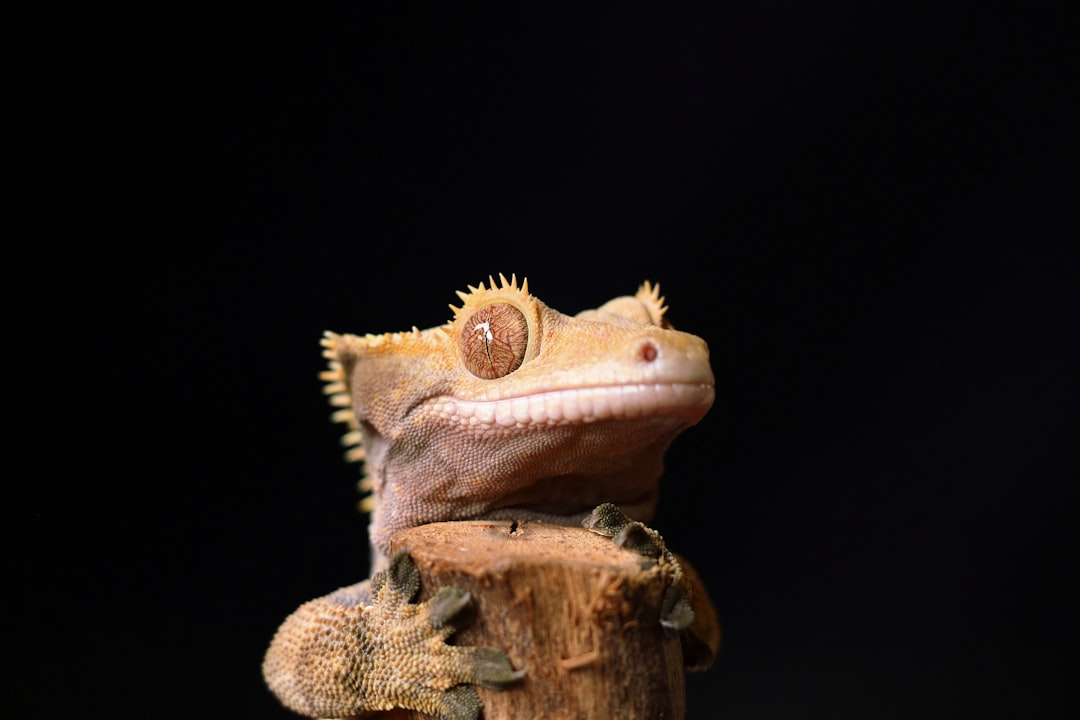
Photo by Pierre Bamin on Unsplash
What Is a Crested Gecko Body Condition Score?
Body condition scoring is a standardized method of evaluating an animal’s fat reserves and muscle mass relative to its skeletal frame. The system originated in livestock management and has since been adapted for companion animals, including reptiles. For crested geckos, a 5-point scale is the most practical format: 1 represents severely emaciated, 3 represents ideal, and 5 represents obese.
Unlike weight alone, a body condition score accounts for the gecko’s individual build. A larger-framed male naturally weighs more than a smaller female at the same age, but both can sit comfortably at a BCS of 3. Conversely, a gecko that has been overfed on high-sugar crested gecko diet (CGD) may fall within the typical weight range for its size while still carrying excessive fat deposits that affect long-term liver health. Weight without visual context routinely masks both problems.
The primary assessment sites on a crested gecko are:
- Dorsal spine and lateral processes - vertebrae that become visible as a raised ridge when fat reserves drop below healthy levels
- Hip bones (pelvic crests) - palpable but not visually prominent in a healthy animal; angular and visible in underweight geckos
- Tail base - narrows disproportionately in underweight animals and develops a visible fat pad in overweight ones
- Lateral flanks - healthy geckos show a slightly convex profile from above; underweight geckos show concave hollowing; overweight geckos appear cylindrical
- Temporal fossa - the shallow depression behind the eye socket, which deepens noticeably in both dehydrated and underweight animals
The Association of Reptilian and Amphibian Veterinarians supports consistent body condition assessment as part of routine health monitoring for captive reptiles. Monthly BCS evaluations combined with regular weight tracking give you two complementary data streams, and the combination is far more useful than either metric in isolation.
How to Assess Crested Gecko Body Condition at Home
You don’t need specialized equipment to score your gecko, but accurate tools make the process repeatable and meaningful. For weight, a scale with at least 1-gram resolution is the minimum; 0.1-gram precision is better for juveniles under 10 grams. The Escali Primo Digital Food Scale is designed for precise weight measuring; placing the gecko in a small deli cup on the platform and zeroing out the cup’s weight first gives you a clean reading of the gecko alone.
For snout-vent length (SVL) measurements, a flexible tape measure allows you to follow the contour of the gecko’s body from the tip of the snout to the cloaca. Pairing SVL with weight gives you a weight-to-length ratio that means considerably more than either figure alone - a 45mm SVL juvenile at 4 grams is in very different condition from a 75mm adult at 4 grams. The GDMINLO Soft Tape Measure is flexible enough to conform to a gecko’s profile and has centimeter markings on the reverse side, which is the standard unit used in herpetological records.
Step-by-Step Body Condition Assessment
-
Weigh the gecko in a secure container. Use a small deli cup with ventilation holes. Tare the scale, place the gecko inside, and record the weight in grams. Always weigh at the same time of day - ideally in the evening before feeding - to control for digestive variation across sessions.
-
Measure snout-vent length. With the gecko resting on a flat surface or your forearm, gently extend it and measure from the tip of the snout to the cloaca. Record in millimeters. Crested geckos can drop their tails voluntarily, so SVL is the stable long-term metric; never include tail length in this measurement.
-
Observe the dorsal spine. Hold the gecko in lateral view or observe from above while it rests on a branch or cork round. A healthy gecko has a smooth dorsal line. If the spine appears as a visible ridge, or individual vertebrae are distinct beneath the skin, condition has declined.
-
Palpate the hip bones. With clean, dry hands, gently run a fingertip along the posterior flanks just anterior to the rear legs. In a healthy gecko, you should feel the pelvic crests as slight protrusions beneath the skin. They should not be visually obvious or feel sharp under light touch pressure.
-
Evaluate the flanks and tail base. View the gecko from above and from the front. Concave flanks indicate underweight condition; a gently rounded profile is healthy; a cylindrical or bulging appearance suggests excess fat accumulation. Check the tail base for the characteristic fat pad - its presence and relative size are early indicators of which direction condition is trending.
-
Assign a score and log it. Use the 5-point table below. Record the BCS alongside the weight in grams and SVL in millimeters. Track monthly for adults; every one to two weeks for juveniles or any animal in active recovery.
Crested Gecko Body Condition Score Reference Table
| BCS | Category | Spine and Hip Visibility | Flank Profile | Tail Base | Recommended Action |
|---|---|---|---|---|---|
| 1 | Severely emaciated | Spine sharply raised; hips angular and visually prominent | Deeply concave | Severely narrowed, rodlike | Veterinary evaluation immediately |
| 2 | Underweight | Spine visible as a ridge; hips slightly visible | Mildly concave | Narrow; minimal fat padding present | Increase feeding frequency; audit husbandry |
| 3 | Ideal | Spine not visible; hips palpable but not visible | Gently convex | Modest fat pad, rounded | Maintain current diet and schedule |
| 4 | Overweight | Spine not palpable without pressure; hips obscured | Noticeably rounded or cylindrical | Visible fat deposit from above | Reduce CGD portion; increase movement opportunities |
| 5 | Obese | Spine buried; hips not palpable | Bulging; may restrict locomotion | Large, distinct fat deposit | Veterinary consultation; major diet revision |
Underweight Crested Geckos: Signs and What to Do
A BCS of 1 or 2 is a genuine welfare concern, not a situation where watchful waiting is the right move. The most obvious visual sign in an underweight crested gecko is a raised dorsal spine - the vertebrae appear as a ridge or as distinct individual bumps running along the back. In more severe cases, the hip bones create sharp angles just above the rear legs, and the flanks show concave hollowing when viewed from above.
The temporal fossa, the shallow depression just behind the eye socket, deepens noticeably in underweight animals. This is a reliable early indicator and typically appears before the spine becomes a visible feature. Catching a gecko at this stage, before hip angles develop, gives you the best chance of recovery through straightforward feeding adjustments rather than veterinary intervention.
Common causes of low BCS in crested geckos include insufficient feeding frequency, temperatures running too warm (which elevates metabolic rate and increases energy expenditure beyond what the gecko is consuming), internal parasites, chronic stress from inappropriate housing or cohabitation, and illness or injury that suppresses normal feeding behavior. If two geckos share an enclosure and one is thin, competition at the food dish is a likely factor even if you never witness it occurring directly.
For a BCS 2 gecko without other symptoms, the practical approach is to increase feeding from two to four nights per week, verify temperatures are within the 72-78°F range that crested geckos prefer, and confirm the offered CGD is actually being consumed overnight rather than drying out untouched. A complete gecko diet encourages feeding in geckos with reduced appetite. Pangea Fruit Mix Watermelon Complete Gecko Diet is a complete crested gecko diet; offering it consistently helps rule out diet quality as a factor in poor condition.
A BCS 1 gecko needs veterinary evaluation before additional feeding adjustments. Severely emaciated animals frequently have underlying illness that explains the weight loss, and increasing feeding volume without addressing the cause is unlikely to produce lasting improvement. Fecal parasitology and a general physical exam are the appropriate starting point.
Healthy Crested Gecko Body Condition Score: What You’re Looking For
A BCS 3 gecko looks muscular but not bloated. From above, the body tapers gently from shoulders to hips, with flanks that are slightly rounded without bulging outward. The tail base carries a modest fat pad that fills the area around the base of the tail without creating a distinct swelling. The spine is simply not a visual feature of the animal - it lies beneath soft tissue and isn’t apparent unless you’re pressing to find it.
Weight benchmarks by life stage
These ranges reflect typical figures documented across keeper communities and referenced in reptile husbandry literature. Individual variation based on lineage, morph, and feeding history is significant:
- Hatchlings (0-3 months): 1.5-3 grams
- Juveniles (3-6 months): 3-7 grams
- Sub-adults (6-12 months): 7-20 grams
- Adults (12+ months): 25-65 grams, with most females running toward the upper end due to reproductive investment
These ranges have substantial overlap and are not diagnostic on their own. A 25-gram gecko could be a healthy adult male or a slightly underweight adult female, and only SVL context clarifies which. VCA Animal Hospitals notes that regular weight tracking over time, rather than single-point measurements, is the most actionable monitoring approach for small reptile species in captivity. A trend line across months tells you whether your gecko is stable, gaining, or losing - which is the actual information you need.
A healthy gecko should also be behaviorally consistent: active at dusk and through the night hours, alert when approached, and showing regular interest in food. Body condition exists in context alongside behavior and husbandry. A gecko scoring BCS 3 but remaining lethargic during its normal active period warrants attention regardless of what the scale says.
Overweight Crested Geckos: Risks and How to Course-Correct
Overweight crested geckos are less common than underweight ones in most keeper setups, but they do occur - particularly when geckos receive high-sugar CGDs as the sole diet without insect supplementation, or when enclosure design offers little incentive for climbing and hunting behavior. A sedentary gecko in a minimally furnished enclosure receiving nightly CGD deposits is the typical setup for gradual overconditioning.
The primary health risk in genuinely obese crested geckos is hepatic lipidosis, or fatty liver disease. Fat accumulation in the liver impairs metabolic function, and in small reptiles this condition can become life-threatening over time. External signs of an overweight gecko include flanks that appear cylindrical when viewed from above, a visually distinct fat pad at the tail base, and a spine that remains completely buried even under light palpation pressure. In severely obese animals, locomotion may appear labored compared to the fluid climbing behavior of a gecko in healthy condition.
The correction for a BCS 4 gecko is measured rather than abrupt:
- Reduce CGD offerings from nightly to every other night, or reduce portion size by roughly half without changing frequency
- Introduce live feeder insects such as dubia roaches or appropriately sized crickets in place of some CGD volume; insects provide protein without the simple sugars present in many CGDs and promote active hunting behavior that increases caloric expenditure
- Review the enclosure for climbing opportunities that support natural locomotion patterns; the Crested Gecko Enrichment Climbing Setup guide covers practical ways to structure the space for more movement
- Prioritize CGDs with a balanced macronutrient profile over fruit-forward formulations that emphasize palatability over nutritional completeness
A BCS 5 gecko with confirmed obesity and reduced mobility warrants a veterinary visit. Hepatic lipidosis in reptiles is a clinical diagnosis, and recovery timelines are long.
Common Mistakes When Scoring Crested Gecko Body Condition
Relying only on weight. Weight is one variable in a multi-variable picture. A gecko that has consumed water heavily before weigh-in, or one that is gravid and carrying eggs, will show a temporarily elevated number that has nothing to do with fat reserves or muscle condition. Score the animal visually at every weigh-in session, not just occasionally.
Confusing dehydration with being underweight. A dehydrated crested gecko also develops a sunken temporal fossa and can appear thinner than it actually is. Before concluding a gecko is underconditioned, verify that enclosure humidity is reaching the 70-80% peak typical during the evening mist cycle. Dehydration-related hollowing can resolve within days once humidity is corrected - review the Crested Gecko Humidity and Temperature Management Guide for full wet-dry cycling protocols.
Scoring too infrequently. Monthly weigh-ins are the practical minimum for adults. Juveniles should be weighed every one to two weeks because their growth rate is fast enough that a problem can develop or self-correct within a single month. A juvenile losing ground between monthly checks may have dropped meaningful body mass before you notice the trend.
Over-interpreting a single data point. A gecko that weighed 28 grams last month and 26 grams this month has not necessarily lost two grams of body tissue. Variation from hydration state, time of day, and food passage can account for that difference entirely. Look for trends across three or more sessions before adjusting management.
Scoring during a retained shed. Geckos typically reduce feeding and activity around a difficult shed event. Assessing body condition mid-shed can produce misleading results. Resolve the shed situation first, then reassess once the gecko has returned to normal feeding.
Ignoring the tail base. The tail base fat pad is one of the fastest-responding indicators - it fills in as condition improves and depletes before the spine becomes visible as condition declines. Including it in every assessment gives you earlier warning in both directions and makes your scores more sensitive to real change.
Frequently Asked Questions
How often should I score my crested gecko’s body condition?
Monthly is the practical minimum for adult crested geckos, and every two weeks is better for juveniles under 10 grams. Each session should pair a weight measurement with a visual BCS rather than relying on the scale reading alone. Keep a simple log - a spreadsheet or a notebook, format doesn’t matter - with the date, weight in grams, SVL in millimeters, BCS score, and any relevant notes such as recent shedding events or husbandry changes. Trends across three or more data points give you actionable information. A single weigh-in tells you where the gecko is today; a log tells you which direction it’s heading and how fast.
My crested gecko is eating regularly but still appears thin. What’s wrong?
A gecko consuming CGD consistently but failing to maintain or gain condition should prompt a veterinary visit to rule out internal parasites. Cryptosporidiosis is the most serious concern - it causes chronic weight loss despite apparent feeding and has no reliable treatment in reptiles. Pinworm infections are far more common and are treatable with appropriate antiparasitic medication. Other possibilities include temperatures outside the 72-78°F preferred range driving elevated metabolism, chronic stress from enclosure problems or excessive handling, or a CGD that doesn’t meet the gecko’s nutritional needs. Switching to a complete gecko diet like Pangea Fruit Mix Watermelon Complete Gecko Diet can eliminate diet quality as a variable before assuming a health issue is the driver.
What’s a normal weight for an adult crested gecko?
Most adult crested geckos fall between 25 and 65 grams, with females typically toward the upper end of that range due to reproductive demands. That said, weight without SVL context says very little about actual condition. A 40-gram gecko with a 90mm SVL is in very different shape than a 40-gram gecko with a 70mm SVL. The most useful approach is to establish your individual gecko’s own baseline over several months of consistent records, then flag meaningful deviations from that baseline rather than comparing against published averages. Use a scale accurate to at least 1 gram - the Escali Primo Digital Food Scale works well for this - to ensure your longitudinal records are reliable enough to detect real change.
Can I apply a BCS system designed for dogs, cats, or livestock to my crested gecko?
Not directly. Mammalian BCS systems rely heavily on fat coverage over ribs, hip bones, and spinal processes in ways that partially overlap with reptile anatomy but diverge enough to produce misleading assessments. The 5-point system described here is adapted for the specific sites most informative on a crested gecko: dorsal spine visibility, pelvic crest prominence, temporal fossa depth, tail base fat pad, and lateral flank profile. When consulting a reptile-experienced vet, share your weight records and describe what you observe at each of these sites specifically. That information is far more useful to a herp vet than a BCS number borrowed from a feline or canine scoring framework.
Body condition scoring is one of the highest-value habits you can build as a crested gecko keeper. It costs nothing beyond a few minutes and a reliable kitchen scale, and it gives you early warning of problems that would otherwise go undetected until they become serious. Aim for a BCS of 3 - a gecko where the spine disappears from view, the hips are palpable but not angular, and the flanks are gently rounded. Weigh your gecko consistently, log the numbers, and assess the visual markers at every session.
If you’re seeing signs of BCS 1 or 2, act now rather than monitoring and hoping. If you’re at BCS 4 or 5, reduce CGD portions and add climbing enrichment before reaching for a vet referral. Most body condition problems in crested geckos respond well to husbandry adjustments - but only if you catch them early enough for those adjustments to make a meaningful difference.
If this guide helped you think more systematically about your gecko’s health, bookmark it as a reference for your next weigh-in session and share it with a fellow keeper who might not know what to look for yet.
Related Reading
- Crested Gecko Calcium Supplementation Guide - Nutrition fundamentals that pair directly with body condition monitoring
- Baby Crested Gecko Care - Weight and growth benchmarks for hatchlings and juveniles in context