Leopard Gecko Weight Chart and Body Condition by Age
This post contains affiliate links. As an Amazon Associate, I earn from qualifying purchases at no extra cost to you.
A gram scale and a consistent weighing schedule are two of the cheapest preventive tools in your leopard gecko care kit. Most early health problems - including cryptosporidiosis, internal parasites, and metabolic bone disease - reveal themselves as weight loss before any other visible symptom appears. By the time you can clearly see that a gecko is unwell, the animal may have already shed 15 to 20 percent of its body mass over weeks or months without obvious behavioral signals.
The problem is that most keepers have no reference point. They weigh their gecko, get a number, and have no idea whether 38 grams is healthy, worrying, or excellent for a 6-month-old female. Without context, a scale is just a device.
This guide provides that context. You will find a complete leopard gecko weight chart broken down by age and sex, a body condition scoring system you can apply by observation alone, a step-by-step weighing protocol, and clear criteria for when a reading warrants a vet call versus a feeding schedule adjustment.
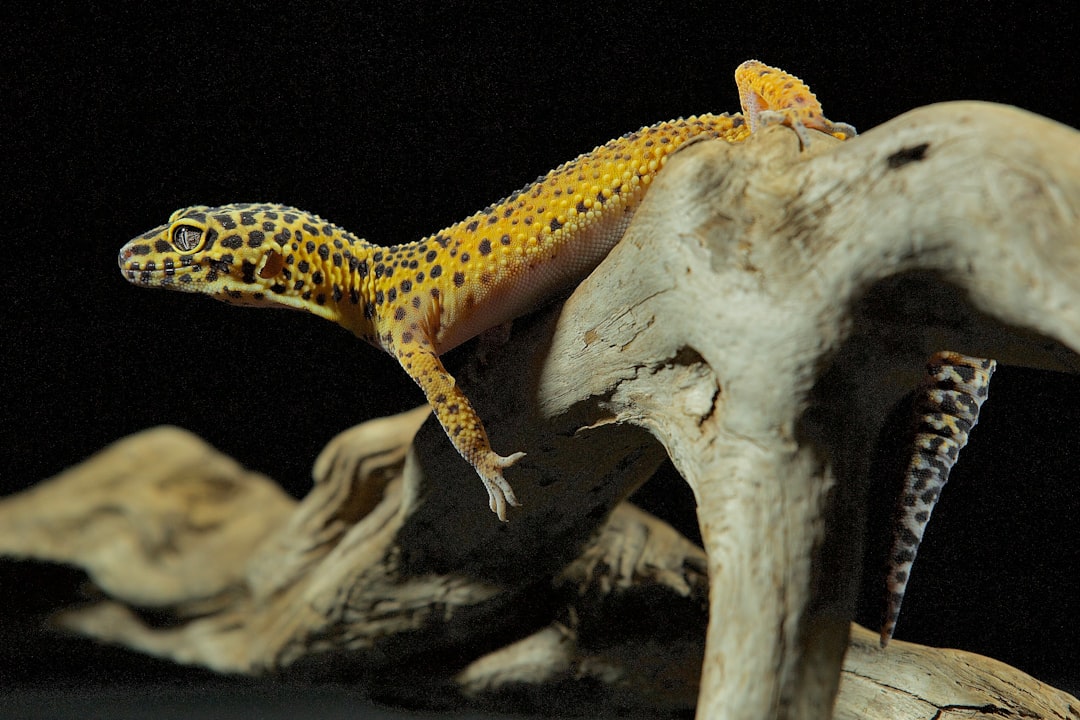
Photo by Andrey Tikhonovskiy on Unsplash
Why Regular Weighing Catches Leopard Gecko Health Problems Early
Leopard geckos are stoic animals. They mask signs of illness effectively and rarely display obvious distress until a condition has progressed well past the point where early intervention would have been straightforward. Weekly weighing converts a subjective visual impression into a documented, objective trend.
A gecko losing 2 to 3 grams per week consistently is telling you something meaningful even if it still eats, defecates normally, and moves around the enclosure with apparent energy. The conditions most commonly detected through weight trend monitoring include:
- Cryptosporidiosis: A protozoal infection that impairs nutrient absorption. Affected geckos eat but cannot convert food into body mass, producing the classic stick-tail presentation. Weight loss from crypto does not respond to feeding schedule changes alone.
- Internal parasites (pinworms, coccidia): These frequently cause stagnant growth in juveniles or slow, sustained decline in adults. A fecal test from a reptile vet is the only reliable diagnosis.
- Metabolic bone disease (MBD): Calcium and vitamin D3 deficiency suppress appetite and impair muscle function before skeletal deformity becomes visible. Weight loss often precedes a formal diagnosis by weeks.
- Egg binding in females: A gravid female unable to pass eggs typically stops eating. Tracking weight against a known feeding history reveals this pattern before the condition becomes dangerous.
- Sub-optimal enclosure temperatures: If the warm side drops below 88 to 90°F, digestion slows significantly. A gecko may continue eating but fails to metabolize food efficiently, producing stagnant or declining weight despite regular feeding.
Enclosure humidity also affects feeding behavior more than many keepers expect. Leopard geckos need ambient humidity in the 30 to 40 percent range, with a moist hide that spikes to 70 to 80 percent to support clean shedding. The Exo Terra Analog Hygrometer is an analog model that requires no batteries, keeping that number visible at a glance. The Association of Reptilian and Amphibian Veterinarians (ARAV) includes weight monitoring as a standard component of reptile husbandry, with weekly weighing as the accepted standard for leopard geckos and monthly trend reviews to identify patterns that single readings miss.
Leopard Gecko Weight Chart by Age and Sex
The table below represents typical weight ranges based on aggregated keeper records, herpetological care literature, and published veterinary care sheets. Individual variation is real: genetics, morph type, prey species, and feeding frequency all influence where a specific gecko falls. A gecko outside the typical range is not automatically unhealthy, but outliers deserve closer evaluation against body condition score.
| Age | Female (g) | Male (g) | Notes |
|---|---|---|---|
| Hatchling (0-4 weeks) | 2-5 | 2-5 | Sexes are identical in weight at hatch |
| 1 month | 5-10 | 5-10 | Rapid growth begins; daily feeding typical |
| 2 months | 10-18 | 10-18 | Growth accelerates with consistent feeding |
| 3 months | 14-22 | 14-22 | Tail fat storage begins to accumulate |
| 4 months | 18-27 | 18-28 | Males begin a slight size advantage |
| 5 months | 22-33 | 23-35 | Sexual dimorphism becomes more apparent |
| 6 months | 25-38 | 28-42 | Transition toward juvenile feeding schedule |
| 9 months | 33-50 | 38-58 | Sub-adult stage; growth rate moderates |
| 12 months | 38-60 | 45-70 | Near adult size for most individuals |
| 18 months | 40-65 | 50-80 | Adult weight reached for most geckos |
| 24 months+ | 45-70 | 55-90 | Stable adult range; monitor for trend changes |
Giant and super giant morphs run heavier at every bracket, with adult males sometimes exceeding 100 to 120 grams in good body condition. Females lose measurable weight during active egg production, which is physiologically normal provided weight rebounds after each clutch. A gecko in the lower third of the range is not necessarily underweight if its body condition score is appropriate for its frame.
The most useful metric is not any single reading but the direction of travel across several sessions. A gecko at 42 grams and holding steady is almost always healthier than one that was 58 grams eight weeks ago and is now 42 grams and still falling. Trend direction matters far more than any single snapshot. The Best Gram Scales For Weighing Geckos And Small Reptiles guide covers specific scale models for every life stage, including hatchlings where a 1-gram rounding error is unacceptable.
Monitoring Body Condition and Weight
Body condition scoring (BCS) adds the visual layer that weight numbers alone cannot provide. A gecko can sit within the typical weight range while actually being in poor condition, and a lean gecko can be perfectly healthy for its frame. BCS and weight work together as a two-part assessment more informative than either measure in isolation.
Veterinary guidance from VCA Animal Hospitals recommends assessing body condition at each routine handling session. Building a quick visual check into your weekly weighing routine costs almost no additional time.
The Three Anatomical Zones to Evaluate
Tail base width. The tail functions as a fat storage organ. A healthy gecko has a tail base roughly as wide as, or slightly narrower than, the widest point of its torso. A pencil-thin tail signals fat depletion regardless of what the scale reads. A tail dramatically wider than the body with a dimpled or irregular surface indicates excessive fat storage and the associated metabolic risks.
Lateral fat pads. Healthy geckos develop small, visible fat deposits along the sides of the neck and behind the jawline - plump and rounded but not pendulous or drooping. Absent or sunken fat pads indicate the gecko is drawing on stored reserves. Excessively large, sagging fat pads suggest chronic overfeeding.
Spine and hip bone visibility. On a gecko in appropriate condition, the spine is not a prominently visible raised ridge along the back. If you can clearly distinguish each individual vertebra from above, or if hip bones create sharp protrusions under the skin, the gecko is underweight by body condition even if its scale weight falls within range.
5-Point Body Condition Scale
- Score 1 (Emaciated): Spine clearly visible, hip bones protruding, tail is a thin rod with no discernible fat deposit. Requires veterinary attention and structured dietary reintroduction.
- Score 2 (Thin): Spine slightly visible, tail noticeably narrower than the torso, fat pads reduced or absent. Increase feeding frequency and audit all husbandry parameters.
- Score 3 (Ideal): Smooth topline with no visible vertebral ridge, tail proportional to body width, fat pads present and appropriately sized. This is the target for most adults.
- Score 4 (Overweight): Fat pads drooping or enlarged, tail wider than torso, movement may appear slightly labored. Reduce feeding frequency and review prey size.
- Score 5 (Obese): Dramatic fat deposits throughout body and tail, visible dimpling on the tail surface, difficulty moving normally. Dietary intervention and a vet consultation are appropriate.
The target for most adult leopard geckos is a stable BCS of 3. Breeding females naturally fluctuate between 2 and 4 across an active egg-laying season, which is expected provided it tracks alongside documented clutch production. Know your individual animal’s baseline and catch meaningful departures from it early.
How to Weigh Your Leopard Gecko Accurately
Inconsistent technique produces inconsistent data, which defeats the purpose of the exercise. A reliable process takes under two minutes per gecko and produces readings you can trust session over session.
-
Place a small plastic container on the scale and tare the display to zero. A deli cup, shallow tupperware, or small plastic bowl works well. Press the tare or zero button so the scale reads 0.0g before adding the gecko. This ensures you measure the gecko’s actual weight rather than the combined weight of animal and container.
-
Transfer the gecko to the container calmly and without chasing. Approach from the side, scoop gently from beneath, and lower the gecko into the container. A stressed gecko is more likely to thrash, making a stable reading difficult and occasionally triggering tail autotomy in a defensive individual. If the gecko is reactive, pause and return in a few minutes rather than forcing the process.
-
Wait for the display to stabilize before reading it. Leopard geckos shift their weight constantly on a scale. Wait for a brief moment of relative stillness and record the reading. If your scale has a hold function, use it. Record weight to the nearest 0.1 gram - rounding to whole grams loses too much precision for juveniles under 20 grams.
-
Log the weight with the date and relevant observations. A spreadsheet or notes app with columns for date, weight, feeding notes, shed status, and behavioral changes creates a health record that becomes genuinely valuable over months and is far more useful to a reptile vet than any verbal account from memory.
-
Return the gecko to the enclosure and offer food if it is a scheduled feeding night. Always weigh before feeding, not after. Gut contents add variable, unpredictable weight that corrupts trend data. Weigh at the same time of day each session - ideally early evening when leopard geckos are naturally alert - to reduce variation from circadian digestive activity.
Weigh juveniles under 6 months weekly without exception. Adults in stable health can be weighed every 1 to 2 weeks with a monthly trend review. Any gecko that is ill, recovering, or showing unexplained weight loss should be weighed every 3 to 4 days until the trend clearly stabilizes.
Supplements and Leopard Gecko Weight: Closing the Nutritional Gaps
Supplementation failures are one of the most common hidden causes of poor body condition in leopard geckos kept at otherwise appropriate weights. A gecko eating adequate quantities of live prey but receiving incorrect or inconsistent supplementation can be calorie-sufficient while remaining nutritionally deficient. Deficiencies in calcium, vitamin D3, and vitamin A impair growth, fat storage, bone mineralization, and immune function without producing obvious short-term symptoms.
Calcium without D3, applied at most feedings. Calcium powder offsets the inverse calcium-to-phosphorus ratio found in most live prey. Crickets, mealworms, and dubia roaches all carry significantly more phosphorus than calcium; without calcium dusting, this imbalance pulls calcium from bone tissue over time, contributing to metabolic bone disease. Fluker’s Reptile Calcium Supplement Without Vitamin D3 is a reptile calcium supplement widely used for this purpose. The D3-free formulation is appropriate for geckos without full-spectrum UVB lighting, which describes most leopard gecko enclosures.
A complete reptile multivitamin with D3, used once or twice per week. Leopard geckos without UVB access cannot synthesize vitamin D3 endogenously and depend on dietary D3 from their supplement rotation. Zoo Med Reptivite with Vitamin D3 provides a reptile multivitamin with D3 for geckos not receiving UVB. Alternating this with plain calcium powder prevents D3 accumulation from daily over-supplementation while keeping both nutrients consistently available across the week.
Gut loading feeder insects for 24 to 48 hours before offering them - using dark leafy greens, sweet potato, or a commercial gut-load substrate - meaningfully increases the nutritional value of each prey item. A gecko eating well-supplemented, gut-loaded prey grows more efficiently and maintains better body condition than one eating nutritionally hollow insects of the same size and quantity. If a gecko is underweight or stagnant despite reasonable feeding, audit supplement protocol and gut-load practices first before pursuing any veterinary diagnosis. The Crested Gecko Calcium Supplementation Guide covers the underlying supplementation rationale in detail.
Common Mistakes When Tracking Leopard Gecko Weight
Weighing After Feeding Instead of Before
This is the single most common source of confusing weight data. A juvenile weighs noticeably more immediately after eating a full meal than it did an hour before. If you weigh before feeding one week and after the next, your trend line becomes noise rather than signal. Always weigh before offering food, and weigh at a consistent time of day each session.
Using an Imprecise Scale
A kitchen scale displaying weight to the nearest gram is inadequate for hatchlings and juveniles under 15 grams. A 1-gram rounding error represents 10 to 20 percent of a 5 to 8 gram gecko’s body mass, making it impossible to detect meaningful early weight loss. Digital scales accurate to 0.1 grams - widely available as jewelry or pocket scales - are the appropriate tool at any life stage. Rounding to whole grams only becomes acceptable once an adult gecko exceeds roughly 50 grams.
Reacting to a Single Low Reading Instead of a Trend
Weight fluctuates from session to session based on hydration status, gut fill, shed timing, ambient temperature, and time of day. A single reading below the chart range is not a crisis in isolation. Two or three consecutive readings showing a downward trajectory are the trigger to investigate. A gecko whose weight has been stable for months before a single low reading most likely had an empty gut at weigh time and will read normally the following week.
Ignoring Breeding Season Weight Loss in Females
Breeding females can lose 10 to 15 grams across an active egg-laying season, and that loss is physiologically expected. The correct approach is to increase feeding frequency during the active breeding period, provide a dedicated calcium dish in the enclosure at all times so the female can self-regulate her intake, and monitor weights closely to ensure the loss stays within the expected seasonal range. A female who continues declining significantly beyond normal post-clutch recovery may be egg-bound or dealing with a secondary condition that warrants veterinary evaluation.
Attributing All Weight Loss to Husbandry Before Ruling Out Disease
Cryptosporidiosis presents almost exactly like a husbandry failure - an affected gecko eats, moves normally, and appears to have adequate care. The defining pattern is weight loss despite consistent eating, with a progressively thinning tail and no response to husbandry improvements over 4 to 6 weeks. If documented corrections do not produce weight stabilization within that window, a fecal test from a reptile veterinarian is the next step. Crypto cannot be resolved through feeding frequency changes alone, and delaying that diagnosis wastes critical time.
Skipping Weigh-Ins During Shedding Periods
Many keepers avoid handling during a shed cycle to reduce stress, which is appropriate, but skipping the weight session entirely removes data points that can reveal consistent patterns. A gecko losing disproportionate weight during every shed may be expending excess energy on incomplete shedding due to chronically low humidity in the moist hide. The shed skin itself is nearly weightless, so a notable weight drop during each shed is worth flagging and investigating over time.
FAQ: Leopard Gecko Weight and Body Condition
How often should I weigh my leopard gecko?
Weigh juveniles every week without exception - this age group grows fastest and declines fastest when something goes wrong. Adults in stable health do well on a weekly to biweekly schedule with a monthly trend review. Any gecko that is ill, recovering, or showing unexplained weight loss should be weighed every 3 to 4 days so you can evaluate whether an intervention is working in real time. Record every measurement with the date; a written or digital log is far more useful than memory, especially when presenting a trend to a reptile veterinarian.
My leopard gecko’s tail looks thin. Is that always a problem?
Not always, but it always warrants a closer look rather than being dismissed. Tails thin out for several legitimate reasons: stress in a new enclosure, a recent illness, nutritional gaps, or reproductive activity in females drawing on fat reserves. A gecko with a slightly narrower tail, stable weight, good appetite, and a BCS of 2 to 3 is likely just a lean individual rather than an unhealthy one. However, a gecko whose tail has been visibly thinning over several consecutive weeks alongside declining weight or reduced feeding is showing a meaningful pattern. Audit husbandry temperatures and supplementation first, then consult a reptile vet if thinning continues without a clear explanation.
What weight should a leopard gecko be at 12 months old?
At 12 months, most females fall between 38 and 60 grams, and most males between 45 and 70 grams. Giant and super giant morphs regularly exceed both ranges, which is appropriate for their genetics rather than a sign of obesity. Use body condition score alongside the scale number to make the final determination - a 12-month-old at 36 grams with a proportional tail, visible fat pads, and a smooth topline may simply be a small-framed individual on a normal trajectory. The weight trend across the preceding 3 to 6 months matters as much as any single reading.
Conclusion
Weight tracking and body condition scoring take under five minutes per week and pay dividends across the entire life of your leopard gecko. The weight chart above gives you reference numbers to make sense of what the scale tells you. The body condition framework gives you the visual layer to interpret what those numbers mean in context. The supplement protocol gives you the nutritional foundation to support healthy growth from hatch through full adulthood.
Start this week. Weigh your gecko, write down the number with today’s date, and repeat the following week. Within a month you will have a meaningful trend - the tool that catches problems early rather than after they become crises. If something changes, your logged records give a veterinarian exactly the historical data needed to help you quickly and accurately.
If this guide was useful, bookmark it as a reference for your gecko’s ongoing health reviews, or leave a comment below with questions about your specific animal.
Related Reading
- Leopard Gecko Diet - what to feed at each life stage to support the weight targets in this guide
- Leopard Gecko Care Guide Beginners - the full husbandry foundation that healthy weight tracking builds on top of