Leopard Gecko Not Eating: Seasonal, Husbandry, and Medical Causes
This post contains affiliate links. As an Amazon Associate, I earn from qualifying purchases at no extra cost to you.
A leopard gecko that suddenly refuses food is one of the most common concerns new keepers bring to reptile forums, and the anxiety is understandable. These are animals whose body weight sits in grams, and a sustained refusal can tip into dangerous territory faster than it would for larger pets. The reassuring part is that the vast majority of cases fall cleanly into one of three categories: the gecko is following a seasonal appetite cycle that has nothing to do with your setup, something in the enclosure is suppressing normal feeding behavior, or there is an underlying health problem that needs professional attention. Getting the category right before you intervene is the most important step you can take. Changing prey types, adjusting temperature, and adding supplements all at once is a reliable way to confuse the diagnosis and stress the gecko further. This guide walks through how to read the signs, verify your setup, and identify exactly when a vet visit stops being optional.
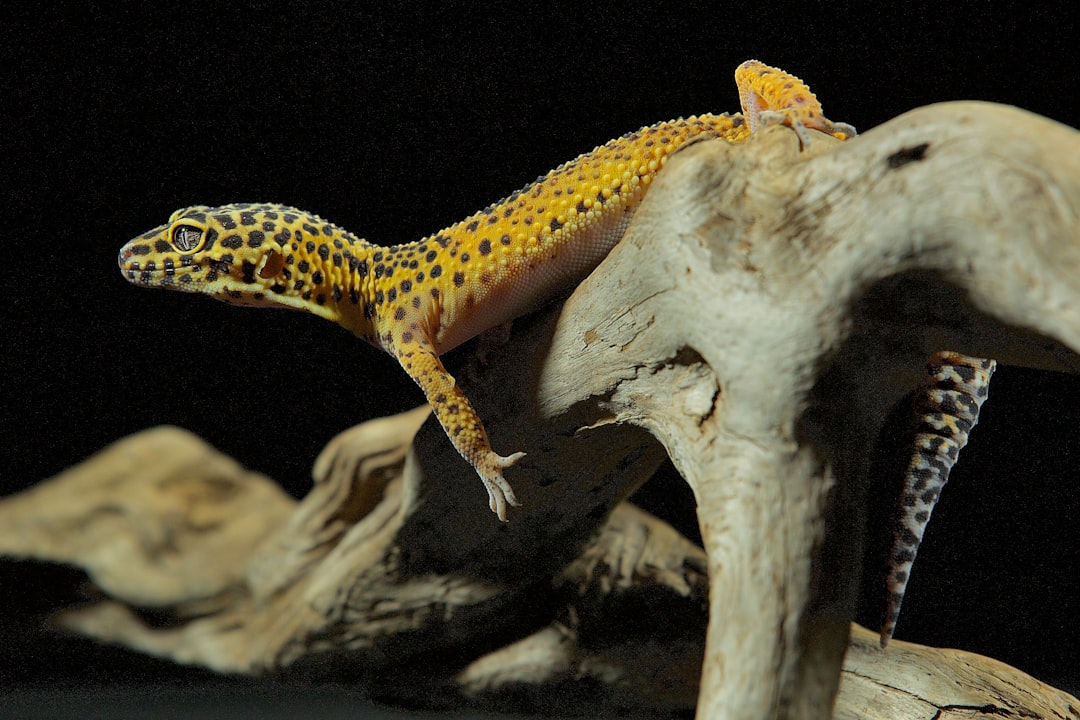
Photo by Andrey Tikhonovskiy on Unsplash
Why Leopard Geckos Stop Eating: Getting the Category Right
Before you adjust anything, establish a baseline on the gecko itself. The fat stored in a leopard gecko’s tail is your first and most practical indicator. A thick, rounded tail base tells you the gecko has reserves and can tolerate a short refusal without immediate medical risk. A noticeably thin or wrinkled tail base means the clock is already running, and the threshold for a vet call is much shorter regardless of what else is going on.
The second indicator is behavior. A gecko that still emerges at dusk, investigates the enclosure, and tracks prey normally is physiologically different from one sitting hunched in a corner with eyes partially closed, visible respiratory effort, or an unusual posture. The first scenario is almost never an emergency on day 7 or 14. The second one needs evaluation promptly.
The table below maps common presenting signs to their most likely cause. No single sign is diagnostic in isolation, but the pattern usually points clearly to one category.
| Presenting Signs | Most Likely Category |
|---|---|
| Refusal starting in autumn or winter, normal behavior, fat tail | Seasonal / brumation |
| Refusal with cool surface temperatures below 85°F, normal behavior | Husbandry - temperature |
| Refusal after a prey switch or new supplement, normal behavior | Husbandry - diet or supplementation |
| Refusal within 2 weeks of enclosure move or purchase | Husbandry - acclimation stress |
| Refusal coinciding with dull coloration or patchy skin | Husbandry - pre-shed cycle |
| Refusal with weight loss, abnormal feces, mucus, or swelling | Medical - requires vet evaluation |
Track the gecko’s weight weekly using a gram scale. A loss of 10 percent or more from its baseline is a threshold that warrants a veterinary call regardless of which category you believe applies.
Seasonal Causes: Brumation and the Autumn Appetite Drop
Leopard geckos originate from arid and semi-arid regions spanning Afghanistan, Pakistan, and northwestern India. In their native range, winter brings shorter photoperiods and surface temperature drops that push conditions well outside the geckos’ preferred active range. Wild populations respond with brumation: a period of sharply reduced metabolic activity that differs from mammalian hibernation in that the animals do not become fully torpid but instead slow down significantly, spend most time sheltered underground, and stop feeding.
Captive leopard geckos retain this seasonal programming even when enclosure temperatures are held artificially stable. The primary driver appears to be photoperiod - the ratio of light hours to dark hours - rather than ambient temperature alone. As days shorten in the Northern Hemisphere, typically from October through February, many captive geckos gradually reduce feeding frequency, become less active in the early evening, and eventually refuse food for stretches ranging from 4 to 8 weeks. Some individuals extend longer, and a smaller subset shows no seasonal slowdown at all. Individual variation is significant.
During this period, a healthy gecko with a full tail can fast without acute medical risk. The criteria that keep this in the “seasonal, no action required” category are:
- Body condition remains stable week over week and the tail does not thin noticeably
- Behavior is quieter but otherwise normal, with no signs of respiratory effort or unusual posture
- Feces, when produced, appear normal in consistency and color
- No mucus, swelling, mouth gaping, or limb abnormalities are present
The correct management response is to offer prey every 7 to 10 days and let the gecko decide. Attempting to push a gecko through its brumation window by significantly boosting temperatures burns its fat reserves without resolving the photoperiod signal driving the behavior. Note the start and end dates of each seasonal refusal. Most individual geckos are consistent year over year, and once you recognize the pattern, subsequent seasonal refusals become routine management rather than a source of alarm.
Husbandry Causes When Your Leopard Gecko Is Not Eating
This is the most fixable category and the most frequently misdiagnosed. Keepers routinely assume temperatures are fine because the enclosure feels warm to the touch, or because a stick-on strip thermometer reads within a plausible range. Both of those assessments are unreliable. What matters is the surface temperature at the floor of the warm hide - the specific spot where the gecko presses its belly when thermoregulating. Strip thermometers read ambient air temperature, not surface temperature, and the difference can be 10 to 15°F in either direction.
Leopard geckos need a warm side belly heat of approximately 88 to 92°F to digest prey effectively. If the warm side surface runs below 85°F, digestion is compromised, and the gecko’s feeding motivation drops accordingly. The ambient cool side should sit at 70 to 75°F, with overall ambient not exceeding 85°F.
Verify this with a thermometer that measures surface temperature directly rather than ambient air. The Govee Indoor Hygrometer Thermometer H5075 with Bluetooth App Control lets you monitor both temperature and humidity from your phone, catching gradual drift that a single spot-check would miss. Pair it with an Exo Terra Heat Mat, 8 Watt, Small regulated by a thermostat to maintain a stable warm surface. For a detailed breakdown of thermostat types and heating element compatibility, see our guide on Best Leopard Gecko Enclosures Heating Setups.
Beyond temperature, these husbandry variables account for a large portion of feeding refusals:
Pre-shed behavior. Leopard geckos typically stop eating 2 to 5 days before a shed and will not resume until the old skin is fully consumed or removed. If your gecko has dull coloration, slightly opaque eyes, or patchy skin texture, wait out the shed before drawing any conclusions about the refusal.
Acclimation period. A newly purchased gecko or one moved to a new enclosure commonly refuses food for 2 to 4 weeks while adjusting. Minimizing handling during this window accelerates the process. Offering a prey item every 7 days and otherwise leaving the gecko undisturbed is the most effective approach.
Supplement fatigue. Over-dusting prey with calcium containing vitamin D3 at every feeding is a documented cause of appetite suppression in reptiles. The Repashy SuperFoods Calcium Plus 4 oz JAR is a calcium-plus-D3 supplement; follow the label for dosing frequency. For adults without UVB supplementation, dust every third feeding with a calcium-plus-D3 product and use plain calcium on remaining feedings.
Prey preference. Some individuals are strongly fixed on a single prey type. A gecko accustomed to dubia roaches may ignore crickets entirely, and vice versa. If you recently switched feeders, switching back is faster and less stressful than trying to condition acceptance of something new.
Medical Conditions That Stop a Leopard Gecko from Eating
When seasonal and husbandry causes have been ruled out and the refusal extends past 3 to 4 weeks without resolution, medical investigation is the appropriate next step. Leopard geckos are susceptible to several conditions that present partly or primarily as anorexia.
Cryptosporidiosis is the most serious concern and the one most specific to this species. Caused by the intracellular parasite Cryptosporidium varanii, crypto produces progressive weight loss and tail wasting - the classic presentation is a gecko that may still occasionally eat but cannot maintain weight, eventually developing a distended abdomen alongside a stick-thin tail. There is no reliable cure, and infected animals shed oocysts capable of contaminating shared equipment. Diagnosis requires a fecal PCR test from a reptile-experienced vet. Progressive weight loss despite some feeding is the key red flag.
Internal parasites including pinworms and coccidia are common in wild-caught animals and poorly managed stock. They suppress appetite through gut inflammation and competition for nutrients. A fecal float and direct smear is a low-cost first screen available at most veterinary practices.
Metabolic bone disease (MBD) from chronic calcium or vitamin D3 deficiency causes jaw deformity, limb tremors, and difficulty pursuing prey. If the gecko physically cannot bite or swallow prey effectively, feeding refusal follows. MBD is largely preventable with appropriate supplementation and is reversible in early stages under veterinary guidance.
Substrate impaction from ingested calci-sand or fine particulate causes digestive obstruction. Affected geckos become lethargic, stop defecating, and stop eating. A gecko on loose particulate substrate with a history of pursuing prey across the substrate rather than from a feeding dish is a candidate for this diagnosis.
Stomatitis and respiratory infections both produce enough discomfort to suppress feeding. Signs include visible mucus around the mouth or nostrils, gaping, audible wheezing, or redness along the mouth margins.
The Association of Reptilian and Amphibian Veterinarians maintains a searchable directory of reptile-experienced veterinarians by region. A visit to a general practice without reptile experience is far less useful than no visit at all when it comes to diagnosing crypto or parasites specifically.
How to Troubleshoot a Leopard Gecko Not Eating: A Systematic Approach
The central principle of troubleshooting a feeding refusal is to change one variable at a time and give each change sufficient time to show results. Leopard geckos do not respond to a temperature correction within 24 hours - feeding interest may take 7 to 10 days to return after the warm side is corrected. Work through these steps in sequence rather than all at once:
-
Weigh the gecko and record the baseline. A gram scale is non-negotiable for tracking whether a refusal is dangerous. You cannot make a sound decision about intervention timing without knowing whether weight is stable or declining. Weigh at the same time of day, once per week.
-
Verify surface temperature inside the warm hide. Place a thermometer probe directly on the substrate at the floor of the warm hide. The reading should be 88 to 92°F. If it reads below 85°F or above 95°F, adjust the thermostat set point and allow 24 hours to stabilize before any other changes.
-
Verify humidity. The enclosure should hold 30 to 40 percent ambient humidity with a slightly more humid hide at 50 to 60 percent to support normal shedding. Sustained humidity below 25 percent is a shedding and hydration stressor that indirectly suppresses feeding.
-
Review recent changes. List anything that changed in the past 30 days: new prey type, new supplement, new hide or decor, increased handling, enclosure move, or changes to room lighting. Roll back any recent changes before assuming a new cause.
-
Offer prey at the correct time of day. Leopard geckos are crepuscular to nocturnal. Offering prey in the early afternoon when ambient light is high reduces prey-strike motivation significantly. Offer 2 to 3 appropriately sized prey items beginning 30 minutes after the room lights dim, then check an hour later.
-
Make one prey switch if all the above are confirmed correct. If temperatures and timing are verified and the gecko still shows no interest in its usual prey, offer one alternative feeder type - for example, a small dubia roach if the gecko has been eating mealworms. Allow 7 to 10 days of observation before any further changes.
-
Set a calendar threshold and stick to it. Refusal of 3 weeks with stable weight and no red flags warrants continued monitoring. Refusal of 4 to 5 weeks with any measurable weight loss, or 6 weeks with stable weight, warrants a veterinary appointment for fecal screening and a wellness exam.
Following this sequence prevents the most costly diagnostic error: modifying so many variables simultaneously that identifying the actual cause becomes impossible.
Common Mistakes That Prolong a Leopard Gecko Feeding Refusal
The most well-intentioned interventions often make the situation harder to resolve. These are the errors that consistently delay recovery.
Offering food every single day. Daily feeding attempts during a refusal do not increase the gecko’s motivation to eat. In most cases they increase background stress, particularly when each offering involves the keeper opening the enclosure, handling the gecko to inspect it, or otherwise disrupting its environment. Offer prey every 5 to 7 days during a refusal and otherwise leave the gecko alone to settle.
Reading temperature from the enclosure exterior. Infrared thermometer guns are accurate instruments, but when aimed at the glass side panel of a tank they read the glass temperature, not the surface inside. Glass is an insulator and the reading can be significantly lower than actual interior conditions. Always place the probe or sensor directly on the substrate inside the warm hide to get a meaningful measurement.
Force-feeding at home. This is appropriate in a veterinary setting using the right tools and technique. At home, force-feeding a gecko that is refusing food due to illness or stress introduces jaw injury risk, aspiration risk, and severe additional stress without addressing the underlying cause. If the gecko’s condition is deteriorating badly enough that force-feeding feels necessary, that is an emergency vet visit, not a home intervention.
Over-supplementing with vitamin D3. Some older care guides recommend dusting every feeding with a calcium-plus-D3 product. Excessive D3 intake causes hypervitaminosis D in reptiles, which disrupts calcium metabolism and produces appetite suppression as an early symptom. Use calcium-with-D3 no more than twice weekly, and plain calcium on remaining feedings. The Merck Veterinary Manual’s reptile section notes that hypervitaminosis from supplement overuse is an underrecognized cause of chronic illness in captive reptiles.
Housing two geckos together. Leopard geckos are solitary. Cohabitation - even without visible aggression - creates chronic low-level stress that manifests as feeding suppression in the subordinate animal. If you are keeping two geckos together and one has stopped eating, separate them first before troubleshooting anything else.
Allowing weight loss to continue without a deadline. A gecko that has been refusing food for two weeks but appears behaviorally “normal” can mask significant internal pathology, particularly with crypto. Weight loss of 10 percent or more from baseline is a hard line for professional evaluation regardless of how active the gecko seems.
Frequently Asked Questions
How long can a leopard gecko go without eating before it becomes dangerous?
A healthy adult with good body condition - specifically a thick, rounded tail base - can typically fast for 4 to 8 weeks without acute medical risk. This range aligns with natural brumation windows documented in wild populations from their native range. That said, “can” does not mean “should be allowed to without monitoring.” Weight must be checked weekly. Juveniles under 12 months have significantly smaller reserves and should not go more than 2 to 3 weeks without feeding before you consult a vet. Once the tail begins to thin and wrinkle, the clock for intervention has started regardless of how long the refusal has lasted.
Should I force-feed my leopard gecko if it has not eaten in two weeks?
No. Two weeks of fasting in an adult gecko with adequate body condition does not warrant force-feeding under any circumstances you can manage safely at home. Force-feeding risks jaw injury, aspiration, and compounding the stress that is often part of the problem in the first place. The appropriate home response at the two-week mark is weekly weight monitoring, temperature verification, and ensuring the gecko has access to clean water in a shallow dish. If the gecko’s condition is declining quickly enough that force-feeding feels necessary, that is the moment for an emergency vet appointment, not a home procedure with a feeding syringe.
Can too much calcium supplement cause my leopard gecko to stop eating?
Yes, and more commonly than most care guides acknowledge. Excessive vitamin D3 intake from over-dusting prey with a calcium-plus-D3 product at every feeding can lead to hypervitaminosis D. Early symptoms in reptiles include appetite suppression, lethargy, and subtle behavioral changes - well before more obvious toxicity signs appear. When using a supplement such as the Repashy SuperFoods Calcium Plus 4 oz JAR, follow the label for dosing frequency. As a general framework, most reptile veterinary references recommend calcium-with-D3 no more than twice weekly, with plain calcium on remaining feedings. If you have been supplementing at every feeding, reduce the frequency for two weeks and observe whether feeding interest improves.
What prey type works best for restarting a feeding refusal?
There is no universally superior prey item, but dubia roaches are the first choice most experienced keepers reach for when trying to restart a refusal. They are highly palatable, move in a way that triggers prey-drive reliably, and have a better calcium-to-phosphorus ratio than mealworms. Crickets are a close alternative but require more active husbandry - gut-loading, escape prevention - and some geckos find them more stressful to pursue. Waxworms work as a short-term appetite stimulant due to high fat content but should not become a regular staple. If your gecko has been eating mealworms and stopped, offering a dubia roach of appropriate size is a solid first trial. For a full breakdown of prey types, gut-loading, and feeding schedules by age, see our Leopard Gecko Diet guide.
Conclusion
A leopard gecko not eating is a situation worth taking seriously and working through methodically, not a reason to panic or change everything at once. Identify which of the three categories - seasonal, husbandry, or medical - is most consistent with what you are observing, then work through the relevant variables one at a time. Verify temperatures at the surface of the warm hide rather than the glass. Monitor body condition and weight weekly so you have real data rather than impressions. Know the thresholds - 10 percent weight loss, 4 to 6 weeks of refusal, visible illness signs - that move the situation from home management to a veterinary appointment. Most cases resolve with a single temperature or prey correction. The ones that do not deserve a reptile-experienced vet promptly, not prolonged home experimentation.
If this guide helped you narrow down what your gecko is dealing with, bookmark it for the next seasonal refusal - they tend to come around on a predictable annual schedule.