Best hides for leopard geckos: warm, cool, and humid options compared
This post contains affiliate links. As an Amazon Associate, I earn from qualifying purchases at no extra cost to you.
Leopard geckos spend most of their active hours moving between shelters, not exploring open space. In the wild, Eublepharis macularius occupies rocky, semi-arid scrubland across Pakistan, Afghanistan, and northwest India, where rock crevices and burrows serve as thermal refuges, humidity pockets, and predator shelters simultaneously. A captive enclosure that fails to replicate those microclimates doesn’t give a gecko an opportunity to adapt. It simply stresses the animal until behavior and health begin to degrade.
The pattern is recognizable in new setups: a gecko that stops eating, stays buried in one corner, or cycles through incomplete sheds for weeks without resolution. Inadequate hiding options are either the direct cause or a major contributing factor more often than most new keepers realize.
You need three hides at minimum - one over the warm end of the enclosure, one on the cool end, and one moist hide dedicated to supporting shedding. Each serves a distinct biological function. Substituting one for another, or lining up three identical hides along one side of the enclosure, forces your gecko to make tradeoffs between competing physiological needs. A leopard gecko that has to choose between correct thermoregulation and feeling secure will nearly always compromise feeding and immune function before it abandons hiding behavior. That’s not a personality quirk. It’s the survival logic of a prey species that has spent millions of years in rock crevices.
This guide covers what each hide type actually does, how to select and position each one correctly, which materials hold up over time, and the most common setup errors to catch before they affect your gecko’s health.
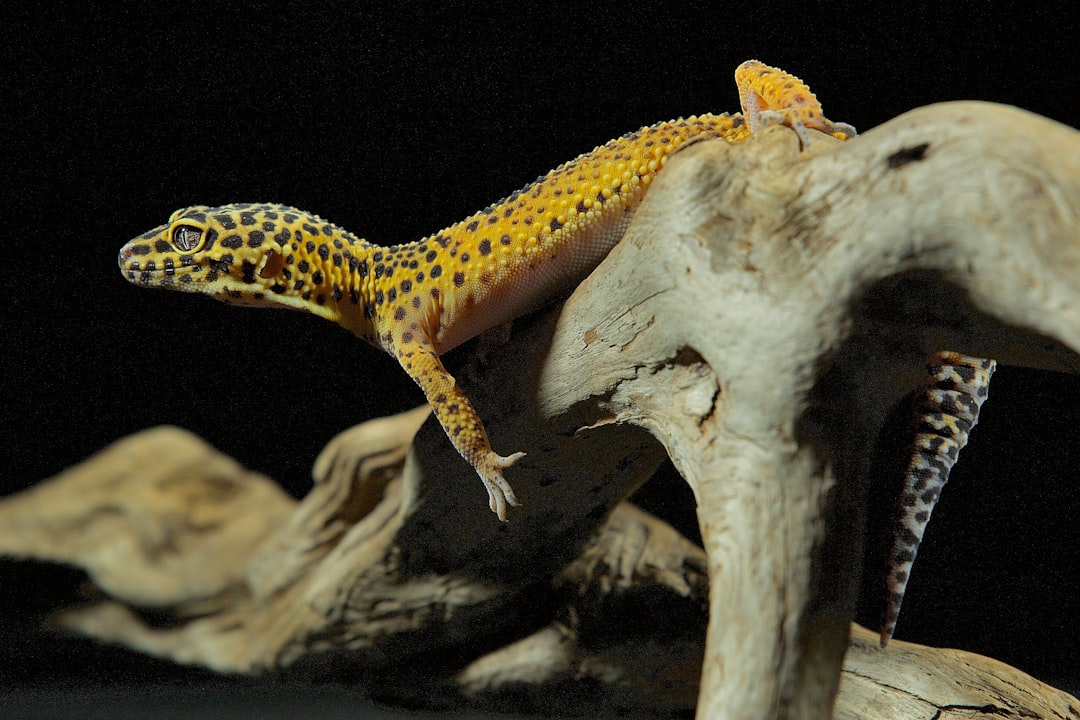
Photo by Andrey Tikhonovskiy on Unsplash
Why Leopard Geckos Need Three Distinct Hides
The three-hide rule isn’t arbitrary keeper convention. It maps directly onto the thermoregulatory biology of a heterothermic reptile. Leopard geckos regulate body temperature behaviorally by moving between areas of different ambient temperature rather than generating heat internally. For that process to function without forcing the gecko into exposed space, it needs sheltered options at genuinely different temperature zones.
The warm hide allows the gecko to digest food, metabolize nutrients, and recover from thermal stress without sacrificing cover. The cool hide gives it a retreat when it needs to lower its body temperature, rest during daylight hours, or decompress away from the heat source. Without a functional cool-side hide, many geckos default to sitting exposed in a cooler corner rather than returning to an uncomfortably warm hide. That consistent exposure to open space represents chronic stress, and chronic stress suppresses appetite and immune function in measurable ways.
The moist hide addresses a third biological need entirely separate from the thermal gradient: humidity management for shedding. Leopard geckos don’t require elevated ambient humidity under normal keeping conditions. General guidance from organizations such as the Association of Reptile and Amphibian Veterinarians recommends maintaining enclosure ambient humidity at 30-40% for this species. Pushing the entire enclosure into a higher humidity range to compensate for an absent moist hide creates a different problem - increased risk of bacterial skin infections and respiratory issues in a species adapted to dry conditions. The moist hide concentrates elevated humidity exactly where the gecko needs it and for exactly as long as the gecko chooses to use it.
There is a practical behavioral monitoring benefit as well. A gecko that has real thermal and humidity options will develop a predictable movement pattern that tells you a great deal about its current condition. A sudden shift from cycling between all three hides to occupying only one is data worth investigating - it may indicate a temperature probe failure, an approaching shed, a stress response to an environmental change, or early signs of illness. That behavioral baseline only exists if the gecko had a properly configured three-hide system to begin with.
For a broader overview of enclosure setup beyond hide placement, the Leopard Gecko Care Guide for Beginners covers lighting, substrate, temperature gradients, and supplementation in full detail.
Setting Up the Warm Hide for Leopard Geckos
The warm hide’s job is to let your gecko reach and maintain optimal metabolic body temperature without becoming exposed. Standard herpetological guidance places the optimal warm zone for leopard geckos at 88-92°F (31-33°C) measured at substrate level, with the interior of the hide tracking within a few degrees of that floor temperature directly beneath it.
Position the warm hide directly over the heat source - for most setups, that means an under-tank heater (UTH) regulated by a thermostat. The thermostat probe should sit on the substrate surface underneath the hide, not on the edge of the UTH or somewhere outside the hide footprint. This placement ensures you are measuring what the gecko actually experiences against its ventral surface.
Safety note: Operating a UTH without a thermostat is a significant risk. Substrate surface temperatures beneath an unregulated UTH can exceed 105°F (40.5°C), which is high enough to cause contact burns that damage internal tissue without leaving obvious external marks for days. A rheostat or dimmer switch is not a substitute for a thermostat - it reduces voltage but does not regulate temperature in response to changing ambient conditions. Every UTH installation requires a thermostat with the probe positioned correctly inside the hide.
Sizing is as important as placement. The warm hide should fit the gecko snugly - tight enough that the gecko makes body contact with the walls and ceiling when inside. This maximizes belly-heat absorption by keeping the animal pressed against the heated floor. A hide large enough for the gecko to turn around comfortably reduces that conductive contact and diminishes thermoregulatory efficiency without creating an obvious hazard. A hide the gecko cannot fully enter is a more obvious problem.
The Exo Terra Reptile Cave - Medium is a reliable warm-side hide for leopard geckos. The medium size suits many adult leopard geckos; keepers with noticeably larger or smaller animals should consider sizing up or down accordingly. Juveniles may benefit from a smaller hide or a DIY cardboard-box substitute until they reach adult proportions.
Verify the interior temperature of the warm hide with a digital probe thermometer at least once a month and after any change to your heating setup. If it consistently reads above 92°F inside the hide at gecko level, shift the cave slightly off-center from the UTH footprint or reduce the thermostat setpoint.
The Cool Hide: Your Gecko’s Off-Duty Refuge
The cool-side hide is the most underrated component of a three-hide system. Most keeper resources mention it briefly and move on, but a poorly positioned or incorrectly sized cool hide is the most common reason a leopard gecko spends meaningful time exposed in its enclosure during daylight hours when it should be resting.
The cool side of a standard 20-gallon leopard gecko enclosure should read 72-78°F (22-25.5°C) at substrate level. The cool hide should be positioned far enough from the UTH footprint that it genuinely measures in this range. Verify it with a probe thermometer rather than estimating by eye. A hide positioned two inches from the thermal boundary that reads 82°F is functionally a second warm hide. It provides no thermal alternative, and a gecko that notices this will skip it entirely.
Sizing on the cool side is slightly more flexible than on the warm side because maximizing body contact for heat absorption is not the primary goal. That said, the hide should still feel enclosed. If it is large enough for the gecko to move inside without touching the walls, it is oversized. The objective is a sheltered resting space, not an interior the gecko can pace.
Material choice matters more on the cool side than many keepers expect. Resin caves clean easily, hold their shape through repeated disinfection cycles, and are heavy enough that a gecko cannot shift them. Cork bark halves are another strong option - lightweight, naturalistic in appearance, and the irregular interior surface provides tactile contact that many geckos actively seek. Flat-bottomed cork bark integrates well into bioactive setups. Avoid thin injection-molded plastic hides for long-term use: they develop microfractures under repeated cleaning and become impossible to fully disinfect over time.
Placement angle also matters. Position the cool hide with its opening facing toward the center of the enclosure rather than directly toward the front glass. A gecko that can partially observe the environment before fully emerging is more likely to use the cool hide consistently as a resting station rather than pacing the front glass in search of a more secure exit.
The Humid Hide for Leopard Geckos: Shedding Support That Actually Works
The humid hide is the single element that most directly prevents the most common leopard gecko health problem in captivity: incomplete shedding, clinically called dysecdysis. Retained shed accumulates most frequently on the toes, tail tip, and eyelids, where constriction can result in loss of digits or corneal damage if not addressed promptly. A well-maintained moist hide eliminates the majority of cases before they develop.
The moist hide should maintain internal relative humidity of 70-80% while the rest of the enclosure stays at 30-40%. Achieving that localized microclimate is more straightforward than it sounds. Here is how to set one up correctly:
-
Choose a container with a closeable lid. An opaque plastic food storage container works well and costs almost nothing. Purpose-built humid hides with removable tops also work. The container must be fully enclosed so moisture stays inside rather than humidifying the ambient air around it. Clear containers are less effective because geckos are less willing to settle in shelters where they feel visible from outside.
-
Cut an entry hole sized to the gecko. The opening should be just large enough for the gecko to enter without scraping its sides. A snug entry hole retains internal humidity and prevents the gecko from dragging moist substrate through the opening when it exits. Sand or tape any cut edges smooth to prevent abrasion on the gecko’s flanks.
-
Fill the lower portion with moisture-retaining substrate. Fill roughly the bottom third of the container with a substrate that holds moisture without becoming waterlogged. Exo Terra Forest Plume Moss is well-suited for this application. Dampen the moss until it holds moisture when squeezed but does not release standing water or drip. Do not saturate it.
-
Position the hide on the cool side or at the thermal midpoint. Placing a moist hide directly over a UTH will dry the substrate within a few hours. In the worst case, a saturated moss bed over an unregulated heat source can produce steam in an enclosed space. Cool-side or thermal-midpoint placement is standard and correct, as documented in the ReptiFiles leopard gecko care guide - one of the most thoroughly sourced husbandry references available for this species.
-
Establish a maintenance schedule and stick to it. The moss inside the humid hide should feel consistently damp to the touch. Refresh the moisture every 3-5 days under normal conditions, and check it daily when your gecko is in active shed. Replace the moss completely every 3-4 weeks, or immediately if you detect any mold growth or sour odor from the interior.
Positioning a Zoo Med Repti Rock Food Dish near the entrance of the humid hide serves a practical function during active shed cycles. Geckos in shed move repeatedly between the moist hide and a water source. Keeping a stable, clean dish close to the humid hide reduces the exposure distance involved in that cycle and keeps the feeding station organized during a period when the gecko is already moving more than usual.
Comparing Leopard Gecko Hide Types at a Glance
Understanding the specific requirements for each hide type makes it easier to troubleshoot when your gecko’s behavior changes or when you are setting up a new enclosure. The table below summarizes the key parameters.
| Hide Type | Floor Temperature | Internal Humidity | Substrate | Primary Function |
|---|---|---|---|---|
| Warm hide | 88-92°F (31-33°C) | Ambient (30-40%) | None required | Thermoregulation, digestion |
| Cool hide | 72-78°F (22-25.5°C) | Ambient (30-40%) | Optional, dry | Thermal retreat, resting |
| Humid hide | 72-82°F (22-28°C) | 70-80% | Moist moss or coconut fiber | Shedding support, hydration |
A few clarifications: the warm hide temperature refers to the substrate surface directly beneath the floor of the hide, not the air inside it. Air temperature inside a closed resin cave reads lower than substrate temperature, which is why thermostat probe placement inside the hide footprint matters. The humid hide temperature range is deliberately wide because exact placement at the thermal midpoint varies between enclosures, and small variations in that zone are acceptable. The firm constraint is that it must not overlap with any active heat source. The cool-hide substrate notation of “optional, dry” refers to adding a thin layer of dry coconut fiber for naturalistic texture - it has no effect on thermal properties but some geckos prefer the surface.
Common Leopard Gecko Hide Mistakes to Avoid
Most hide-related problems in leopard gecko setups fall into a small, recognizable set of errors. Identifying them early prevents the gradual health decline that results when a gecko’s baseline environmental needs go unmet for weeks or months at a time.
Providing only one or two hides. The most widespread mistake is setting up one main hide - usually the warm one - and assuming the gecko will adapt to the absence of alternatives. It won’t thermoregulate or feel secure with a single option. A gecko with only a warm-side hide will spend daylight hours exposed on the cool side. A gecko with only a cool-side hide won’t digest food efficiently because its metabolic rate will remain suppressed. Three hides is the operational minimum, not an enthusiast preference.
Placing the humid hide over the heat source. Moss placed directly above a UTH dries within hours, defeating the entire purpose of the setup. More dangerously, a saturated moss bed over an uncontrolled or poorly regulated heat source can generate steam in a small enclosed space. The humid hide belongs on the cool side or at the thermal midpoint, not touching or overlapping the warm zone under any circumstances.
Using hides that are too large. Keepers often assume a roomier hide gives the gecko more comfort. For this species, the opposite is true. A hide that allows the gecko to move freely inside provides insufficient body contact for thermal absorption in the warm hide and insufficient security cues in either hide. If your gecko hesitates at the entrance, moves in and out without settling, or perches on top of the hide rather than going inside, size down before making any other changes.
Raising ambient enclosure humidity instead of providing a moist hide. Misting the whole enclosure to compensate for a missing or dry moist hide distributes moisture across substrate, walls, and decor throughout the setup. For a species adapted to arid conditions, sustained elevated ambient humidity raises the risk of scale rot, bacterial dermatitis, and respiratory infections. The localized moist hide approach gives the gecko humidity access without compromising the dry ambient conditions it requires.
Skipping regular cleaning. Hides trap shed skin, fecal material, and food debris that isn’t visible from outside. Spot-clean warm and cool-side hides weekly during routine enclosure maintenance. For the humid hide, full moss replacement every 3-4 weeks is the minimum standard; replace immediately if you detect any mold or sour odor. Resin hides can be disinfected with a diluted reptile-safe solution, rinsed thoroughly, and dried completely before being returned to the enclosure.
Clustering all three hides on the same side. Three hides positioned along one end of the enclosure eliminate the functional temperature gradient. The gecko gains cover but loses the ability to move between thermal zones while remaining sheltered. The warm and cool hides must be at genuinely different ends of the temperature spectrum - verify this with probe thermometers rather than assumptions.
For help selecting thermometers that give you accurate substrate-level readings inside each hide position, the guide to Best Digital Thermometers and Hygrometers for Reptile Enclosures covers the reliable options in detail.
Frequently Asked Questions
How many hides does a leopard gecko actually need?
Three is the functional minimum for an adult leopard gecko: one warm-side hide, one cool-side hide, and one moist hide for shedding support. Some keepers add a fourth hide at the thermal midpoint for geckos showing signs of chronic stress or for larger enclosures where three hides leave significant uncovered territory. More than four hides in a standard 20-gallon enclosure tends to make the layout congested and harder to clean without sacrificing proper hide spacing. For juvenile geckos under six months old, the number remains three, but each hide must scale down in size. A juvenile placed in an adult-sized hide often refuses to use it because the interior feels exposed rather than secure, and the lack of wall contact in the warm hide limits thermoregulatory efficiency.
What is the best substrate to use inside a moist hide?
Sphagnum moss and long-fiber coconut fiber are the two most reliable options. Sphagnum moss retains moisture consistently across a wide range of ambient temperatures, resists compaction over time, and has natural antimicrobial properties that extend the useful life between full replacements. Coconut fiber holds moisture well but compacts more quickly and can develop an anaerobic layer at the bottom if it stays wet for extended periods. Paper towels work as a short-term substitute during a shed cycle when you need an immediate solution, but they require daily monitoring and daily replacement once wet. Whichever substrate you use, aim for moist to the touch without releasing standing water when squeezed, and replace it on a fixed schedule rather than waiting for visible deterioration.
My leopard gecko never uses the moist hide. What should I check?
Start with the two most common causes: an entry hole that is too large, making the interior feel exposed, and placement too close to the warm zone, making the interior warmer than the ambient cool side. Move the hide further from the heat source and verify the internal temperature reads below 82°F. Check whether the substrate is actually damp - dry moss looks nearly identical to moist moss without physical contact. If the gecko is currently in an active shed and still avoiding the moist hide, those two checks almost always identify the issue. If your gecko sheds completely without ever using the moist hide, it may be sourcing sufficient humidity from the ambient water dish or its sleeping position. Shed quality is the meaningful metric, not hide-use frequency.
Conclusion
Three properly configured hides - warm-side, cool-side, and moist - give a captive leopard gecko the behavioral options it needs to thermoregulate efficiently, shed completely, and maintain a stress baseline low enough to support consistent feeding and long-term health. The specifics matter: snug sizing, correct temperatures confirmed with probe thermometers, moist hide substrate that is refreshed on a fixed schedule, and placement that genuinely separates warm from cool across the thermal gradient.
The practical measure of a functioning hide setup is simple: a gecko eating regularly, shedding in one clean piece, and appearing at the front of the enclosure around dusk. If any of those behaviors are absent, the hide configuration is the right place to start your audit. Adjust one variable at a time, document what changes, and allow 7-10 days before drawing conclusions. The gecko’s behavior will tell you clearly when the setup is working.
If this guide helped you think through your enclosure setup, bookmark it for your next maintenance check or share it with a keeper who is still running a one-hide configuration.
Related Reading: