Best Calcium and Vitamin Supplements for Crested Gecko Nutrition
This post contains affiliate links. As an Amazon Associate, I earn from qualifying purchases at no extra cost to you.
The most common nutrition mistake crested gecko keepers make is not feeding the wrong food - it is assuming their complete meal replacement powder handles everything. Quality crested gecko diets (CGDs) like Repashy and Pangea include calcium and vitamins, but how much additional supplementation you need depends on your feeding approach, your gecko’s life stage, and whether you run UVB lighting. Get it wrong in either direction and you are looking at metabolic bone disease, muscle tremors, or fat-soluble vitamin toxicity - all preventable with a clear picture of what your base diet actually provides.
The calcium-to-phosphorus (Ca:P) ratio is the central issue. Healthy bone density in crested geckos requires a Ca:P ratio of approximately 2:1. Most feeder insects - crickets, dubia roaches, and mealworms included - deliver an inverted ratio without supplementation, which is why even a gecko eating predominantly CGD still needs calcium dusting when insects are part of the rotation. The core task is to map what your base diet covers, identify the genuine gaps, and fill them with the right supplement on a consistent schedule.
This guide covers the three supplements most crested gecko keepers will actually use, explains when and how often to apply each one, and addresses the dosing errors that cause real harm in captive geckos.
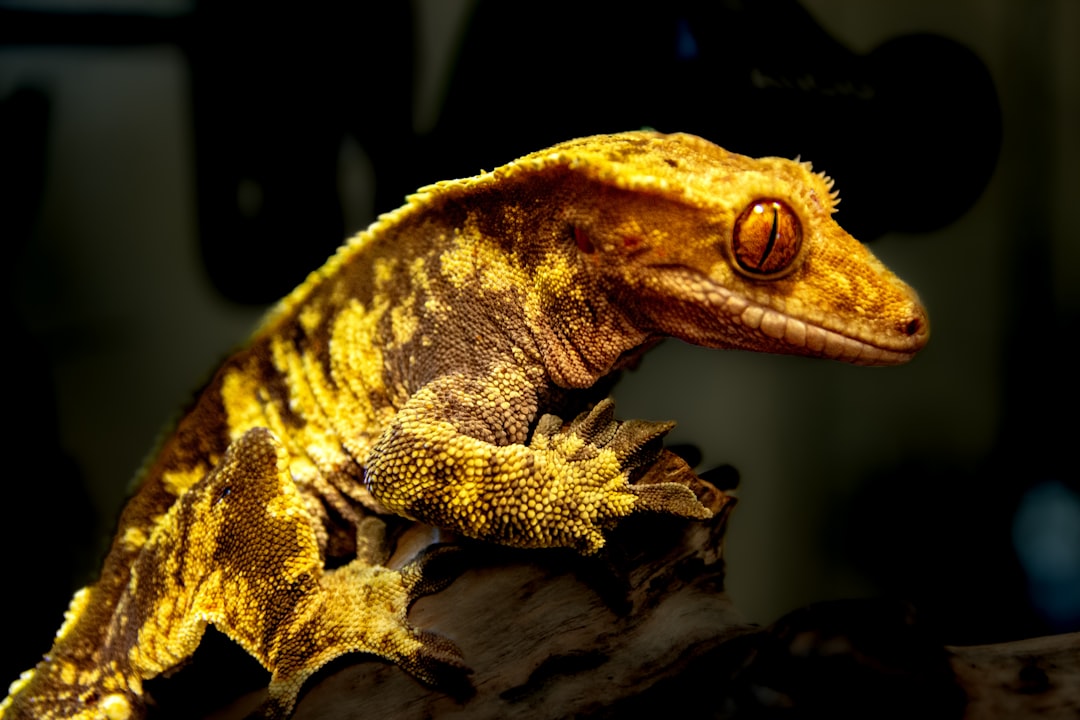
Photo by martin lea on Unsplash
Why Calcium Supplementation Matters for Crested Gecko Health
Metabolic bone disease (MBD) is the most preventable serious condition in captive crested geckos. It develops when calcium intake is chronically low, when the Ca:P ratio stays inverted for too long, or when vitamin D3 is absent and the gecko cannot absorb dietary calcium at all. Early signs - a slightly kinked tail, subtle jaw softness, and tremors after handling - are easy to miss until the condition is advanced. By the time a gecko struggles to grip branches or shows visible skeletal deformities, significant bone resorption has already occurred.
Crested geckos are nocturnal animals from New Caledonia, evolved in a subtropical forest environment where UVB exposure is considerably lower than in open-habitat diurnal lizards. In captivity, many keepers run low-level UVB or none at all, which means the gecko depends almost entirely on dietary D3 to drive calcium absorption in the gut. This creates a dependency on your supplement routine that a basking lizard receiving several hours of strong UVB simply does not share.
Calcium also plays a role in muscle contraction, nerve signal transmission, and egg shell formation - it is not purely a skeletal mineral. A gecko with chronic low-grade calcium deficiency may appear outwardly healthy for months before clinical signs emerge. By the time the problem is visible, supplementation alone may not fully reverse existing skeletal changes. Preventive consistency is far more valuable than correction after the fact.
Breeding females raise the stakes considerably. A gravid crested gecko laying 15-20 eggs per season depletes calcium reserves far faster than a non-breeding adult. Females cycling eggs without sufficient calcium availability can develop hypocalcemia, resulting in muscle weakness, tetany, and potentially fatal egg-binding. Standard adult supplementation schedules are not adequate for actively laying females without deliberate modification.
The practical baseline for every crested gecko keeper, regardless of diet brand: maintain an appropriate calcium supplement on hand, understand when D3 is required, and run a schedule matched to your actual enclosure setup.
D3 and UVB: Understanding What Your Crested Gecko Setup Actually Needs
Most keeper confusion about supplements originates here. Two types of calcium supplements exist: calcium with added D3 and plain calcium without. Which type you use, and how often, is determined entirely by your lighting setup.
Vitamin D3 is synthesized in skin tissue when UVB-B radiation (280-315 nm) reaches the gecko at adequate intensity. Reptiles with reliable UVB access produce D3 endogenously, which reduces reliance on dietary sources. Crested geckos have lower UVB requirements than strictly diurnal species, but current manufacturer guidance from Zoo Med and Arcadia consistently supports providing low-level UVB - a T5 HO 5.0 or 6% tube at appropriate distance - even for crepuscular and nocturnal geckos, both for D3 production and measurable behavioral benefit.
The practical framework by setup:
No UVB in the enclosure: The gecko has no mechanism to produce D3 endogenously. Use a D3-containing calcium supplement such as Zoo Med Reptile Calcium with Vitamin D3 at every insect feeding. Without dietary D3, absorbed calcium stays low regardless of how much calcium powder you apply - the mineral is present but cannot be processed without the signaling pathway.
Low-level UVB (T5 5.0 or 6%, properly positioned at 12-15 inches): The gecko synthesizes some D3 on its own. Rotate between a D3 calcium supplement and plain calcium, or use D3 products less frequently. This reduces cumulative dietary D3 load while maintaining adequate calcium delivery.
CGD-primary diet with no supplemental UVB: High-quality CGDs already contain D3. A gecko eating CGD daily at adequate quantity is receiving background D3 from that food. Your calcium supplement can still be a D3 product at insect feedings, but you are not starting from a complete deficit.
Vitamin D3 is fat-soluble and accumulates in the liver rather than being excreted. Chronic oversupply leads to hypervitaminosis D - pathological calcification of soft tissues, with kidneys typically the first organ affected. The Merck Veterinary Manual identifies hypervitaminosis D as a documented risk in captive reptiles receiving excessive supplemental D3 without balancing UVB exposure. UVB provides a natural physiological ceiling for D3 synthesis; dietary D3 has no such ceiling. Your supplement frequency is the safety valve.
The Three Best Calcium and Vitamin Supplements for Crested Geckos
Not every supplement on the market is formulated with the metabolic realities of small, primarily fruit-eating lizards in mind. These three products are widely proven in the crested gecko keeper community, cover distinct supplementation needs, and represent the range of approaches from all-in-one to precisely separated dosing.
Repashy SuperFoods Calcium Plus
The Repashy SuperFoods Calcium Plus is the most practical all-in-one option for keepers who want a single supplement covering calcium, D3, and the major vitamins. It includes calcium, vitamin D3, and vitamin A sourced as beta-carotene (the safer provitamin precursor), along with trace minerals. Repashy developed it to complement its meal replacement powders, bridging the nutritional gaps that a CGD alone leaves when insects are part of the feeding rotation.
The beta-carotene sourcing for vitamin A is a meaningful distinction. The gecko converts beta-carotene to vitamin A on demand, which dramatically reduces hypervitaminosis A risk compared to products using preformed retinol. For keepers who want a lower-risk combined approach without managing multiple supplement types, Calcium Plus is the cleanest choice. Repashy’s documentation at repashy.com includes mixing ratios if you prefer to blend it directly into your CGD for geckos with inconsistent insect acceptance.
Zoo Med Reptile Calcium with Vitamin D3
The Zoo Med Reptile Calcium with Vitamin D3 is a calcium supplement with added D3 and no full vitamin profile. This makes it a precise tool rather than an all-in-one product. Use it when you want to address calcium and D3 specifically without stacking additional vitamins at every insect feeding. It works well as the primary supplement in no-UVB setups where a separate multivitamin runs on a conservative, independent rotation - keeping each nutrient category under direct control.
Dust insects with a thin, even coat. Heavy dusting does not improve absorption, reduces insect palatability, and wastes product. The 8 oz container is a practical size for households running multiple geckos.
Zoo Med Reptivite Reptile Vitamins
The Zoo Med Reptivite Reptile Vitamins is a full-spectrum multivitamin used on a rotation schedule alongside a calcium supplement, not as a substitute for one. Reptivite covers the major fat-soluble vitamins (A, D3, E, K) and a range of B vitamins and trace minerals. Because it contains preformed retinol vitamin A rather than beta-carotene, frequency control is essential - once every two weeks is the widely used keeper guideline for geckos eating a complete CGD. For insect-heavy feeders with a lower nutritional baseline, slightly more frequent use may be appropriate.
Reptivite works best as periodic nutritional insurance. If your CGD is high-quality and consistently accepted, monthly use may be entirely sufficient. If you are managing a breeding female or running a budget CGD, biweekly use is more defensible.
Supplement Comparison
| Supplement | D3 Included | Vitamin A Form | Best Use Case | Frequency Guideline |
|---|---|---|---|---|
| Repashy Calcium Plus | Yes | Beta-carotene (lower toxicity risk) | All-in-one for CGD + insect feeders | Every insect feeding |
| Zoo Med Calcium with D3 | Yes | None | No-UVB setups, separated dosing | Every insect feeding |
| Zoo Med Reptivite | Yes | Preformed retinol | Periodic multivitamin rotation | Every 2 weeks or less |
How to Build a Crested Gecko Supplement Schedule
A supplement schedule should follow your actual diet structure and lighting setup. There is no universal dusting frequency that works for every keeper - the variables genuinely change what you need. The following steps produce a working routine grounded in the factors that drive crested gecko nutrition.
-
Identify your base diet. A gecko eating a high-quality CGD - Repashy, Pangea, or Black Panther Zoological - as 80-100% of its diet already receives baseline calcium, D3, and vitamins from that formulation. A gecko eating primarily live insects with occasional fruit has close to zero nutritional baseline for calcium or D3 without supplementation. Knowing your starting point determines how aggressively you need to fill gaps.
-
Assess your lighting setup. No UVB means no endogenous D3 production, so you need consistent dietary D3 at every insect offering. Low-level UVB - Arcadia 6% or T5 5.0 properly positioned at 12-15 inches - means the gecko is producing some D3 independently, allowing you to reduce D3 supplement frequency without eliminating it entirely.
-
Choose your supplement combination. CGD-primary with no UVB: Repashy Calcium Plus at every insect feeding plus Zoo Med Reptivite every two weeks. CGD-primary with low UVB: Zoo Med Calcium with D3 at insect feedings plus Reptivite monthly. Insect-heavy diet with no UVB: Zoo Med Calcium with D3 at every insect feeding plus Reptivite every 10-14 days.
-
Attach supplementation to feeding days. Crested geckos on insects typically feed every 1-3 days depending on age. Tie calcium dusting to every insect offering without exception. Tie multivitamin use to a calendar date - the first and fifteenth of the month, for example - rather than an insect feeding count. This prevents frequency creep, which is the slow accumulation of fat-soluble vitamins through informal, untracked oversupplementation.
-
Track body condition over time. Supplement schedules are working hypotheses, not permanent solutions. Monthly weight checks and visual body condition assessment - particularly tail base width and ribcage visibility - tell you whether your nutrition program is producing results. Use a crested gecko body condition scoring guide as your reference point and adjust if trends move in the wrong direction.
For breeding females during active laying season, place a small open dish of plain calcium carbonate inside the enclosure 24/7. Gravid females will self-supplement by licking calcium powder when their demands spike - a documented behavioral adaptation that reduces the risk of miscalculating individual needs during a high-demand period.
Gut-loading feeder insects with calcium-rich greens - collard greens, mustard greens, and dandelion leaf - for 24-48 hours before a feeding meaningfully improves the calcium content of each insect. A well gut-loaded cricket delivers more usable calcium than a nutritionally depleted one with heavy powder dusting on top. For a clear picture of what your CGD is delivering before adding supplementation, the guide to understanding reptile nutrition labels and CGD ingredients is a useful primer on reading guaranteed analysis panels.
Common Supplement Mistakes That Put Crested Geckos at Risk
Over-supplementing D3. The most consequential error is applying a D3-containing supplement at every insect feeding without accounting for what the CGD already delivers, without a UVB offset, and while running a separate multivitamin on top simultaneously. Vitamin D3 is fat-soluble and accumulates in the liver rather than being excreted. Pathological calcification of kidney tissue is the documented outcome in severe chronic cases. The correction is straightforward: identify all D3 sources in your gecko’s routine at once - CGD, calcium supplement, multivitamin - and confirm they are not all firing at maximum frequency at the same time.
Under-supplementing breeding females. Gravid females laying 15-20 eggs per season have calcium demands far exceeding those of a non-breeding adult. Keepers who maintain a standard adult schedule through an active laying cycle without adjustment risk driving a breeding female into hypocalcemia - low blood calcium that causes muscle weakness, tetany, and potentially fatal inability to pass eggs. Increase dusting frequency during active laying, offer a free-choice calcium dish, and check weight weekly during breeding season.
Dusting too heavily. A thin, even coat on feeder insects is all that is needed. Thick white accumulations reduce insect palatability, impair the insect’s natural movement (making it less appealing to a predatory gecko), and create the false impression of thorough supplementation when most of that powder ends up on the enclosure floor. Shake insects briefly in a small amount of powder until lightly coated, then feed immediately - delays allow the dust to fall off before the gecko ever encounters the insect.
Storing supplements poorly. Fat-soluble vitamins, particularly D3 and vitamin A, degrade with heat, humidity, and light exposure. A supplement jar sitting unsealed in a warm, damp reptile room may deliver a fraction of its labeled dose within weeks. Seal lids tightly after every use, store products in a cool, dry location away from direct light, and note expiration dates. A gecko showing early MBD progression despite a regular supplement routine warrants checking the age and storage condition of the product being used before assuming a dosing error.
Stopping supplementation during slow eating phases. Crested geckos eat considerably less during cooler months and may refuse feeder insects for extended periods. Many keepers stop supplementing entirely when feeding activity drops. A more reliable approach is to maintain calcium availability through the CGD - which is typically still accepted even during slow periods - and dust insects normally on the occasions when the gecko does accept them. Consistency across a year matters more than perfect adherence on any individual feeding day.
Frequently Asked Questions
Can I use Repashy SuperFoods Calcium Plus as my only supplement?
For a crested gecko eating CGD as 90-plus percent of its diet with no UVB, Repashy SuperFoods Calcium Plus can reasonably function as a stand-alone supplement when dusted on feeder insects at every offering. It covers calcium, D3, and vitamins using beta-carotene vitamin A, which substantially reduces hypervitaminosis A risk compared to preformed-retinol products. The real limitation is delivery consistency: a gecko that rarely accepts insects receives very little supplement from dusting alone. Repashy’s documentation at repashy.com includes low-ratio CGD mixing guidance as an alternative delivery method for geckos with inconsistent insect acceptance - check current mixing recommendations before adding it directly to your CGD batch.
How often should I supplement a juvenile crested gecko compared to an adult?
Juveniles grow rapidly and have proportionally higher calcium demands than adults. A practical starting guideline used across the keeper community is to dust every insect feeding for geckos under six months of age, then reduce to two to three times per week for juveniles between six and twelve months. Adult non-breeding geckos on CGD-primary diets generally do well with twice-per-week calcium dusting. Adult breeding females need elevated frequency and a supplemental calcium dish during active laying season, as their demands far exceed the maintenance adult baseline. These are starting points - monitor weight trends and body condition and adjust the schedule accordingly when you see warning signs developing.
What is the difference between calcium with D3 and calcium without D3?
Plain calcium carbonate provides the mineral itself without any additional vitamin load. Zoo Med Reptile Calcium with Vitamin D3 adds the vitamin required to drive calcium absorption in the small intestine when the gecko is not producing D3 through UVB exposure. If your gecko has consistent access to appropriately dosed UVB lighting, plain calcium is often sufficient as the primary supplement, with D3 products used at reduced frequency. Without any UVB at all, plain calcium supplementation is largely wasted - the mineral is present in the gut but cannot be effectively absorbed without the D3 signaling pathway active.
Is Zoo Med Reptivite safe for crested geckos?
Zoo Med Reptivite Reptile Vitamins is widely used by crested gecko keepers without issue when dosing frequency stays conservative. The key consideration is that Reptivite contains preformed vitamin A as retinol rather than beta-carotene, which carries a higher hypervitaminosis A risk at elevated doses compared to precursor-based products. For geckos eating a complete CGD, once every two weeks is a reasonable upper frequency guideline. Do not apply Reptivite at the same rate you use a calcium supplement. Treat it as periodic nutritional insurance within a rotation, and it fits into a well-designed supplement schedule without meaningful accumulation risk when frequency is managed deliberately.
Conclusion
Crested gecko supplementation does not need to be complicated, but it does need to be intentional. The three products covered here - Repashy SuperFoods Calcium Plus, Zoo Med Reptile Calcium with Vitamin D3, and Zoo Med Reptivite Reptile Vitamins - cover the full range of keeper setups from all-in-one simplicity to precisely separated, independently controlled dosing. Match your product selection to your UVB situation and base diet, add a multivitamin on a conservative rotation, and monitor body condition monthly.
If something looks wrong - weight loss, tremors, jaw softness, or a breeding female in distress - your supplement schedule is the first variable to examine, not the last. The goal is targeted supplementation that fills genuine nutritional gaps without creating new problems through fat-soluble vitamin accumulation. A consistent, well-matched routine prevents most nutrition-related health issues before they start.
Bookmark this page as a quick reference when you build or update your supplement routine, or whenever you bring home a new crested gecko.
Related Reading
- Understanding Reptile Nutrition Labels and CGD Ingredients - decode what your base CGD is actually delivering before layering supplementation on top
- Crested Gecko Body Condition Score: Underweight, Healthy, and Overweight Examples - track whether your supplement schedule is producing results through consistent body condition monitoring