Which Live Insects to Feed Crested Geckos and How to Culture Them
This post contains affiliate links. As an Amazon Associate, I earn from qualifying purchases at no extra cost to you.
Crested geckos are one of the few reptiles where a single commercial product genuinely covers most nutritional bases. Quality meal replacement powders supply balanced macros, calcium, and vitamins in a single dish, which is why CGD-only diets became the default for many keepers. That convenience is real, but it obscures something worth taking seriously: live insects do things no powder can replicate.
Active foraging behavior, complementary amino acid profiles, and the sensory stimulation of chasing prey differ meaningfully from licking paste off a cup ledge. Reptile veterinary organizations consistently recommend live insect supplementation one to two times per week alongside quality CGD for juveniles and adults alike - not because MRP is deficient, but because insects provide a nutritional and behavioral dimension worth having.
Choosing feeders carelessly means wasted money, inconsistent nutrition, or - in the case of crickets left unsupervised overnight - direct harm to your gecko. This guide cuts through the options so you can make every feeding session count.
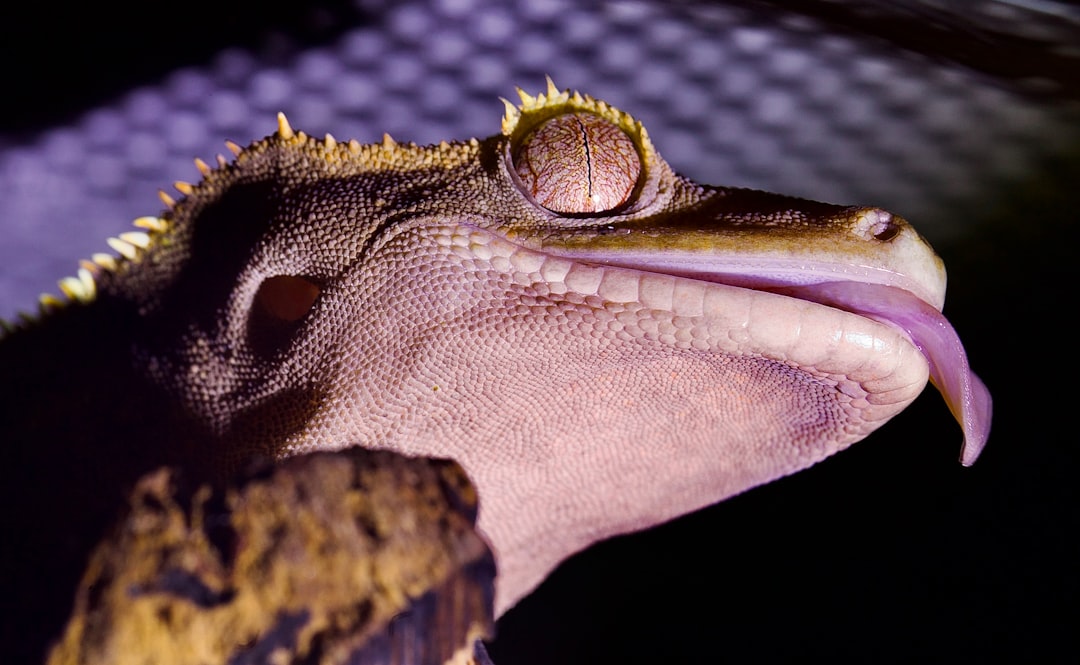
Photo by Andrey Tikhonovskiy on Unsplash
Best Live Insects for Crested Geckos
Not every feeder insect marketed for reptiles belongs in a crested gecko’s regular rotation. The comparison table below gives an at-a-glance overview before the detail:
| Feeder Insect | Protein (dry wt.) | Fat (dry wt.) | Gut-Load Response | Culture Difficulty | Recommended Use |
|---|---|---|---|---|---|
| Banded Crickets | ~65% | ~13% | Excellent | Moderate | Primary staple |
| Dubia Roaches | ~54% | ~29% | Excellent | Easy long-term | Primary staple |
| Black Soldier Fly Larvae | ~42% | ~35% | Not required | Moderate | Supplement |
| Mealworms | ~48% | ~28% | Good | Easy | Occasional only |
| Waxworms | ~15% | ~61% | Poor | Moderate | Treat, max twice monthly |
| Hornworms | ~9% | ~3% | Not practical | Difficult | Treat and hydration |
Nutritional figures are dry-weight approximations drawn from published comparative feeder insect analyses. Fresh-weight values appear lower because most live feeders carry significant water content.
Crickets
Crickets are the most universally available live feeder for crested geckos and, when properly gut-loaded, nutritionally solid. Banded crickets (Gryllodes sigillatus) have largely replaced house crickets (Acheta domesticus) in the North American commercial feeder trade following widespread die-offs from cricket paralysis virus. If you’re ordering from a bulk supplier, you’re almost certainly getting banded crickets regardless of labeling - they’re hardier, longer-lived, and significantly less odorous than Acheta.
Crested geckos accept crickets readily, even reluctant feeders. The active chase behavior triggered by a live cricket moving across a plant leaf is the kind of enrichment a cup of CGD paste simply doesn’t produce. The practical downsides are colony management: crickets are noisy at night, die unpredictably if conditions slip, and escapees in a reptile room are genuinely annoying. Those are real inconveniences, not dealbreakers.
Dubia Roaches
Dubia roaches (Blaptica dubia) are widely considered the superior staple feeder from a nutritional and husbandry standpoint. They produce no noise, virtually no odor compared to any cricket species, gut-load with high efficiency, cannot climb smooth glass or polished plastic, and don’t generate sudden overnight die-offs. For keepers building a long-term home culture, dubias require far less daily intervention than crickets.
The primary limitation for crested geckos is size. Adult dubias reach 1.5 inches - too large for most geckos in the 40-65 gram range, which have relatively small jaw widths relative to their body size. Small nymphs at 3/8 inch and medium nymphs at 5/8 inch are the usable target range. Note that dubia roaches are regulated as a potential invasive species in some Australian states and parts of Florida; verify the legal status in your region before establishing a colony.
Black Soldier Fly Larvae
Black soldier fly larvae (Hermetia illucens), sold as Phoenix Worms, Nutrigrubs, and Calciworms, carry a naturally favorable calcium-to-phosphorus ratio of approximately 1.5:1. Most other feeders invert this - crickets run roughly 1:3 Ca:P, requiring calcium supplementation to correct the imbalance before feeding. BSFL’s natural ratio means you can offer them without calcium dusting, which simplifies the supplementation workflow. They’re soft-bodied, easily digested, and trigger active hunting behavior when released into a planted enclosure. The limitation is fat content: BSFL run higher in fat than crickets and work best as a supplement to a primary staple rather than the sole feeder. They also have a short usable lifespan at room temperature before they begin to pupate.
Mealworms and Waxworms
Mealworms (Tenebrio molitor) have a high chitin shell relative to soft tissue, reducing effective protein bioavailability and making them a poor staple choice. Use them occasionally. Waxworms (Galleria mellonella) are the high-fat treat of the feeder world - avidly accepted by almost every gecko and capable of generating feeding preferences that crowd out leaner prey when offered too frequently. A ceiling of twice per month is appropriate.
Gut-Loading Live Insects the Right Way
Gut-loading transforms a nutritionally hollow feeder into a genuinely useful food item, and it is not optional. The nutritional content your gecko receives from a live insect reflects almost entirely what that insect consumed in the 48-72 hours before feeding. An insect sitting in a bare container on cardboard egg crates delivers calories without meaningful micronutrients.
The two most critical targets in a gut-load diet are calcium and beta-carotene. Raw crickets carry an inverted calcium-to-phosphorus ratio of roughly 1:3, which actively undermines bone health over time when fed without correction. Fluker’s High Calcium Cricket Feed is specifically formulated to push feeder insect Ca:P ratios in the right direction and is widely used as a dry gut-load base that crickets and roaches consume readily.
Fresh produce amplifies gut-load quality well beyond what dry feed alone achieves. High-calcium leafy greens form the top tier: collard greens, dandelion greens, turnip greens, and mustard greens. Butternut squash and sweet potato contribute beta-carotene, a vitamin A precursor. Avoid high-oxalate plants like spinach and beet greens - they bind calcium and work directly against your supplementation goals. Watercress, bok choy, and kale are all better choices.
Moisture management is the part most keepers underestimate. Open water dishes drown small crickets and become contamination points within hours, so provide all moisture through fresh produce: sliced orange, cucumber, and romaine are reliably accepted. Replace fresh produce within 24 hours to prevent mold - a molded slice will spread quickly in a warm cricket bin, generating mycotoxins you do not want passing through the insect to your gecko.
The Association of Reptilian and Amphibian Veterinarians (ARAV) treats nutritional preparation of live feeders as a foundational component of preventive reptile care, not a supplemental step. Gut-loading is how the feeder insect becomes a usable food item, not a formality layered on top.
Understanding how live insect nutrition fits alongside CGD in the complete dietary picture is easier once you’ve worked through what’s actually in the powder. The guide on understanding reptile nutrition labels and CGD ingredients breaks down how to read those formulations and what they cover.
Supplementing Live Insects: Calcium and Vitamin Dusting
Even a well gut-loaded insect benefits from calcium applied at the point of feeding. Standard reptile veterinary guidance calls for calcium without D3 at most feeder sessions, with calcium-plus-D3 reserved for geckos with no UVB access - or used on a reduced rotation, roughly every third feeding, for geckos that do have appropriate UVB lighting.
Zoo Med Reptile Calcium without Vitamin D3 is the reference product for this protocol. Using plain calcium lets you control D3 intake independently, which matters because hypervitaminosis D - vitamin D3 toxicity - causes soft tissue calcification and kidney damage in reptiles and is genuinely dangerous at chronic low-level oversupply. Crested geckos with appropriate UVB access synthesize most of their needed D3 from that source, and stacking a calcium-plus-D3 supplement on top creates cumulative risk over months. Per VCA Animal Hospitals’ crested gecko nutrition guidance, supplementation strategy should account for the gecko’s actual UVB access rather than applying a single default protocol across all animals regardless of lighting setup.
If your gecko has no UVB source at all, switch to a calcium-with-D3 product as the primary supplement and use it at every insect feeding.
The application method is the standard “shake and bake”: place feeders in a small container, add a light dusting of supplement, cover and shake gently, then feed within minutes. The coating should be lightly visible, not a thick white crust. Excess powder falls off in the enclosure and doesn’t contribute additional nutritional value sitting on the substrate. The REPTI ZOO Reptile Cricket Keeper & Mixer Combo Kit integrates a shaker dispenser that holds feeders during dusting and allows direct transfer to the enclosure, keeping the process contained and repeatable rather than improvised with a paper cup each session.
Multivitamin supplementation runs on a different schedule - roughly once every 1-2 weeks rather than at every feeding. Products formulated with beta-carotene as the vitamin A source are preferable for routine use because the body regulates conversion to retinol, and excess beta-carotene is not stored as a toxin the way synthetic retinol can be.
How to Culture Live Insects at Home
Home cultures pay off quickly once you’re maintaining two or more geckos. Bulk feeders from a commercial supplier cost a fraction of pet store pricing per hundred, and you control gut-load quality from the moment they arrive. Crickets and dubia roaches are the two cultures most worth establishing for crested gecko keepers.
Setting Up a Cricket Culture
-
Source banded crickets from a bulk feeder supplier, not a pet store. Order 500-1,000 adults and sub-adults. Banded crickets (Gryllodes sigillatus) tolerate temperature variation better than house crickets and are commercially dominant in North American bulk feeder operations.
-
Set up two ventilated bins. Use plastic storage totes with mesh screen lids: one as the main breeding colony, one as a hatchling nursery. Stack egg carton trays vertically inside each bin to maximize surface area and reduce cannibalism. Avoid substrate on the bin floor - it retains moisture and accelerates bacterial load, which triggers die-offs.
-
Install an egg-laying container in the main bin. Fill a shallow plastic cup 2 inches deep with slightly moist coconut fiber. Adults lay eggs in this medium readily. Replace the container every 5-7 days and move the old container with its eggs to the nursery bin to hatch away from adult cannibalism.
-
Manage temperature deliberately. Eggs hatch in 8-14 days at 80-88°F (27-31°C) versus 14-21 days at room temperature. A reptile heat mat positioned under one end of the nursery bin achieves the target range.
-
Feed continuously and manage fresh produce promptly. Offer dry gut-load at all times. Add fresh produce every other day and remove uneaten portions within 24 hours. Remove dead crickets daily - decomposing bodies generate ammonia rapidly and trigger colony-wide die-offs in warm conditions.
-
Harvest on rotation to protect breeding stock. Pull medium and sub-adult crickets from the main bin for feeding, leaving enough adults for continued breeding. Once both bins cycle reliably, you’ll have a near-continuous supply at manageable scale.
Setting Up a Dubia Roach Colony
Dubias take longer to establish but require far less daily management than crickets. A founding colony of 50 females and 15-20 males kept at 85-95°F (29-35°C) will reach self-sustaining density in 3-4 months. Use the same vertically stacked egg carton arrangement, a dry gut-load base offered continuously, and fresh produce for moisture. Females give birth to live nymphs rather than laying egg cases, which eliminates the egg container rotation step entirely. Weekly removal of dead roaches and frass accumulation, combined with monthly deep-cleaning, is the primary maintenance requirement. Dubias are more productive with minimal light exposure - keeping bins in a closet or cabinet works in their favor.
Feeding Frequency and Prey Sizing for Crested Geckos
Insect feeding frequency scales with the gecko’s age and current body weight:
- Hatchlings under 5 grams: Three insect sessions per week. Offer 1/8-inch pinhead crickets or very small BSFL. CGD daily.
- Juveniles 5-20 grams: Two to three sessions per week with graduated cricket sizes. CGD daily or every other day.
- Sub-adults 20-35 grams: Two sessions per week using small to medium crickets or small dubia nymphs. CGD four to five times weekly.
- Adults over 35 grams: One to two sessions per week with medium crickets (5/8 inch) or medium dubia nymphs. CGD four to five times weekly.
Prey sizing follows a single reliable rule: offer no insect wider than the distance between your gecko’s eyes. Crested geckos have disproportionately small jaw widths relative to body size, and prey that exceeds this guideline causes swallowing difficulty, regurgitation, and stress. A gecko that lunges repeatedly but fails to capture prey is signaling that the prey is too fast, too large, or both - drop to a smaller size immediately rather than waiting for the gecko to adjust.
Feed insects in the evening when crested geckos become naturally active. Remove uneaten crickets within 2-3 hours without exception. Left overnight, crickets bite sleeping geckos - eye tissue, eyelids, and toes are the most commonly affected sites. These wounds become infected and represent one of the most frequent preventable injuries documented in captive crested geckos. If you consistently find uneaten crickets after three hours, reduce the number offered per session rather than assuming the gecko will eventually finish them.
Tracking whether your insect-plus-CGD protocol is working shows up most clearly in body weight trends and condition scoring. The guide on crested gecko body condition scoring gives a practical framework for assessing whether the diet is producing the right outcomes.
Common Mistakes When Feeding Live Insects to Crested Geckos
Skipping Gut-Loading Entirely
Purchasing crickets from a pet store and dropping them directly into your gecko’s enclosure is the most common live feeder error in the hobby. Pet store feeders have typically been in bare containers for days with minimal nutrition - they arrive malnourished, with inverted Ca:P ratios and negligible vitamin content. Feeding them directly delivers calories without meaningful micronutrients. Loading for at least 24-48 hours before every feeding session is what transforms a feeder insect into a useful nutritional payload. There is no substitute for this step.
Leaving Crickets in the Enclosure Overnight
This deserves emphasis because the injuries are documented regularly across keeper communities and reptile veterinary practices. Crickets are opportunistic scavengers, and a stationary, warm gecko is an accessible food source. Always remove uneaten crickets within 2-3 hours of a feeding session. If overnight removal is not practical for your schedule, switch your staple feeder to dubia roaches - they are substantially less aggressive toward sleeping geckos and the problem largely resolves.
Oversupplying Vitamin D3
D3 toxicity in reptiles causes soft tissue calcification and kidney damage. Using calcium-plus-D3 at every insect feeding for a gecko that also receives proper UVB exposure pushes cumulative D3 toward harmful levels over time. Keep Zoo Med Reptile Calcium without Vitamin D3 as the primary supplement for UVB-equipped setups and reserve D3-containing products for geckos with no UV access or for limited rotational use.
Offering Prey That Is Too Large
Geckos repeatedly stressed by prey they cannot physically manage become reluctant feeders over time - the association between feeding attempts and frustration persists. If your gecko is lunging and missing or appears distressed in the presence of feeders, size down immediately and don’t wait for the gecko to adjust on its own.
Treating Waxworms as a Weekly Rotation
Waxworms generate strong dietary preferences in crested geckos faster than most other feeders. Geckos offered waxworms more than twice monthly begin refusing leaner prey, a preference that can be stubborn to reverse. Reserve them for appetite stimulation when a gecko has genuinely gone off feed for several weeks, not as a routine variety item.
Neglecting Colony Hygiene
Dead crickets decompose within hours in warm conditions, releasing ammonia that stresses live colony members and creates pathogen loads that spread quickly. A hygiene-neglected culture crashes within 1-2 weeks, leaving you without a feeder supply and potentially exposing your gecko to contaminated insects from a declining colony. Daily removal of dead insects and weekly spot-cleaning are non-negotiable maintenance steps.
Frequently Asked Questions About Live Insects for Crested Geckos
Can crested geckos live healthy lives on CGD alone without any live insects?
Yes - complete meal replacement powders are nutritionally sufficient for crested geckos without live prey. The case for adding live insects is not that MRP is missing something critical, but that insects add behavioral enrichment, active foraging stimulation, and complementary nutrition that improve overall quality of life. Juveniles benefit most from the elevated protein that regular insect feeding provides during growth phases. If live insects are genuinely impractical for your situation, a quality CGD fed on a consistent schedule remains the more important baseline. Adding insects when practical improves the picture meaningfully.
How do I know if my crested gecko is getting enough nutrition from live insects?
Track body weight weekly on a gram scale and use body condition assessment as your primary feedback tool rather than counting insects consumed per session. A gecko maintaining appropriate weight with a well-muscled tail base, no visible spine or hip bones, and normal activity in the evening is receiving adequate nutrition. A gecko losing weight on a schedule of regular insects and daily CGD should be evaluated for husbandry factors first - temperature range, stress sources, enclosure size - before adjusting feeding volume. If husbandry checks out and weight loss continues, a veterinary evaluation for parasites is the appropriate next step.
Which feeder is easier to culture at home - crickets or dubia roaches?
Dubia roaches are easier to maintain long-term despite a slower startup. They don’t die suddenly, don’t make noise, produce minimal odor, and require substantially less daily management than a cricket colony. Cricket cultures need daily dead removal, careful moisture control, and active monitoring to prevent crashes that are difficult to predict until they’re already underway. The tradeoff is timeline: a dubia colony takes 3-4 months to reach self-sustaining density, while crickets can supply feeders from a new culture within 5-6 weeks. The practical recommendation is to run both in parallel at first - maintain crickets for immediate supply while building the dubia colony to maturity, then shift your staple reliance to dubias over time.
Conclusion
Live insects complete a crested gecko’s diet rather than replacing what a quality MRP already provides. Pick a primary staple - crickets or dubia roaches - gut-load consistently for at least 48 hours before every session, apply a light dusting of plain calcium at each feeding, and match prey size to your gecko’s head width. Set up a home culture once your collection makes it cost-effective, and you gain consistent feeder quality at a fraction of retail pricing.
The protocol demands consistency above all. A gecko receiving well-prepared live insects twice a week alongside quality CGD shows better muscle condition, stronger feeding responses, and more active behavior than one surviving on powder alone. Start with crickets if live insects are new to you - they’re immediately available, universally accepted by crested geckos, and entirely manageable with a proper setup from day one.
If this guide helped you sort out your feeder insect setup, bookmark it for reference when you start your first home culture.
Related Reading