Best Automatic Misting Systems for Crested Gecko Humidity Control
This post contains affiliate links. As an Amazon Associate, I earn from qualifying purchases at no extra cost to you.
Crested geckos are remarkably adaptable lizards, but humidity is the parameter where that adaptability hits hard limits. Native to the cool, wet forests of Grande Terre and the Loyalty Islands in New Caledonia, cresties evolved in an environment where humidity peaks around 70-80% during damp nighttime hours and drops toward 50-60% through the warmer daytime period. That wet-dry cycle drives proper shedding, skin hydration, and respiratory health. Without it, you will eventually see retained sheds compressing the toes, a gecko that drinks and eats less, and respiratory infections that were entirely preventable.
Manual misting works when you can commit to it reliably, twice a day, every day. Most keepers find that consistency breaks down. Life gets busy, schedules shift, and your gecko absorbs the consequences. An automatic misting system handles the timing without depending on your memory, and it often delivers a more even spray pattern than a handheld bottle.
The reptile equipment market is noisy. Foggers, pressurized reservoir systems, and ultrasonic humidifiers all occupy the same shelf space without being equivalent solutions. Some work well for crested geckos. Others actively work against the dry-out period your gecko needs every day. This guide makes the distinctions clear, evaluates the three products worth buying, and shows you how to configure a setup that produces real results.
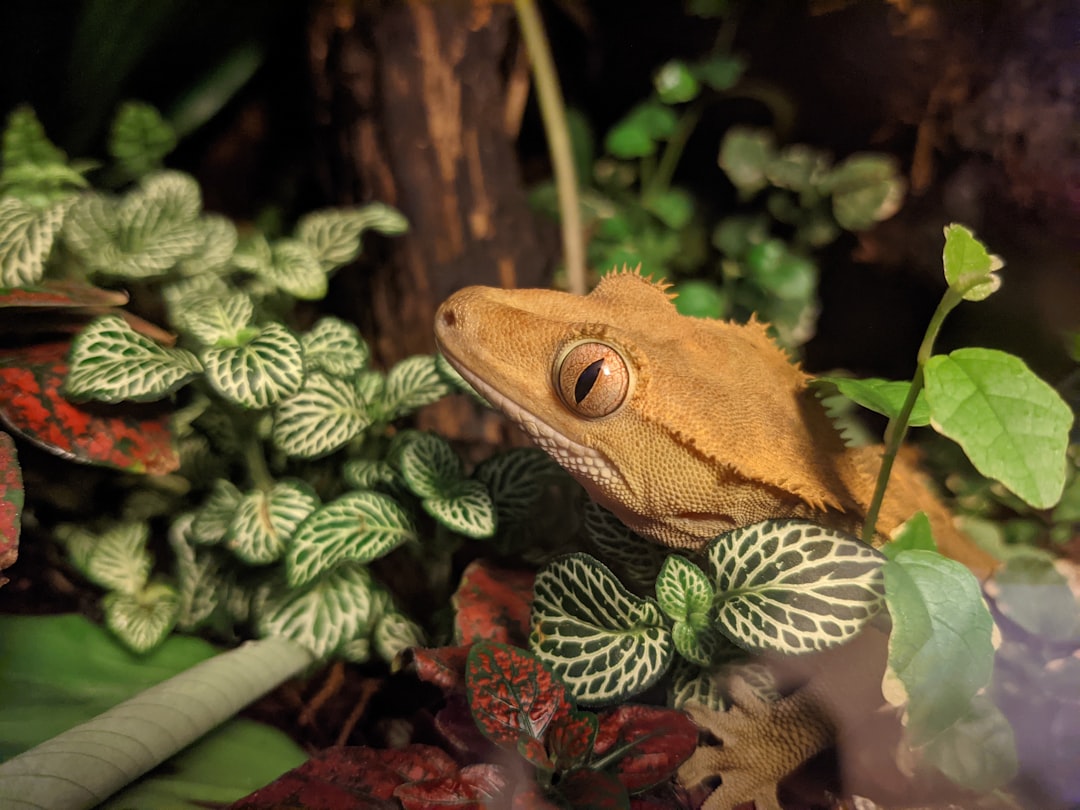
Photo by George Millson on Unsplash
Understanding Crested Gecko Humidity: Needs and System Options
The humidity target for crested geckos is well-established across veterinary and keeper literature: ambient levels should peak around 70-80% immediately after misting, then drop back toward 50-60% before the next cycle. The drier period is just as critical as the wet period. Sustained high humidity with no dry-out creates the conditions where bacterial and fungal growth takes hold in the substrate, on decor surfaces, and eventually on the gecko’s skin. A persistently wet enclosure is a less visible problem than a dry one, but it is not a safer one.
According to ReptiFiles’ crested gecko care guide, the recommended approach is to mist heavily in the evening, allow the enclosure to dry through the following day, and mist again in the morning only if needed based on your ambient humidity and enclosure ventilation. Keepers in arid climates or with heavily screen-vented enclosures typically need both cycles. Keepers in more humid regions or with glass-front enclosures often manage well on a single evening misting. The consistent requirement across all setups is a meaningful dry-out window between cycles.
Juveniles are more sensitive to humidity inconsistency than adults. A young crested gecko kept in chronically low humidity will shed incompletely, and retained shed material on the toes is one of the leading preventable causes of constriction injuries in this species. Adults handle occasional misses better, but even adult cresties kept consistently dry will drink less, potentially refuse food, and show stress coloration and behavior over time.
Effective monitoring is essential alongside any misting system. A quality hygrometer positioned at mid-enclosure height, not pressed against the glass where it reads inaccurately, gives you the data to verify your schedule is actually producing the target range. The guide to best digital thermometers and hygrometers for reptile enclosures covers the measurement tools worth pairing with any automated misting setup. Without measurement, you are guessing.
System Types: Misting vs. Foggers
These two product categories both add moisture to an enclosure, but they produce meaningfully different humidity profiles. Understanding the distinction before you buy saves you from a common and expensive mistake.
Pressurized misting systems use a reservoir, a pump, and one or more nozzles to spray a fine water mist onto enclosure surfaces, plants, and decor. The droplets are relatively large and wet surfaces quickly, then evaporate over several hours. This produces the discrete wet-then-dry pattern crested geckos require. The gecko drinks droplets off leaves and cork bark, the substrate absorbs moisture, and evaporation brings humidity back down before the next cycle fires. The behavior is predictable and fully controllable through timer programming.
Ultrasonic foggers produce a cold fog of extremely fine water particles that stay suspended in the air much longer than mist droplets. A fogger running on a regular timer in a crested gecko enclosure will often hold substrate and surfaces wet for extended periods, removing or compressing the dry-out period and raising the risk of persistent dampness that encourages bacterial and fungal growth. Foggers are not wrong for crested gecko husbandry; they are wrong as a primary humidity tool.
The practical bottom line: use a pressurized misting system as your primary humidity management tool. If your climate is very dry and your enclosure drops below 50% humidity too quickly between cycles, a fogger running briefly on a separate timer can buffer the mid-day trough without driving overall humidity into the problematic range. It should supplement your misting system, not replace it.
What to Look for in an Automatic Misting System for Crested Geckos
Consumer-grade reptile misters vary considerably in build quality and functionality. These are the features that separate a system worth owning from one that becomes a frustration within the first month.
Timer programmability. The most important feature is independent control over cycle frequency and cycle duration. You need to set how many times per day the system fires and how long each burst lasts. Preset schedules that do not allow custom intervals are too inflexible for the seasonal and climate variations most keepers deal with across a full year. A system that lets you program a 10-second burst at 7am and a 15-second burst at 9pm independently is far more useful than one locked to fixed intervals.
Reservoir capacity. For a single-enclosure setup with one or two nozzles, a reservoir in the 1.5 to 2-liter range typically provides several days of operation between refills. Small reservoirs under 500ml require frequent refilling, which eliminates a significant share of the automation benefit. If you manage multiple enclosures, prioritize higher-capacity systems or plan to run multiple units.
Nozzle quality and replacement availability. Nozzle tips are the highest-wear component in any misting system. Mineral scale accumulates in the tip orifice and gradually degrades spray quality from a fine mist to an uneven drip that oversaturates one area and misses the rest. A manufacturer that sells replacement nozzles as a separate product is making long-term use practical. Avoid systems where the nozzle assembly is proprietary and non-replaceable.
Pump noise. Many keepers program misting cycles for evening and early morning when the gecko is most active. A loud pump running in a quiet room at 10pm is genuinely disruptive. Consumer reviews mentioning pump noise are worth weighting heavily in your decision.
Ease of cleaning. Biofilm accumulates in reservoirs and tubing that hold standing water for more than a few days. A system that cannot be disassembled for regular cleaning will eventually become a bacterial growth problem independent of any mineral buildup. Easy-access reservoirs and removable tubing are practical necessities for long-term maintenance.
The Best Automatic Misting Systems for Crested Geckos: Three Options Compared
The three products below cover the main use cases for crested gecko keepers, from a dedicated primary misting system to the essential consumable that keeps an existing popular system working correctly, to a fogger that belongs in your setup only in the right supporting role.
| Product | Type | Primary Use | Timer Included | Best For |
|---|---|---|---|---|
| Flapiki Reptile Smart Mister | Misting system | Primary humidity source | Yes | Primary enclosure setup |
| Exo Terra Nozzles Replacement for Monsoon RS400, 2-Pack | Replacement nozzle accessory | Maintaining existing RS400 | N/A (nozzle only) | RS400 owners; essential maintenance item |
| Zoo Med Repti Fogger | Fogger | Supplemental humidity | N/A | Dry climates; secondary tool only |
Flapiki Reptile Smart Mister with Timer
The Flapiki Reptile Smart Mister, Reptile Humidifiers Misting System with Timer is a reptile misting system with a built-in timer. For a keeper who wants to automate humidity for a crested gecko enclosure for the first time, this category of dedicated reptile mister is the most direct solution. The integrated timer removes the need to buy a separate outlet timer, making it a straightforward tool for building a proper wet-dry cycle.
Install the unit, mount the nozzle in the upper portion of the enclosure, fill the reservoir with distilled water, set your schedule, and then monitor your hygrometer readings for the first week to confirm the cycle is producing the target humidity range. This is the product to start with if you are setting up automated misting from scratch and do not already own an established system.
Exo Terra Nozzles Replacement for Monsoon RS400, 2-Pack
The Exo Terra Nozzles Replacement for Monsoon RS400, 2-Pack is not a standalone system. It is the replacement nozzle set for the Exo Terra Monsoon RS400. If you already own an RS400, these nozzles are an essential maintenance consumable, not an optional accessory.
Nozzle tips are the first point of failure in any misting system. Mineral deposits from regular tap water gradually block the orifice, reducing the spray from a fine mist to an uneven drip that oversaturates one corner of the enclosure and misses the rest. Running a partially blocked nozzle also puts additional load on the pump motor over time. Plan to inspect nozzle tips monthly if you use tap water, or every two to three months with distilled water. Keep a set of replacements in your supply drawer so degraded performance does not catch you unprepared.
Zoo Med Repti Fogger
The Zoo Med Repti Fogger is a fogger, and understanding what that means for crested gecko husbandry determines whether this product is genuinely useful or actively counterproductive for your setup. Used as a primary humidity source, it tends to sustain enclosure humidity too consistently, suppressing the daily dry-out period that is a fundamental part of correct crested gecko care. Used correctly as a secondary tool, it serves a real purpose.
The most effective application is pairing it with a pressurized misting system and running it on a separate timer for a short mid-day window if your enclosure consistently drops below 50% humidity between morning and evening misting cycles. Keepers in very dry climates, or those running screen-top enclosures in heated homes during winter, often find this approach keeps the baseline humidity from dropping uncomfortably low. Do not run the Repti Fogger as the sole humidity device in any crested gecko enclosure.
How to Set Up Your Automatic Misting System: A Step-by-Step Guide
A correct initial setup prevents most of the operational problems keepers encounter in the first weeks of running an automated system. Keep all electrical connections away from areas that receive direct spray, and use a GFCI outlet wherever water and electricity are in proximity. Follow this sequence for a pressurized misting system:
-
Mount the reservoir before filling it. Position the reservoir at or above the level of the nozzle entry point into the enclosure. Consumer reptile misters use relatively low-pressure pumps that work best when the reservoir is not significantly below the nozzle. Use cable clips or adhesive holders to route tubing cleanly and prevent it from shifting during a spray cycle.
-
Install the nozzle at upper-mid enclosure height, angled inward toward the back wall. Aim the spray arc toward back surfaces, plants, and cork bark rather than directly at the substrate. The goal is to wet enclosure surfaces so the gecko can drink from them. Direct substrate saturation keeps the bottom layer wet too long and accelerates mold growth, particularly in bioactive setups.
-
Fill the reservoir with distilled or reverse-osmosis water on the first run. Using distilled water from the start extends nozzle life significantly and prevents the mineral scaling that is the primary cause of nozzle blockage over time. If distilled water is not practical as a long-term solution, plan for monthly descaling from the beginning.
-
Trigger a manual test cycle and observe spray coverage. Run the system manually before setting the automated timer and watch where the spray lands throughout the enclosure. Adjust the nozzle direction if coverage is uneven, if the spray concentrates too heavily on one spot, or if it is aimed directly at the gecko’s primary resting areas.
-
Set the timer, then monitor your hygrometer readings for five days before making permanent schedule decisions. Track the peak humidity immediately post-misting and the baseline humidity just before the next scheduled cycle. Target a post-misting peak of 75-80% and a pre-misting baseline of 50-60%. If the enclosure stays wet too long, reduce cycle duration or improve ventilation. If humidity drops too fast, increase duration or add a second daily cycle.
Common Mistakes to Avoid With Crested Gecko Misting Systems
Even a well-chosen misting system produces poor results when setup or maintenance practices are wrong. These are the errors that appear most frequently in keeper communities, and how to correct them.
Treating a fogger as a primary misting solution. Foggers produce sustained ambient humidity rather than a discrete wet event followed by drying. In a crested gecko enclosure, that removes the wet-dry cycle the gecko’s biology depends on and keeps substrate and surfaces in a persistently damp state that creates ideal conditions for bacterial and fungal growth. A pressurized misting system is the correct primary tool. A fogger is supplemental at most.
Aiming the nozzle directly at the gecko’s resting area. A pressurized misting nozzle delivers a concentrated spray during activation. Positioning it to fire directly at a basking ledge or cork tube where the gecko typically rests means cold pressurized water hitting the animal at every cycle, including nighttime cycles when the gecko is active and exposed. This is stressful. Aim nozzles toward walls and plants so mist disperses before contacting the animal.
Neglecting water quality and system cleaning. Mineral deposits are the primary mechanical failure mode in misting systems. Hard tap water leaves calcium and magnesium scale in nozzle orifices and tubing over weeks and months, progressively degrading spray quality from fine mist to uneven drip to no-flow. Use distilled water when possible, descale monthly when using tap water, and empty the reservoir every few days to prevent biofilm accumulation.
Assuming the timer setting equals correct humidity. A timer fires on schedule but has no way of knowing what the enclosure is actually doing. Seasonal shifts in indoor humidity, a partially clogged nozzle, or a change in enclosure ventilation can all shift actual humidity levels without triggering any visible alert. According to guidance from the Association of Reptilian and Amphibian Veterinarians, consistent environmental monitoring is one of the most impactful preventive practices in captive reptile health. A quality digital hygrometer checked regularly is not optional.
Running cycles too frequently and eliminating the dry-out window. Programming misting cycles too close together or setting burst durations too long can result in substrate that never fully dries between cycles. In bioactive enclosures, this suppresses microfauna populations and encourages surface mold growth. In all enclosure types, it raises the risk of scale rot and respiratory issues. If your substrate is visibly wet six or more hours after misting, reduce duration or drop to a single daily cycle until conditions normalize.
Frequently Asked Questions
What humidity level do crested geckos need, and how do I measure it accurately?
Crested geckos need ambient humidity that peaks at 70-80% directly after misting and recovers to 50-60% before the next cycle fires. The wet-dry pattern matters as much as the absolute numbers. A gecko sitting at a constant 75% with no drying period is in a worse situation than one cycling between 80% and 55% on a predictable schedule. To measure accurately, position a digital hygrometer at mid-enclosure height, away from glass walls, which read localized microclimate conditions rather than true ambient levels. A probe-type hygrometer placed toward the center of the enclosure gives the most representative reading of what your gecko is actually experiencing throughout the day.
How many misting cycles per day does a crested gecko enclosure need?
For most setups, one or two cycles per day is correct. A single heavy evening misting that peaks humidity and allows it to drop to baseline by the following midday works well in many home environments. Keepers in dry climates, or with heavily vented screen-top enclosures, often need a shorter morning cycle in addition. The calibration target is recovery time: if humidity is still above 70% twelve hours after the last cycle, you are either misting too heavily or your enclosure lacks sufficient ventilation. If it drops below 50% within two to three hours of misting, increase duration or add a second daily cycle at a lighter setting.
Can I use tap water in my reptile misting system?
Tap water functions adequately in the short term but accelerates mineral scale buildup in nozzle tips and tubing, particularly in areas with hard water. This progressively degrades spray quality from a fine mist to an uneven drip, and eventually blocks the nozzle entirely. Distilled or reverse-osmosis water eliminates this problem almost entirely. If tap water is your only practical option, descale nozzle tips and tubing monthly using a diluted white vinegar solution, followed by a thorough clean water flush before returning the system to use. Keeping replacement nozzles on hand, such as the Exo Terra Nozzles Replacement for Monsoon RS400, 2-Pack for RS400 owners, is smart preventive maintenance regardless of water source.
Do crested geckos drink from a water dish or from droplets misted onto surfaces?
Crested geckos primarily drink water droplets that collect on enclosure surfaces after misting, which mirrors how they hydrate in their native New Caledonian forest environment. Wild animals drink from droplets left on leaves and bark after rainfall, and captive cresties retain this behavioral pattern strongly. A gecko that ignores its water dish but actively licks enclosure surfaces and plant leaves after misting is behaving normally and is likely well-hydrated. Always provide a shallow water dish as a secondary source, particularly for juveniles during the initial enclosure adjustment period, but do not treat the dish as the primary driver of hydration. Consistent misting is the more reliable route to a well-hydrated gecko.
Building a Misting Routine That Actually Sticks
The right automatic misting system removes the most common failure point in crested gecko humidity management: human consistency. The Flapiki Reptile Smart Mister is the direct starting point for keepers automating humidity for the first time. If you already run an Exo Terra Monsoon RS400, treat the Exo Terra Nozzles Replacement 2-Pack as a standing maintenance item rather than something you order only when spray quality degrades. And if your enclosure sits in a very dry space and loses humidity too quickly between cycles, the Zoo Med Repti Fogger earns its place as a supplemental tool.
Buy the hygrometer first if you do not already have one. Automate next. Then observe your actual readings for a week before making permanent schedule decisions. Adjust based on data, then leave the system alone until something in your environment changes. That sequence, repeated correctly, is what good crested gecko humidity management looks like in practice.
If this helped you get your setup dialed in, bookmark it for reference when you are ready to expand your collection.
Related Reading