Crested Gecko Molting Problems: Troubleshooting and Solutions
This post contains affiliate links. As an Amazon Associate, I earn from qualifying purchases at no extra cost to you.
A crested gecko refusing food during a shed is annoying. A crested gecko with retained shed coiled around a toe like a rubber band is a genuine emergency. The difference between an uneventful molt and a dysecdysis crisis usually comes down to one or two husbandry variables you can identify and correct today.
Crested geckos shed their entire skin in one continuous cycle, consuming the shed almost immediately afterward. Most keepers never witness the process. But when something disrupts that cycle - most often low humidity, inadequate hydration, or a nutritional shortfall - the skin fails to release cleanly. Retained shed on toes constricts blood supply within hours. Retained eye caps impair vision and, left untreated, can permanently damage the eye.
This guide covers every layer of the problem: why crested gecko molting goes wrong, how to recognize a shed already in trouble, how to safely remove stuck shed, what recurring shedding failures reveal about your setup, and when the situation genuinely warrants a veterinary visit. The goal is to move you from reactive troubleshooting to a setup that produces clean, easy sheds every single cycle.
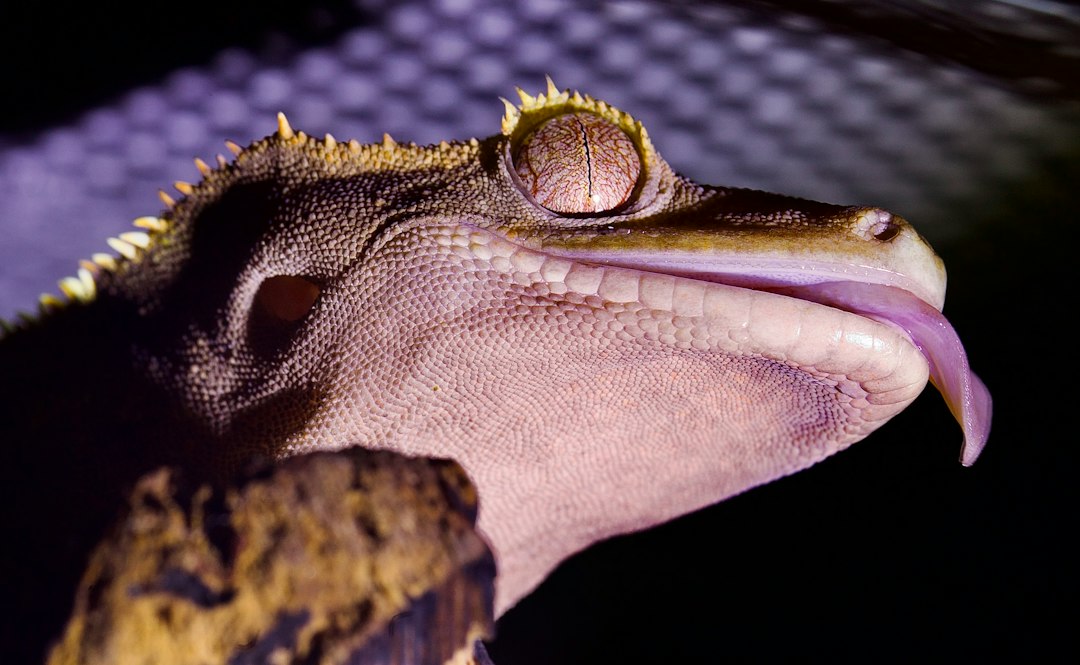
Photo by Andrey Tikhonovskiy on Unsplash
How Crested Gecko Shedding Works (and Why Problems Develop)
Shedding, or ecdysis, is how reptiles grow. A crested gecko’s outermost skin layer - the stratum corneum - does not stretch, so the gecko must periodically loosen and slough it to accommodate body growth and tissue renewal. A fresh skin layer forms beneath the old one before the process begins, and lymphatic fluid accumulates between the two layers to facilitate their separation.
In healthy crested geckos, the cycle is governed by growth hormones and triggered by body growth rate. Juveniles typically shed every two to four weeks. Subadults shed every three to six weeks. Fully mature adults complete a molt roughly every four to eight weeks. These intervals are not fixed - they vary with individual metabolism, ambient temperature, and season. Don’t use a rigid schedule to decide whether a shed is overdue. Use the gecko’s skin appearance and behavior instead.
The shedding process typically completes within 24 to 48 hours once visibly underway. The skin lifts first around the face and head, then peels toward the tail. Crested geckos consume the shed almost universally - an instinctive behavior that recycles protein and eliminates scent evidence in the environment. Finding shed skin loose in the enclosure is the exception, not the rule. If you never see shed, the gecko is almost certainly shedding regularly; you are simply missing the consumption.
What causes the process to break down? Low humidity is the primary driver. Crested gecko skin requires moisture to separate cleanly from the underlying new layer. When the enclosure is too dry during an active shed, the old skin desiccates before fully releasing and bonds to the surface beneath it. Secondary causes include vitamin A deficiency, calcium imbalances, internal parasites disrupting fluid regulation, skin injuries creating adhesion points, and chronic stress interfering with hormonal cycles. Identifying which factor is operating in your specific situation is what makes troubleshooting productive rather than circular.
For a comprehensive look at managing ambient conditions throughout the year, the Crested Gecko Humidity and Temperature Management Guide covers environmental control in full detail.
Warning Signs Your Crested Gecko Is Preparing to Shed
Spotting a gecko in pre-shed lets you optimize conditions proactively rather than reacting to a stuck shed problem after it has already developed.
The most reliable visual signal is a dull, matte, or grayish cast to the skin - often described as dusty or washed out. In normal condition, crested geckos display vibrant colors with sharp pattern contrast. A gecko that looks distinctly desaturated compared to its usual appearance is almost certainly entering pre-shed. This color shift results from the thin lymphatic fluid layer forming between the old skin and the developing new layer beneath. The change can be subtle in lighter-colored morphs and very pronounced in animals with dark, bold patterns.
Behavioral shifts accompany the visual cues. Geckos in pre-shed frequently reduce activity and refuse food. An animal that normally meets you at the enclosure wall or actively pursues live insects may spend most of the shed window hiding and ignoring meals. This is normal biological behavior and not a reason for alarm on its own. Continue offering food as usual but avoid forcing interaction.
You will also commonly observe the gecko rubbing its face and body deliberately against branches, cork bark, or enclosure furniture. This is purposeful: the gecko uses textured surfaces to initiate and advance the shedding process. A smooth-walled enclosure with nothing to abrade against produces more retained sheds than almost any other single setup failure. Make sure the enclosure contains cork rounds, natural branches, and enough dense foliage to provide multiple rough contact points.
A gecko in pre-shed should not be handled unless you are specifically examining for retained shed. Handling imposes stress at an already physiologically demanding moment and can interfere with the shedding process. Give the gecko a minimum of three to four uninterrupted days once pre-shed signs appear.
Root Causes of Crested Gecko Molting Problems
Diagnosing recurring shedding failures means evaluating three systematic categories: environment, nutrition, and underlying health.
Environmental Causes
Humidity is the primary variable. Crested gecko enclosures should maintain ambient humidity between 60 and 80 percent, with a daily misting cycle that briefly raises humidity toward near-saturation before allowing a gradual natural drop. This wet-dry pattern mimics the gecko’s native New Caledonian forest habitat and is especially important during active sheds when the old skin must remain pliable enough to separate fully.
Measuring humidity accurately is non-negotiable. Analog dial hygrometers drift and underread notoriously - often by 10 to 20 percentage points. Your enclosure can be significantly drier than you believe while the dial shows an acceptable number. A calibrated digital hygrometer like the Govee Indoor Hygrometer Thermometer H5075 with Bluetooth App Control provides reliable ambient readings accessible via a smartphone app, so you can confirm whether your humidity is genuinely in target range between misting events, not just at the moment the mist hits.
Misting coverage matters as much as frequency. Worn or clogged nozzles on automated misting systems deliver uneven spray that creates dry pockets even when the timer fires correctly. If your misting system shows reduced output or inconsistent spray patterns, the nozzles are usually the culprit. The Exo Terra Nozzles Replacement for Monsoon RS400, 2-Pack is a straightforward maintenance solution for the Monsoon RS400 misting system.
Temperature also contributes. Crested geckos should be kept between 72 and 78 degrees Fahrenheit during the day, dropping to 65 to 72 at night. Temperatures above 80 degrees accelerate desiccation of the shed layer even when ambient humidity readings appear to be in the correct range.
Nutritional Causes
Vitamin A deficiency is a documented cause of dysecdysis across lizard species. Vitamin A supports epithelial cell turnover, a process directly involved in the shedding cycle. A crested gecko eating a complete, quality crested gecko diet that includes preformed vitamin A sources is generally covered for baseline needs. However, geckos receiving very limited supplemented live insect feedings may have marginal vitamin A intake over time, particularly in high-growth juvenile phases.
Calcium does not directly cause shed failures, but chronic deficiency contributes to physiological stress that can disrupt hormonal function and overall health. Dusting live insects before each feeding with Repti Calcium with D3 (3oz) - Includes Attached DBDPet Pro-Tip Guide supports calcium intake alongside protein at every insect meal. The Best Calcium and Vitamin Supplements for Crested Gecko Nutrition guide covers timing and product selection in full detail.
Health-Related Causes
Internal parasites - particularly pinworms and flagellates - are common in crested geckos and impair nutrient absorption in ways that affect overall physiological health, including shedding quality. A gecko with chronic shedding problems despite corrected husbandry should have a fecal float performed by a reptile veterinarian before further environmental changes are made. Skin injuries, healed bite wounds, and areas with scar tissue can also produce localized stuck shed at specific sites even when the rest of the shed completes without issue. If the same body area retains shed across multiple cycles, inspect that location closely for scarring, mites, or early signs of infection.
How to Fix Stuck Shed on a Crested Gecko
When your gecko emerges from a shed with retained skin on its toes, tail tip, or body patches, act within 24 hours. The retained skin continues contracting as it dries further, and on toes specifically, that constriction can cut off circulation rapidly.
Follow these steps in order:
-
Prepare a shallow soak container. Use a small deli cup or plastic food container filled with warm water at approximately 80 to 82 degrees Fahrenheit. The depth should be shallow enough that the gecko can stand with its head comfortably above water at all times. A thick layer of warm, wet paper towels on the container bottom works equally well for geckos that resist still water. Never use a deep container or hot water.
-
Place the gecko in the soak for 10 to 15 minutes. The moisture rehydrates the retained shed and softens the bond between old and new skin layers. Place a breathable mesh cover or loosely fitted lid over the container - crested geckos are strong climbers and will escape without one. Monitor the gecko continuously throughout the soak. Do not leave it unattended.
-
Remove retained skin using a damp cotton swab with rolling pressure. After soaking, use a water-saturated cotton swab or your damp fingertip to roll stuck patches free from the body. Work from the outer edge of the retained skin toward the gecko’s body surface, applying light rolling pressure rather than any pulling force. On toes, roll from the toe base toward the tip. Never tear, peel, or pull.
-
Inspect every toe individually after the first pass. Retained shed on a single toe is narrow enough to miss at a glance. A headlamp and magnifying glass significantly improve visibility. Check the area directly behind each toe pad and at each toe joint, where constricting bands most commonly remain after an initial removal attempt.
-
Repeat the soak if stubborn patches remain. A second 10-minute soak often releases what the first attempt could not. Do not try to force retained skin free without soaking again first. Forcing removal without adequate moisture causes microinjuries to the new skin beneath, creating adhesion points that worsen shedding in future cycles.
The table below summarizes risk levels and intervention decisions by location:
| Retained Shed Location | Risk Level | Appropriate Home Treatment | When to See a Vet |
|---|---|---|---|
| Body patches | Low | Warm soak and cotton swab | If present after 3 soak cycles |
| Tail tip | Moderate | Warm soak and cotton swab | If constriction or color change appears |
| Individual toes | High | Immediate warm soak and cotton swab | Any sign of swelling or discoloration |
| Eye caps (spectacles) | Critical | None - do not attempt | Immediately |
Common Crested Gecko Molting Mistakes to Avoid
Knowing what not to do during a shed cycle is as important as knowing the correct intervention. These are the errors that consistently turn manageable situations into genuine problems.
Misting directly onto the gecko. Misting the enclosure during a shed is necessary and correct. Spraying the gecko itself at close range or high force creates stress and can cause loosening skin to tear prematurely. Direct the misting wand toward foliage, enclosure walls, and substrate surfaces, not the animal.
Pulling visible loose skin. Skin that appears to hang freely may still be firmly attached at points you cannot see. Tearing it causes bleeding, skin damage, and irregular healing that creates adhesion points affecting future sheds. Soak first, every time. Let the moisture accomplish what force will not.
Immediately dropping humidity once the shed appears complete. Many keepers restore their normal misting schedule the moment the gecko has shed. Maintain the wet side of your normal cycle for at least 24 to 48 hours after each shed. If any retained patches were missed during the initial examination, extended moisture makes secondary intervention far easier.
Using dry materials to assist removal. Friction without moisture tears the new skin beneath the retained layer. Always use water-saturated cotton swabs or damp fingertips. A dry paper towel dragged across a partially shed toe does more harm than the retained shed itself.
Handling excessively during the shed window. If you handle your gecko daily during normal periods, stop during active sheds. Take the gecko out only when examining for retained skin. Extra handling adds stress with no benefit to the animal at this specific time.
Treating consecutive problem sheds as isolated incidents. A single retained patch flags a humidity check. Two consecutive problem sheds signal a systematic evaluation of your environmental setup, supplementation schedule, and the gecko’s health. Recurring dysecdysis is diagnostic information, not a coincidence.
Trusting unverified humidity readings. Visual estimates of enclosure moisture - judging by how damp the substrate feels or how wet the foliage looks - are not reliable enough to base husbandry decisions on. Accurate monitoring equipment pays for itself the first time it prevents a vet visit for toe necrosis.
For a broader look at shedding biology across species, the Understanding Reptile Shedding Across Species guide puts crested gecko ecdysis in useful comparative context if you keep a mixed collection.
When Crested Gecko Molting Problems Require Veterinary Care
Some retained shed situations exceed what home treatment can safely address. Knowing these thresholds is as important as knowing how to perform a warm soak.
Discolored or swollen toes are urgent. If a toe with retained shed appears dark, purple-gray, or is noticeably swollen compared to adjacent toes, circulation is being compromised. Tissue necrosis can begin within hours of sustained constriction. A reptile veterinarian can remove the constricting band with surgical instruments under magnification and assess whether the toe remains viable. Call the same day - do not wait for a routine appointment.
Retained eye caps cannot be treated at home. Eye caps, called spectacles, are the clear scales covering crested gecko eyes. Unlike most lizard species, crested geckos lack functional eyelids - the spectacle sheds as part of each cycle. A retained spectacle causes progressive discomfort, increasingly impairs vision, and can lead to secondary bacterial infection or permanent corneal damage. Attempting home removal carries serious risk of catastrophic eye injury. The Association of Reptilian and Amphibian Veterinarians maintains a searchable directory to help you locate a qualified reptile vet in your region.
Infected retained shed sites require antibiotic treatment. If shed has been present for more than 48 hours and the skin beneath appears red, weeping, or has any odor, bacterial infection has likely begun. Topical home remedies will not address an established infection. Appropriate antibiotic treatment should be determined by a veterinarian with reptile experience.
Multiple consecutive problem sheds without a clear husbandry cause. When you have methodically corrected humidity, temperature, substrate, and supplementation and the gecko continues to shed poorly across multiple cycles, a systemic health issue is the likely explanation. Parasites, metabolic bone disease, and hormonal disruption are documented systemic drivers of chronic dysecdysis. A fecal exam and physical examination, informed by VCA Animal Hospitals’ reptile shedding guidance, can identify the root cause and direct an appropriate treatment plan.
Frequently Asked Questions About Crested Gecko Molting Problems
Why does my crested gecko seem to go months without shedding?
Perceived shedding gaps usually have two explanations. First, crested geckos consume shed skin almost universally and do so quickly - entire shed events can occur without your knowledge even if you check the enclosure daily. Second, fully adult crested geckos naturally extend inter-shed intervals as growth slows, sometimes reaching six to eight weeks or longer between cycles. Neither situation is inherently concerning if the gecko is eating well, maintaining stable body weight, and shows no visible retained shed from a prior cycle. If you observe weight loss or reduced appetite alongside apparent shedding pauses, that combination warrants a veterinary assessment rather than a husbandry adjustment made on intuition alone.
Can I use a humid hide to support crested gecko shedding?
Yes, and it is one of the most effective passive supports for shedding in small geckos. A humid hide is a small enclosed shelter packed with damp sphagnum moss, positioned at mid-level in the enclosure. The gecko enters voluntarily when it needs additional moisture during the shed cycle. It is especially valuable for juveniles, who shed frequently and benefit most from localized humid refugia. Place it in a location where the gecko already spends time rather than expecting it to seek out an unfamiliar spot. Keep the moss damp but not wet enough to pool standing water, and rinse or replace it every one to two weeks to prevent mold accumulation.
My crested gecko ate its shed skin. Should I stop it?
No - shed consumption is entirely normal and should not be interrupted. Crested geckos and many other reptile species consume their shed skin instinctively. The behavior serves multiple biological functions: recouping the protein and mineral investment in the old skin, eliminating chemical scent evidence in the environment, and reducing visual disturbance in the territory. The shed is consumed in pieces as it releases, often so quickly that keepers miss the entire event. If you never see shed material in the enclosure, that is expected, not unusual. The only context where shed-adjacent behavior warrants attention is if the gecko appears to be ingesting substrate or other enclosure materials alongside the shed skin.
Conclusion
Crested gecko molting problems are nearly always preventable with consistent husbandry, and when they do occur, they respond quickly to the right technique applied promptly. Maintain ambient humidity in the 60 to 80 percent range with calibrated digital monitoring, provide textured climbing surfaces throughout the enclosure, supplement live insect feedings with quality calcium, and minimize handling during the shed window. When stuck shed appears, a warm soak and cotton swab resolve the vast majority of cases without further intervention needed. Toe constriction requires same-day urgency. Retained eye caps go straight to a reptile vet - no home treatment attempts.
Treat your gecko’s shed frequency and quality as a recurring diagnostic signal. Clean, complete sheds every cycle are one of the clearest confirmations that your overall husbandry is genuinely working.
If this guide helped you troubleshoot a tricky shed, bookmark it for your next shed cycle and share it with another crested gecko keeper who might need it.
Related Reading: