Crested Gecko Feeding Schedule: Portions and Feeding Frequency by Age
This post contains affiliate links. As an Amazon Associate, I earn from qualifying purchases at no extra cost to you.
Crested geckos are among the most forgiving reptiles to feed. A quality crested gecko diet (CGD) powder mixed with water covers roughly 90 percent of their nutritional needs, and the species tolerates moderate variation in routine without dramatic short-term consequences. But “easy to feed” is not the same as “feed the same way forever.” How much you offer, how often you offer it, and whether you adjust that schedule as your gecko grows from a 2-gram hatchling to a 40-gram adult makes a real difference in long-term health outcomes.
Most feeding problems in captive crested geckos trace back to a schedule that was appropriate at one life stage and never updated. A hatchling needs daily CGD access. A healthy non-breeding adult needs CGD two to three times per week at most. A breeding female needs considerably more than either. Applying the wrong frequency to the wrong life stage produces predictable consequences over months and years.
This guide gives you a concrete, age-specific reference for CGD portions, insect supplementation frequency, and how to use body weight as a practical checkpoint to confirm the schedule is actually working.
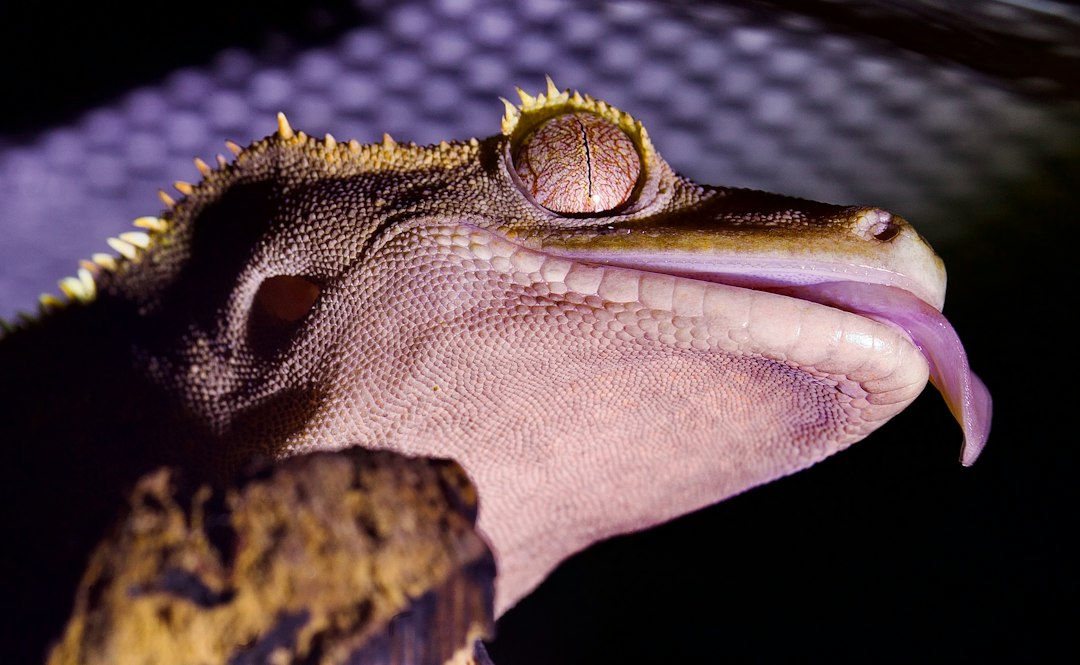
How a Crested Gecko Feeding Schedule Changes as They Age
The logic behind age-based feeding adjustments is metabolic demand. Young geckos are in a phase of rapid skeletal and tissue growth. Their bones are still mineralizing, their organs are developing, and they burn through energy reserves faster than adults do. Daily CGD access supports that growth window without the risk of a young gecko going too long between meals during a period when caloric deficits carry the greatest developmental cost.
As a gecko reaches the juvenile stage (roughly 3-6 months and 8-15 grams), growth continues but the pace slows relative to the hatchling phase. By the time your gecko is a young adult at roughly 18 months, growth is largely complete and the priority shifts from fueling development to maintaining an appropriate body weight and fat reserve without excess caloric loading.
The type of diet does not change dramatically across this arc. CGD powder remains the staple from hatchling through breeding adult. Repashy Superfoods, the pioneering manufacturer of commercial CGD, publishes mixing guidelines (typically a 1:2 ratio of powder to water by weight, adjusted to consistency preference) that serve as a reliable baseline for any quality brand. Insect supplementation adds behavioral enrichment and supplemental protein but it supplements CGD rather than replacing it; crested geckos are predominantly frugivorous feeders in the wild, and their nutritional profile reflects that.
What changes across life stages is feeding frequency and portion size per session. A schedule calibrated for a hatchling, left unchanged, would produce significant fat accumulation in a full-grown adult within a few months. The reverse applies equally: an adult maintenance schedule applied to a growing juvenile can slow skeletal development in ways that are difficult to correct later.
One practical note applicable at every age: crested geckos are nocturnal and most active after lights-out. Offering food in the evening gives them the full active window before you check results in the morning, and better aligns feeding behavior with their natural activity cycle.
CGD Portions by Age: A Practical Feeding Reference
The table below gives you a working framework drawn from manufacturer guidance and documented keeper practice. Individual metabolisms vary. Treat these as starting points and calibrate based on your gecko’s actual consumption and monthly weight trend.
| Age Stage | Age Range | Approx. Weight | CGD Frequency | CGD Per Feeding (prepared) | Insect Frequency |
|---|---|---|---|---|---|
| Hatchling | 0-8 weeks | 2-5 g | Daily | 0.25-0.5 tsp | Every 2 weeks (optional) |
| Baby | 8 weeks-3 months | 4-9 g | Daily | 0.5 tsp | Every 1-2 weeks |
| Young Juvenile | 3-6 months | 8-15 g | Daily to every other day | 0.5-1 tsp | Every 1-2 weeks |
| Juvenile | 6-12 months | 15-30 g | Every other day | 1 tsp | Every 1-2 weeks |
| Sub-adult | 12-18 months | 25-38 g | Every other day | 1-1.5 tsp | Every 2 weeks |
| Adult | 18+ months | 35-55 g | 2-3 times per week | 1.5-2 tsp | Every 2-4 weeks |
| Breeding Female | Active season | 40+ g | 3-4 times per week | 2+ tsp | Weekly |
“Prepared” means CGD mixed with water to feeding consistency, not dry powder. Dry powder volume is roughly half these amounts by weight.
A gecko that consistently finishes its dish clean within an hour is underfed for its current portion size. A gecko that never eats more than a small fraction over several consecutive feedings may be feeding at a normal intermittent pace, or may be receiving more than it needs. Weight trend over four to eight weeks is the most honest signal available. For a detailed walkthrough of what healthy versus overweight body condition looks like in practice, see our guide to crested gecko body condition scoring.
Baby Crested Gecko Feeding Schedule: Daily Routine for Hatchlings
The first 12 weeks represent the fastest growth phase in a crested gecko’s life, and the period where nutritional deficits carry the greatest developmental consequences. Daily CGD access is not cautious overcorrection at this stage. It is appropriate for the growth rate the animal is sustaining.
How to set up a daily feeding routine for a hatchling:
-
Mix a small portion of CGD each evening before lights-out. Start with one-quarter to one-half teaspoon of prepared CGD, mixed to a smooth consistency roughly like thick yogurt. The Repashy Crested Gecko Diet Banana 6 Oz is a well-established staple in the crested gecko hobby. The banana formula is a popular choice for hatchlings.
-
Place the feeding dish at or near ground level. Hatchlings navigate their enclosures more cautiously than juveniles and adults. While they eventually use elevated branches confidently, requiring a significant climb to access food when young creates a barrier that can suppress feeding in the first weeks. The Exo Terra Feeding Dish - Medium is a commonly used option for offering CGD and can be removed for cleaning each evening.
-
Remove leftover CGD within 24 hours. Crested gecko enclosures run warm and humid by design. CGD left at those conditions begins to ferment and grow bacterial contamination within 36-48 hours. Build the habit of pulling the dish each morning, washing it with hot water, and starting fresh that evening. A hatchling licking a contaminated dish can develop gastrointestinal problems that are difficult to distinguish from other causes.
-
Track consumption over weeks, not individual nights. You will frequently find that a hatchling ate but left food in the dish. That is normal. What you are watching for over four to six weeks is consistent weight gain and a reasonably filled tail base. A completely empty dish every single morning suggests you can increase portion size slightly. No apparent feeding across three or four consecutive nights warrants closer attention to temperature, stress, and enclosure conditions.
-
Delay insects until the gecko reaches 5-7 grams and eats CGD reliably. Insects are not nutritionally required at hatchling stage when a complete CGD is the primary diet. Introducing live feeders before a hatchling has established a steady CGD feeding response can create picky-eating behavior that becomes progressively harder to address. Repashy’s own product documentation supports CGD as nutritionally complete for the species without insect supplementation as a requirement.
CGD mixing consistency matters more in practice than most new keepers realize. Too thick and the gecko cannot lap it efficiently; too thin and the caloric density per serving drops below what the animal needs. Aim for a consistency the gecko can lap cleanly from the surface without pressing its face into the dish.
Juvenile Crested Gecko Feeding: Portions and Frequency From 3-12 Months
The juvenile stage is where the crested gecko feeding schedule requires active revision as the gecko grows. A gecko thriving on daily CGD at 5 grams still benefits from daily access at 12 grams, but by the time it reaches 20-25 grams, every-other-day feeding is more appropriate and continued daily feeding begins to risk overcaloric intake.
The transition from daily to every-other-day is not a sharp cutover. A practical approach: move to every-other-day once your gecko consistently weighs 12-15 grams and is gaining weight on schedule. If weight stalls or drops slightly during the transition, return to daily feeding for two to four more weeks before reattempting the shift.
Portion size scales through this phase. A juvenile at 15 grams does well with approximately one teaspoon of prepared CGD per feeding. By 25 grams, one to one-and-a-half teaspoons is reasonable. The best consumption checkpoint is whether the gecko finishes roughly half to two-thirds of the dish over the feeding night. Reliably empty dishes indicate larger portions are warranted. A dish left completely untouched across more than two consecutive feedings usually signals a husbandry issue (temperature fluctuation, shedding stress, recent enclosure change) rather than portion calibration.
Insect supplementation becomes meaningfully relevant during the juvenile phase. The stimulation of hunting live prey supports behavioral health, and additional protein supports the active growth period. Most keepers offer insects every one to two weeks for juveniles. For a practical breakdown of suitable feeder species, prey sizing by age, and how to maintain a feeder colony, see the guide on which live insects to feed crested geckos and how to culture them.
Any insect fed to a crested gecko should be dusted with a calcium supplement. The Rep-Cal SRP00200 Phosphorous-Free Calcium Ultrafine Powder Reptile/Amphibian Supplement with Vitamin D3 is a widely used choice in gecko husbandry: it is phosphorus-free (which matters given the already poor calcium-to-phosphorus ratio in most insects), and the included vitamin D3 is appropriate for geckos kept without UVB lighting. Apply it by shake-bag immediately before offering insects; calcium dust falls off within minutes and loses most of its value if insects sit in a calcium-coated container for long before being presented.
Adult Crested Gecko Feeding Frequency: How Often Is Enough
Once a crested gecko reaches full or near-full adult size (typically 18 months and above, at 35 grams or more for females and 25-plus grams for males), the metabolic focus shifts from growth to maintenance. The goal is stable body weight with adequate fat reserves and no excess caloric loading that places stress on liver function.
Two to three CGD feedings per week is the standard recommendation for non-breeding adults. A Monday-Wednesday-Friday or Tuesday-Thursday-Saturday pattern works well for practical convenience. The critical habit is consistency in timing and the discipline to remove the dish before it spoils. Portion size at this stage is approximately 1.5 to 2 teaspoons of prepared CGD per feeding for a normally sized adult.
Breeding females require a significantly adjusted schedule. A female producing eggs is under substantial metabolic stress, manufacturing calcium-rich eggshells repeatedly through a laying season that can extend six months or longer. Dropping to two feedings per week during active production is a reliable path to weight loss and nutritional deficiency. Three to four CGD feedings per week with larger portions, plus more frequent insect supplementation (weekly during active laying is appropriate), is the correct adjustment. Calcium intake is especially critical during this period; a calcium-deficient laying female faces elevated risk of dystocia and metabolic bone problems.
Insect frequency for non-breeding adults drops compared to the juvenile phase. Every two to four weeks is typical. The primary benefit at this stage is behavioral enrichment and appetite stimulation rather than growth support.
Weight tracking should become a monthly practice once your gecko is fully grown. According to the Association of Reptilian and Amphibian Veterinarians (ARAV), unexplained weight loss in lizards warrants professional evaluation to rule out parasites and organ dysfunction. Any adult crested gecko losing more than 5-10 percent of its body weight over a single month, without an obvious cause such as the end of breeding season or a recent environmental change, is worth a veterinary consultation.
Calcium Supplementation in Your Crested Gecko Feeding Schedule
CGD-fed crested geckos receive the majority of their calcium and vitamin D3 directly from the powder. This is one of the most significant practical advantages of CGD as a staple diet over insect-only or mixed-insect feeding approaches. However, supplemental calcium still matters when insects are any part of the rotation, and the timing and form of D3 matters depending on your lighting setup.
For geckos fed primarily CGD with occasional insects, the rule is straightforward: dust insects every single time they are offered. The calcium-to-phosphorus ratio in most common feeder insects is significantly inverted from what promotes bone density. Crickets run approximately 1:9 calcium-to-phosphorus by dry weight. That ratio works against healthy mineralization if insects are offered in any meaningful quantity without supplementation. Apply the Rep-Cal SRP00200 Phosphorous-Free Calcium Ultrafine Powder Reptile/Amphibian Supplement with Vitamin D3 immediately before offering feeders, not in advance.
For keepers running quality UVB lighting in their crested gecko enclosures, plain calcium without D3 is an option for feeder dusting, alternating with a D3-containing supplement every few weeks to avoid excess vitamin D3 accumulation. For keepers without UVB, calcium with D3 at every insect feeding is the safer standard approach since there is no UV-driven pathway for endogenous D3 synthesis.
CGD brands vary in their published calcium-to-phosphorus ratios, and not all formulas are nutritionally equivalent. Reading the label for your specific product matters, particularly if you are managing a breeding female or a juvenile in a critical growth phase. For a detailed explanation of how to interpret CGD nutritional labels and what the numbers mean for practical feeding decisions, see our guide on understanding reptile nutrition labels and CGD ingredients.
Common Crested Gecko Feeding Mistakes to Avoid
Applying adult feeding frequency to growing geckos. This is the most common and consequential error. A keeper reads that adult crested geckos need food two to three times per week and applies that directly to a 10-gram juvenile. A juvenile on a thrice-weekly schedule can fall measurably behind growth targets within four to six weeks. If your gecko is still in active growth, daily or every-other-day CGD access is the appropriate baseline regardless of what you have read about adult maintenance.
Leaving CGD in the enclosure past 24 hours. Warm, humid environments accelerate bacterial growth in any protein-and-sugar food substrate. Keepers who prepare a large batch at the start of the week and leave it in place until it disappears are running a real contamination risk. Prepare fresh CGD for each feeding session, and remove the dish the following morning without exception.
Overfeeding adults, particularly post-breeding females. A breeding female needs substantially more food during active egg production. Once breeding season ends or a female retires from production entirely, her caloric needs drop back to maintenance levels. Maintaining a breeding feeding schedule year-round is a reliable path toward hepatic lipidosis, a fat-accumulation condition in the liver documented in captive crested geckos. It presents gradually: weight gain, followed by unexpected weight loss, lethargy, and loss of appetite. Scaling back to a maintenance schedule at appropriate life-stage transitions prevents most cases.
Skipping calcium supplementation on feeder insects. If insects are any part of the diet, dusting is not optional. Un-supplemented insects offered regularly over months contribute to cumulative mineral imbalance that eventually manifests as metabolic bone disease, a slow and preventable condition. The cost and effort of dusting is negligible compared to the veterinary and welfare consequences of skipping it.
Mixing CGD at inconsistent or extreme ratios. Too thick and the gecko has to work harder to feed, often consuming less than it needs. Too thin and caloric density drops below what a normal-sized serving should deliver. Use manufacturer guidelines as your baseline and observe how your gecko feeds. Eager, sustained lapping is a good sign. Tentative nose-touching followed by walking away suggests something about the dish, consistency, or enclosure conditions is off.
Ignoring the feeding dish location for hatchlings. A hatchling that must navigate a significant vertical climb to reach its food may simply not eat consistently, especially in the first two to three weeks in a new enclosure. Ground-level or low-mounted feeding stations remove a barrier that is easy to overlook and easy to fix.
Frequently Asked Questions
How often should I feed a crested gecko?
Feeding frequency is dictated by age and reproductive status. Hatchlings (0-3 months) need fresh CGD available every day. Young juveniles can transition to every-other-day access once they reliably exceed 12-15 grams and are gaining weight steadily. Juveniles from 6-12 months do well on every-other-day CGD. Adults over 18 months thrive on two to three feedings per week, with breeding females needing three to four sessions per week during active egg production. The underlying principle: higher metabolic demand from growth and reproduction requires more frequent food access, while a maintenance-phase adult needs enough to sustain weight without a caloric surplus that accumulates as fat and stresses liver function over time.
Can crested geckos survive on CGD alone without insects?
Yes, and this is one of the traits that makes crested geckos particularly accessible as long-term captive animals. A nutritionally complete, well-formulated CGD powder is sufficient as the sole dietary source throughout their lives. Insects provide behavioral enrichment, live-prey stimulation, and supplemental protein and fat, all of which are worth including for quality-of-life reasons. But from a strict nutritional standpoint, a gecko fed exclusively on a quality CGD product formulated to meet the species’ full requirements will not develop deficiencies attributable to insect absence. Insects become more relevant for breeding females who need elevated protein and fat for egg production, and for juveniles who benefit from the enrichment of hunting behavior.
How do I know if I am feeding my crested gecko the right amount?
Monthly weight tracking paired with body condition assessment is the most reliable method available to home keepers. Weigh your gecko on a gram scale each month and watch the trend over time. A gecko in its growth phase should gain weight steadily across the first 18 months. A confirmed adult should hold stable weight within a few grams month to month. Visually, a healthy crested gecko shows a rounded lateral profile, a tail with visible fat reserve at the base, and hip bones that are palpable but not visually prominent. Prominent pelvic bones and a pinched, thin tail indicate underfeeding or an underlying health problem. A gecko with visible fat deposits along the sides of the torso and a very round mid-section may be receiving too much food too frequently.
What is the correct CGD mixing ratio for crested geckos?
Repashy’s published guidance recommends a 1:2 ratio of dry powder to water by weight as a general starting point, producing a consistency roughly comparable to thick yogurt or applesauce. In practice, many keepers adjust slightly toward a thinner mix for hatchlings (easier for small geckos to lap) and a slightly thicker consistency for adults. What you are avoiding is either extreme: a paste so stiff the gecko has to press its face in to consume any of it, or a slurry so thin it offers minimal caloric density per serving. The most useful feedback is whether your gecko approaches the dish readily and laps with visible, sustained consumption. If it does, the consistency is working. If it approaches and walks away without feeding, consistency is one of the first variables to adjust.
A crested gecko feeding schedule is not a single rule you establish at setup. It is a framework you build around your gecko’s current growth stage and revise as that stage changes. Daily CGD for hatchlings, every-other-day for juveniles, two to three times weekly for adults: getting those transitions right on schedule is the most impactful feeding decision most keepers face, and the one most commonly delayed too long.
Pair that age-based framework with monthly weight checks, fresh CGD prepared for each feeding, and consistent calcium supplementation on insects. Those three habits will serve your gecko better than any single product upgrade or protocol change.
If this guide helped clarify your feeding routine, bookmark it as a reference to revisit as your gecko moves through each growth stage.
Related reading:
- Understanding Reptile Nutrition Labels and CGD Ingredients
- Best Calcium and Vitamin Supplements for Crested Gecko Nutrition