Crested Gecko Genetics and Breeding Color Morphs Explained
This post contains affiliate links. As an Amazon Associate, I earn from qualifying purchases at no extra cost to you.
Crested geckos are among the most visually diverse reptiles in captivity, and the terminology around their color morphs has grown more layered with every generation of selective breeding. If you have encountered a sales listing describing an animal as a “tricolor harlequin dalmatian lilly white” and had no idea whether that description justified a four-figure price tag, this guide is for you.
Understanding crested gecko genetics is not about memorizing every possible combination. It is about knowing the handful of core concepts that actually drive color and pattern heritability so you can evaluate animals at purchase, set realistic expectations for your own pairings, and sidestep the mistakes that cost breeders money and time.
Most hobbyist conversations about crestie genetics conflate three distinct things: base color, pattern expression, and specific genetic mutations. Separating these three makes everything else fall into place. Unlike ball python genetics, you do not need to track recessive allele pairings across generations to get started. The honest caveat is that most crested gecko traits are polygenic, so results will not be fully predictable even with excellent records. What records give you is a clearer picture of probability across time.
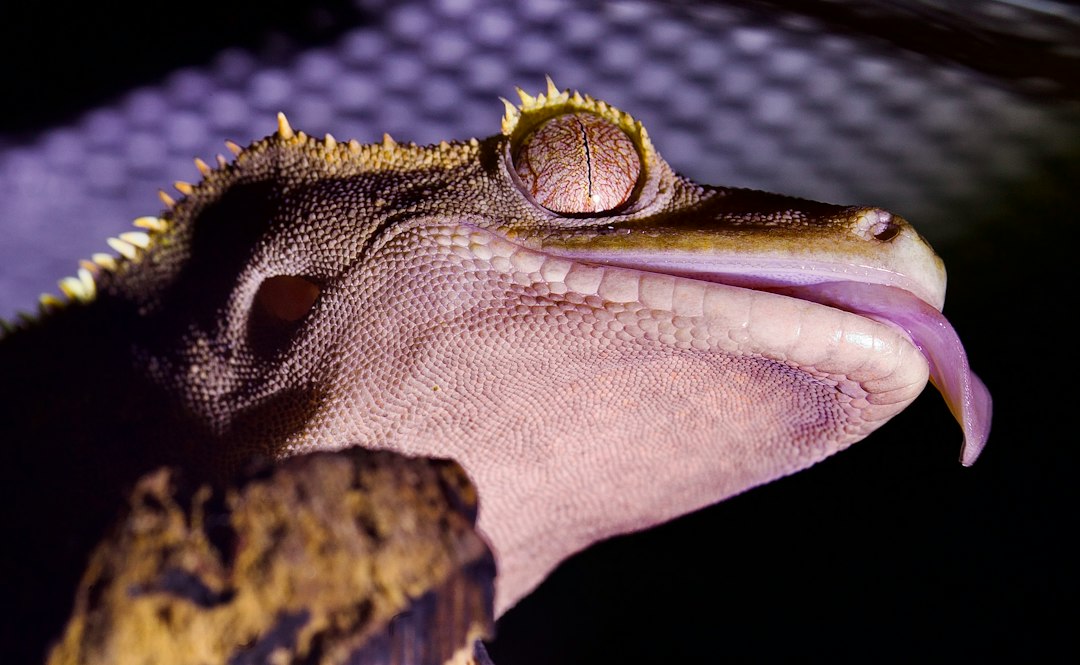
Photo by Andrey Tikhonovskiy on Unsplash
How Crested Gecko Genetics Work: Polygenic Traits vs. Single-Gene Mutations
The foundation of crested gecko genetics is that most visible traits are polygenic, meaning many genes contribute additive effects rather than a single gene toggling “orange on” or “harlequin pattern on.” This is the same mechanism behind coat color variation in dogs or beak shape variation in birds: no single locus controls the outcome, and environmental conditions during development shift expression further.
What this means practically is that pairing two high-orange animals does not guarantee high-orange offspring, though it improves the statistical probability compared to an orange-to-buckskin pairing. Each generation of selective pressure builds on the previous one, which is why lineage matters when sourcing animals for a project. A gecko from a breeder with ten generations of documented orange selection behind it is genuinely different from a pet-store orange animal of unknown heritage, even if they look identical at the time of purchase.
Crested geckos also display what keepers call a “fired” state. A fired-up gecko shows its most saturated, vivid coloration when active, alert, or warm, while a fired-down gecko in its resting state can appear dramatically paler. Evaluating an animal’s genetic potential requires assessing it in both states. A gecko that looks exceptional fired up but washed-out fired down is expressing a volatile, low-heritability phenotype. Breeding animals should show good color and pattern expression in both conditions or at minimum strong structural and pattern traits that read clearly regardless of firing state.
Against this polygenic backdrop, a small number of traits show more predictable, near-single-locus inheritance. The Lilly White mutation, dalmatian spot accumulation, and the axanthic pigment reduction trait each follow patterns that experienced breeders have tracked across thousands of pairings. These are where genetic planning pays off most clearly.
Base Colors and What Drives Crested Gecko Color Morph Value
Base color is the primary ground color of the gecko’s body. The recognized range in the hobby runs from cream and blonde at the light end, through buckskin, yellow, and olive in the mid-range, to orange, red, and near-black chocolate tones at the extremes. These categories are descriptive rather than genetically precise, but they anchor every morph description you will encounter.
Pattern overlays determine how secondary and tertiary colors are distributed across the base. The table below covers the main pattern categories and their current market positioning:
| Pattern | Description | Market Demand |
|---|---|---|
| Patternless | Solid base color, minimal contrast | Moderate |
| Bicolor | Lighter dorsal than lateral, clean transition | Moderate |
| Flame | Distinct light dorsal stripe, contrasting lateral | High |
| Harlequin | Lateral pattern coverage 30-70% | Very high |
| Extreme harlequin | Lateral coverage 70% or more | Very high |
| Tricolor | Three distinct colors including white or cream elements | Premium |
| Pinstripe | Raised cream-to-white scale ridges along dorsal edge | High |
| Tiger | Bold banding across lateral surface, solid or broken | Moderate |
| Brindle | Fine stippling distributed across lateral surface | Moderate |
The intersection of a high-value base color with a high-coverage pattern drives the premium pricing you see in the crested gecko color morph market. An animal listed as a “red extreme harlequin” represents favorable inheritance across multiple polygenic traits simultaneously, which is why the price reflects not just the individual animal but the lineage behind it.
Dalmatian spots exist as an independent overlay on any base and pattern combination. They range from black to white to red and from a handful of scattered marks to 200 or more in deliberately bred lines. Spot count is itself polygenic and selectable across generations.
The core reason crested gecko color morph pricing varies so widely is that visual presentation depends on firing state, age, and individual expression rather than a clean genetic switch. Two siblings from the same clutch can express dramatically differently by adult age, which makes single-pairing predictions unreliable.
The Lilly White Mutation: A True Co-Dominant Crested Gecko Genetics Trait
The Lilly White is the most commercially significant true genetic mutation documented in crested geckos to date. First produced by Brad Ramsey of Gecko Daddy in 2010, it has been the subject of consistent documentation and selective breeding across the community since.
Lilly White is co-dominant. An animal with one copy shows characteristic cream-to-white dorsal coloring with a chalky, blasted appearance that contrasts against the base color on the flanks. This expression is visible at hatch and does not require a fired-up state to assess, which makes it one of the more straightforward traits to evaluate in person or from seller photographs.
The critical rule: never pair a Lilly White to another Lilly White. Animals with two copies of the mutation are not viable. This is biologically parallel to the ball python Spider-to-Spider pairing consequence, where the homozygous super form results in death. Every Lilly White pairing should be one Lilly White parent and one non-Lilly White parent. The theoretical offspring ratio from that cross is 50% Lilly White and 50% normal-appearing, though actual clutch ratios vary.
A listing advertising a “super Lilly White” is a red flag. The super form is not viable, and any breeder making this claim warrants close scrutiny. Similarly, a gecko sold as a “het Lilly White” is biologically imprecise: since Lilly White is co-dominant, every carrier is visually apparent. There are no hidden carriers the way recessive genetics work.
Other mutations with partial community documentation include axanthic (reduces yellow and orange pigment, producing grey-toned animals, generally treated as recessive), lavender expression in certain low-melanin lines, and melanistic tendencies in high-dark-base selections. These are less cleanly characterized than Lilly White and should be treated as polygenic or incompletely understood at this stage. The Reptile Database species entry for Correlophus ciliatus documents the species’ wild-type olive-brown appearance, which gives useful baseline context for how far captive breeding has pushed coloration from the natural range.
Dalmatian Spotting, Axanthic Expression, and Other Selectable Traits
Dalmatian spotting is the most broadly popular add-on trait in crested gecko breeding because it is visually striking, marketable on virtually any base and pattern combination, and selectable across generations through straightforward lineage management. The practical guideline used by most breeders is that both parents should carry 50 or more spots to meaningfully improve average spot counts in the next generation. Pairing a heavily spotted animal to a spotless one will produce some spotted offspring, but average spot counts stay low.
Spot type matters independently of count. Black spots are the classic dalmatian expression. White spots, sometimes called white-wall dals or super dals, are rarer and command premium prices. Red spots on a red or orange base represent one of the most sought-after current combinations. All three spot types can appear on the same animal in well-bred lines, and spot distribution across the body is itself a selectable characteristic.
The axanthic trait reduces xanthophores, the pigment cells responsible for yellow and orange coloration. Visually axanthic animals display grey, blue-grey, or charcoal coloration where a typical crested gecko would show warm tones. Pairing two visual axanthics reliably produces axanthic offspring. Pairing a visual axanthic to an animal of unknown status produces possible-het offspring whose axanthic carrier status requires subsequent test pairings to confirm.
Many animals currently marketed as “blue” or “lavender” are expression products of axanthic genetics combined with specific base colors rather than a discrete blue pigment mutation. This does not make them less visually compelling, but buyers should ask about lineage before assuming a cleanly defined genetic label applies.
How to Plan Crested Gecko Color Morph Pairings: A Step-by-Step Framework
A structured approach to pairing decisions separates a random clutch from a breeding project with direction. Work through this sequence before introducing any pair:
-
Define your target trait precisely before selecting animals. Are you increasing dal spot count, producing Lilly White offspring, deepening orange saturation, or working toward a specific pattern like tricolor? A single clear goal helps you evaluate which animals move the project forward. Selecting for every trait simultaneously in a small collection almost always produces mediocre results across the board.
-
Evaluate your female’s weight and health before anything else. A female should reach 35-40 grams before her first breeding season. This is not a soft recommendation. Females below this threshold face higher rates of egg-binding, calcium depletion, and shortened productive lifespan. Reproductive strain in undersized females is well-documented in reptile veterinary literature and keeper community records.
-
Assess both animals fired up under consistent conditions across multiple sessions. Photograph them 2-3 hours after lights-on over several weeks. A gecko that fires up impressively once and averages mediocre coloration otherwise is not reliably expressing the trait you are selecting for. Consistency of expression is more heritable than peak expression.
-
Confirm Lilly White status in both animals before pairing. If either animal has undocumented lineage, treat it conservatively. The Lilly White phenotype is visually apparent in well-expressed animals, but subtle expression in lightly patterned morphs can be ambiguous. When in doubt, do not assume non-LW status.
-
Introduce the pair in a neutral space and monitor for aggression. Males can be rough during courtship. Keep initial introductions to supervised 15-20 minute sessions and remove the male immediately if the female shows distress. Do not leave the pair unsupervised overnight during the first week.
-
Install a laying box before the female shows signs of gravidity. A container with 4-6 inches of moist coconut fiber or peat-sand mix should be accessible before you expect eggs. A female without an appropriate laying site will retain eggs, leading to dystocia, which is a condition requiring immediate veterinary intervention.
-
Record every pairing, every clutch date, and every hatch outcome from the start. The IUCN Red List profile for Correlophus ciliatus notes the species’ restricted native range in New Caledonia, which underscores why captive breeding records matter for long-term genetic diversity management. More practically, without written records across two or three seasons you have no ability to determine which pairings consistently deliver animals that match your stated goals.
Setting Up a Breeding Environment That Supports Color Morph Outcomes
Environmental stability around your breeding animals is not secondary to genetics. Temperature cycling, nutrition, and housing design directly affect egg viability, female recovery rate, and overall health through the breeding season.
House males and females separately outside of supervised introductions. Cohabitation during breeding season exposes females to chronic courtship stress, which reduces feeding rates, body condition, and reproductive success. Males housed within sensory range of each other can also display aggression and chronic stress that degrades their condition and coloration.
Temperature cycling mimics the New Caledonian dry season and reinforces reproductive readiness. Dropping nighttime temperatures to 65-68°F (18-20°C) for six to eight weeks before your planned pairing season, while maintaining daytime temps in the mid-70s Fahrenheit, is the standard approach in experienced breeding programs. An enclosure that never varies in temperature may produce animals that cycle irregularly or fail to initiate breeding behavior.
Nutrition during the breeding season demands closer attention than routine keeping. Females in active egg production pull calcium from skeletal reserves when dietary intake falls short. The Repashy Crested Gecko Diet Banana 6 Oz serves as a dietary staple, and adding a shallow dish of calcium carbonate without D3 inside the female’s enclosure during active breeding allows her to self-regulate intake. Live insect feedings two to three times per week add protein that supports egg formation and female recovery between clutches.
Monitor both your breeding enclosures and any incubation setup reliably. The Govee Indoor Hygrometer Thermometer H5075 with Bluetooth App Control offers app-connected monitoring, which is practical when incubation temperatures need to hold within a narrow range overnight. Incubation runs well at 68–74°F (20–23°C) in moist vermiculite or perlite. Do not exceed 80°F: elevated temperatures increase developmental failure rates in crested gecko eggs.
The Exo Terra Glass Small Terrarium Kit for Reptiles and Amphibians is a standard option for housing individual adult breeding animals. For seasonal humidity and temperature management specifics, the Crested Gecko Humidity and Temperature Management Guide covers both routine ranges and the deliberate variation that supports breeding readiness.
Common Crested Gecko Breeding Mistakes to Avoid
The genetics side of crested gecko breeding is interesting, but the husbandry side is where most breeding projects go wrong. These are the most consequential mistakes to guard against.
Pairing females too early or underweight. The 35-40 gram minimum exists because egg production is physically costly. A female at 28 grams can technically conceive, but the probability of egg binding, skeletal calcium depletion, and shortened productive lifespan within two seasons is substantially higher. Weigh females monthly and do not compress the timeline based on the start of breeding season. No morph goal justifies burning out a female early.
Evaluating animals only from fired-up photographs. The crested gecko market runs on fired-up imagery because that is when animals look their best. Assess the fired-down state seriously before purchasing or pairing. A gecko with strong coloration fired down is expressing a consistent, heritable phenotype. Strong fired-up expression alone is a less reliable selection criterion because it reflects a volatile peak rather than the average phenotype your offspring will display.
Skipping written records. This is the most common mistake among keepers starting their first breeding season, and its consequences compound across every subsequent season. Without pairing dates, female weights at introduction, clutch dates, incubation temperatures, and hatch outcomes documented somewhere permanent, you have no data to evaluate your project. Memory is not a substitute. Two or three seasons of records will tell you which pairings are genuinely producing animals that meet your goals and which ones consistently disappoint.
Running females through back-to-back breeding seasons without a recovery period. Crested geckos in good conditions can produce clutches from spring through fall. Running females without an off-season accelerates depletion faster than diet alone can compensate. Give females a full rest season with maintained or increased nutrition and no breeding introductions before starting another cycle.
Dismissing the Lilly White pairing rule. The lethal consequence of Lilly White-to-Lilly White pairings is well-documented in community records. It is not a theoretical concern. If an animal’s lineage is undocumented or uncertain, treat it as potentially Lilly White until you have clear reason to conclude otherwise. This costs nothing, and the alternative costs everything.
Overstating the genetics of animals you produce. Calling an animal a “possible Lilly White het” or assigning genetic labels that are not supported by documented pairings misleads buyers and damages trust in your program. Sell animals with accurate descriptions tied to actual records, not speculative labels built from appearance alone.
Frequently Asked Questions
What does polygenic mean for crested gecko genetics, and why does it matter?
Polygenic means that a trait is controlled by many genes working together rather than a single on-off switch. Most crested gecko color and pattern traits work this way: base color, pattern coverage, color saturation, and dalmatian spot count are all influenced by multiple genetic loci. This matters for breeding because no single pairing guarantees a specific outcome. Pairing two high-orange animals makes high-orange offspring more probable, but consistency comes from selecting within a documented line across multiple clutches, not from a single strategic pairing. The practical takeaway is to set expectations around ranges rather than specific outcomes and to measure progress across seasons rather than individual hatches.
Can I predict the exact color morphs produced by a specific crested gecko pairing?
For most crested gecko traits, no. Polygenic inheritance means you are working with probabilities that improve with lineage depth and record quality, not with certainties. Where you can predict with reasonable confidence: the Lilly White outcome (50% Lilly White from a single-copy-to-non-LW pairing), axanthic crosses when both parents are confirmed visual axanthics, and the general directional improvement in a trait when both parents are strong representatives of a well-documented line. Realistic predictions sound like “most clutches from this pairing will run harlequin to extreme harlequin with orange influence.” Anyone claiming to guarantee a specific phenotype from a polygenic crested gecko pairing is overstating what the genetics can deliver.
What is the difference between a flame, a harlequin, and an extreme harlequin?
These terms describe how much of the gecko’s lateral surface is covered by the contrasting pattern color. A flame has the contrasting color concentrated along the dorsal stripe with relatively clean lateral areas beneath it. A harlequin extends that pattern down into the flanks, covering roughly 30-70% of the visible lateral surface. An extreme harlequin reaches 70% or more coverage, often wrapping over the dorsal ridge so that the contrasting color dominates the visible surface of the animal. The thresholds between these categories are descriptive conventions, not genetic measurements, so individual breeders and sellers apply them with some variation. When the distinction matters for a purchase, request multiple fired-up photographs and ask for a coverage estimate before committing.
At what age and weight can crested geckos start breeding safely?
Weight is the more reliable indicator than age. Females should reach 35-40 grams before their first breeding season, regardless of calendar age. Under good husbandry, most females hit this range between 18 and 24 months, though individuals vary by lineage and diet. Males can begin breeding at approximately 25 grams and at least 12 months of age, but starting heavier and older reduces the risk of stunted growth from early reproductive energy expenditure. The practical approach is to weigh animals monthly, keep records of the progression, and let weight and visible body condition determine timing. An animal at target weight that looks thin or shows chronic stress responses should not be bred regardless of how the numbers look.
Crested gecko genetics reward patience, record-keeping, and honest expectations. Most color and pattern traits are polygenic, which means no single pairing delivers guaranteed results, but consistent selective pressure across well-documented generations moves lines in a meaningful direction. The Lilly White is the one place where a clear, hard genetic rule applies: never pair Lilly White to Lilly White. Every other pairing decision comes down to knowing your lineages, defining your goals, and measuring your outcomes honestly.
Start with one or two clearly defined trait targets, condition your animals thoroughly before the breeding season, and commit to written records from the first pairing onward. The color morph market shifts with trends, but a program built on healthy animals and accurate documentation holds its value regardless of what is currently selling. Your next step: weigh your females, verify your records, and determine whether your animals are genuinely ready for what you are about to ask of them.
Bookmark this guide to reference when evaluating animals for purchase or planning your next breeding season pairings.
Related Reading