Common health issues in crested geckos signs treatment and prevention
This post contains affiliate links. As an Amazon Associate, I earn from qualifying purchases at no extra cost to you.
Most crested gecko emergencies do not start as emergencies. They start as a gecko that eats a little less, sheds a little unevenly, or sits on the enclosure floor a few nights in a row, followed by a keeper who assumes it will pass. By the time the jaw is soft, the breathing is wet, or the weight has dropped by a fifth, treatment is harder, the vet bill is larger, and the outcome is less certain.
This guide takes a clear position: the common health issues in crested geckos are overwhelmingly husbandry-linked, and early detection is the cheapest treatment you have. Nutrition errors drive metabolic bone disease. Temperature and humidity swings drive respiratory infections and stuck shed. Dirty enclosures and stress feed parasites and weight loss. A solid diet, a stable enclosure, a gram scale, and a weekly look-over prevent most of it.
You still need a reptile-experienced vet for anything beyond mild, clearly husbandry-related trouble, because only a vet can diagnose and prescribe. Use this guide to learn what to watch for, what to fix at home, and when to stop fixing and call. It draws on veterinary references, manufacturer guidance, and widely documented keeper practice, and it does not replace an exam.
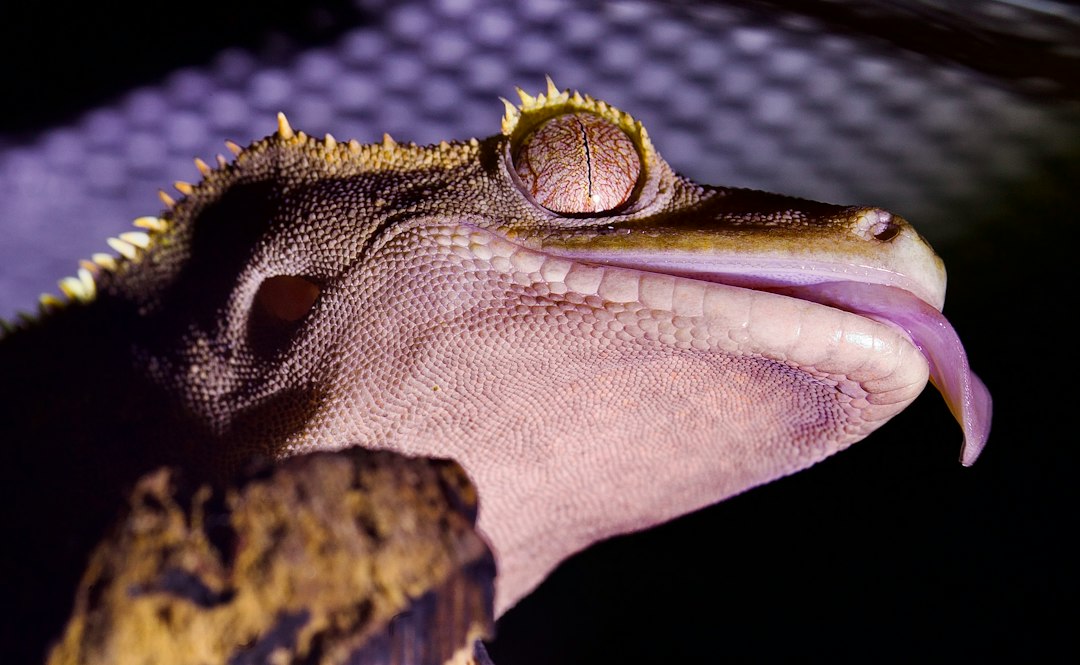
Photo by Andrey Tikhonovskiy on Unsplash
Safety warning: Sick reptiles can deteriorate within hours. Do not give human antibiotics, essential oils, or medications meant for other species, and do not guess at doses. Reptiles can carry Salmonella, so wash your hands after handling your gecko or anything in the enclosure, and keep sick animals and their gear out of kitchen sinks. If your gecko is gaping, bleeding, has tissue protruding from the vent, or cannot right itself, call a reptile vet the same day.
Why Common Health Issues in Crested Geckos Start With Husbandry
Crested geckos are forgiving, which is exactly why problems hide. A crestie can tolerate weeks of marginal humidity or a slightly unbalanced diet before a symptom appears, and by then the damage has compounded. Three variables explain most cases: nutrition, temperature, and the balance between humidity and airflow.
Common care guidance is a daytime range of roughly 72 to 78°F with a cooler night, and sustained readings above about 82 to 85°F are risky. Heat is a bigger threat than a cool room, because an overheated gecko stops eating and dehydrates fast. Humidity works best as a cycle: a spike after evening misting, then drying over the day. An enclosure that stays soaked with stagnant air is as hazardous as one that stays bone dry. The crested gecko humidity and temperature management guide covers ranges and setup in detail.
You cannot manage what you do not measure. The Govee Indoor Hygrometer Thermometer H5075 with Bluetooth App Control is a hygrometer thermometer you can check through an app, which matters because the overnight low and the post-misting peak are readings you will never catch by glancing at a dial. Mount the sensor at mid-height, away from the mister, and review the readings weekly. A reading of 88°F on a hot afternoon explains a lot about a lethargic gecko.
Pair environmental data with body data. Weight is your earliest objective health signal, so pick one of the best gram scales for weighing geckos and record every weigh-in.
A 10-Minute Weekly Health Check
Run this at the same time each week, ideally at night when your gecko is active:
- Weigh your gecko and compare against the last four entries, not just the last one.
- Inspect the face and jaw for clear nostrils, symmetrical eyes, and a firm jaw line with no swelling.
- Check toes and tail. Count toes on every foot, look for rings of retained shed, and confirm any tail stump is clean.
- Look at spine and limbs for a straight back, limbs that hold the body up, and a confident grip on vertical surfaces.
- Examine droppings. Formed brown feces with a white urate cap are normal. Runny, foul, or bloody stool deserves a note and a call to your vet.
- Review the sensor log and confirm fresh water and no moldy food.
Metabolic Bone Disease and Other Nutrition-Related Problems
Metabolic bone disease (MBD) is the classic crested gecko health problem and one of the most preventable. It develops when a gecko lacks usable calcium or vitamin D3, or eats a poorly balanced calcium to phosphorus ratio, and the body pulls calcium from its own skeleton. The Merck Veterinary Manual’s overview of nutritional diseases in reptiles explains how that deficiency produces weak, deformed bone.
Signs. Early MBD is subtle: reduced appetite, weak grip, tremors or twitching, and trouble climbing. Later signs are structural: a soft, swollen, or rubbery lower jaw, a kinked spine or tail, bowed legs, and fractures from ordinary movement. Juveniles and egg-laying females are most exposed because their calcium demand is high.
Treatment. This is vet territory. A reptile vet may examine the gecko, take radiographs and bloodwork, and prescribe calcium and vitamin D3 in forms and doses matched to its size and severity. At home, handle the gecko as little as possible to avoid fractures, keep climbing distances short, and fix the cause. Established deformities rarely reverse completely, which is why catching it early matters.
Prevention. A quality complete gecko diet fed consistently is the foundation, because these formulas are designed to meet crested gecko needs on their own. Learn to read the label with the guide to reptile nutrition labels and CGD ingredients. If you feed insects, gut-load and dust them. A product such as Repashy Calcium Plus 6 oz JAR is a calcium supplement that can be used with feeders. Check the label for its vitamin D3 content and use the labeled amount, because more is not better. Over-supplementing D3 carries its own risks, so avoid stacking multiple D3 products without vet guidance. For brand comparisons, see the roundup of calcium and vitamin supplements for crested gecko nutrition. Some keepers also add low-output UVB as a safety margin, which is optional with a good diet.
Respiratory Infections, Heat Stress, and Dehydration
Respiratory infections usually follow an environment that has weakened the gecko: temperatures too low, a damp enclosure with poor airflow, a new stressor, or an underlying illness. Watch for bubbles or mucus at the nostrils or mouth, clicking or wheezing, a stretched neck, lethargy, and refusal of food. A crestie that is gaping or breathing with visible effort needs a vet the same day.
Treatment is a vet job because diagnosis may need an exam, culture, or other tests, and antibiotics are prescription drugs. At home, confirm temperatures are in range, reduce excess wetness, improve ventilation, and move the gecko to a simple setup with paper towel, hides, and fresh water. Do not turn the heat up to fight an infection. Overheating can kill a crested gecko faster than most infections will.
Heat stress looks different: panting with an open mouth, restless climbing followed by limpness, and dry, tacky skin after temperatures climb past the mid-80s. Move the enclosure to a cooler room, improve airflow, and mist lightly. Skip ice and cold water, because sudden chilling adds stress.
Dehydration shows up as loose or wrinkled skin, sunken eyes, thick saliva, dry chalky urates, and fewer droppings. Mild cases respond to a proper misting routine, a water dish, and a short, shallow, lukewarm soak. A lethargic gecko that does not improve within a day needs a vet, who can give fluids.
If your home runs dry in winter, the Zoo Med Repti Fogger can help add humidity without constant hand misting. Treat it as a supplement to good misting, not a replacement. Run it in controlled cycles, clean the reservoir per the manufacturer’s instructions, and watch your sensor so you do not trade a dry enclosure for a stagnant, wet one. If you want fully hands-off humidity, compare the best automatic misting systems for crested gecko humidity control.
Stuck Shed, Eye Trouble, and Tail Loss: Common Health Issues in Crested Geckos
Stuck shed
Crested geckos shed often and usually eat the skin, so you may never see a normal shed. Trouble looks like skin clinging to toes, the tail tip, the crest, or the area around the eyes. The danger is toes: retained skin can tighten like a ring, cut off circulation, and cost the gecko a toe. Raise humidity for a few days, then give a supervised soak, using a shallow container of lukewarm water or damp paper towels in a ventilated tub for 10 to 15 minutes. Follow with a damp cotton swab rolled gently over loose skin. Never peel skin that resists. If a toe turns dark or swollen, see a vet. The crested gecko molting problems troubleshooting guide covers the full routine.
Eye trouble
Crested geckos lick their eyes to keep them clean, so occasional licking is normal. Problems look like retained shed on the lids, swelling, discharge, squinting, or an eye held shut for days. Do not pick at it. Eye problems can progress quickly, and a vet can remove retained shed safely and treat infection or injury.
Tail loss and floppy tail
Crested geckos drop their tails as a defense, and the tail does not grow back. The result is the rounded stump keepers call a “frog butt.” A tailless crestie can live a normal, healthy life, so the dropped tail itself is less worrying than what caused it: rough handling, a fall, a cagemate, or chronic stress. Move the gecko to paper towels until the stump heals and watch for swelling, discharge, or darkening tissue.
Floppy tail syndrome, where the tail bends or flops over the back or sideways, is mostly cosmetic and is linked to resting upside down on smooth surfaces. Offer horizontal perches and ledges. If the tail looks kinked rather than just limp, raise it with your vet to rule out MBD.
Parasites, Digestive Trouble, and Weight Loss
Weight loss is a symptom, not a diagnosis, and parasites are one of the usual suspects. Pinworms and protozoa such as coccidia can cause runny or foul droppings, regurgitation, undigested food in feces, and a thin tail base despite a normal appetite. Diagnosis needs a fecal exam, and treatment is prescription antiparasitic medication, not home remedies. Hygiene matters too: remove feces daily and disinfect on a schedule, since parasite eggs persist in the enclosure. The guide to common reptile parasites and how to treat them goes deeper. Keep new arrivals quarantined and use separate tools for them.
Impaction and constipation show up as a bloated belly, straining, and no droppings for several days. Causes include swallowing loose substrate, oversized insects, dehydration, and low temperatures. Paper towel is the safest setup for babies and sick geckos, and the guide to the best substrates for crested geckos covers lower-risk options for healthy adults. Do not force oil or laxatives. Call a vet.
For weight, a sustained drop of around 10 percent or more is a practical trigger to book an exam, as is any steady decline over several weigh-ins. The crested gecko body condition score guide helps you judge fat stores by eye alongside the scale.
Triage Table: How Fast to Act
This table is a decision framework, not a diagnosis. When in doubt, move one row up in urgency. To find a qualified clinician, look for a vet with real reptile experience, and the Association of Reptile and Amphibian Veterinarians is a good place to start.
| What you see | Possible issue | Urgency | First move |
|---|---|---|---|
| Open-mouth breathing, bubbles at the nose, wheezing | Respiratory infection or heat stress | Same day | Check temperatures, call a reptile vet |
| Tissue protruding from the vent, heavy straining, bleeding | Prolapse, impaction, or egg-related emergency | Immediate | Keep the gecko calm and the tissue from drying or injury, go to an emergency vet |
| Tremors, rubbery jaw, bent spine | Metabolic bone disease | Within 1 to 2 days | Minimize handling, book an exam, review diet |
| Weight down 10 percent or more over several weeks | Parasites, illness, or poor feeding | Within a week | Fecal test, review husbandry |
| Skin clinging to toes | Stuck shed | Monitor 24 to 48 hours | Raise humidity, supervised soak, vet if toes discolor |
| Wrinkled skin, sunken eyes | Dehydration | Same day if lethargic | Mist, offer water, vet if no improvement |
| Runny stool, regurgitation | Parasites or infection | Within a few days | Collect a fresh sample for a fecal test |
| Dropped tail with a clean stump | Tail loss | Monitor | Paper towels, watch for infection |
Common Mistakes That Make Crested Gecko Health Problems Worse
Most bad outcomes trace back to a handful of avoidable errors:
- Waiting too long. A few days is reasonable for a mild shed issue. It is not reasonable for open-mouth breathing, tremors, or steady weight loss.
- Cranking up the heat to treat illness. Cresties handle cool better than hot. Keep temperatures in the normal range and let the vet decide on supportive care.
- Handling a gecko with MBD signs. Soft bones fracture easily, so keep handling minimal until a vet clears it.
- Stacking supplements. Dusting a complete diet with a multivitamin that contains D3, then adding another product, risks over-supplementation. Follow labels and vet guidance.
- Trusting a single dial reading. Stick-on gauges drift and miss swings. Use a logging sensor.
- Misting without airflow. Soaked substrate and stagnant air favor bacteria and fungus. Let the enclosure dry between mistings.
- Peeling stuck shed. Dry skin pulled off can tear living tissue. Soak first, swab gently, and stop if it resists.
- Housing adults together. Cagemates add stress, tail nipping, and competition for food, and they make it hard to tell which animal is sick. Solo housing is simpler.
- Medicating from the internet. Leftover antibiotics and online dosing charts can mask or worsen disease. Only a vet should prescribe.
- Skipping quarantine and fecal tests for new geckos. Parasites spread quietly, and a baseline test costs far less than treating an established infection.
Each of these has a cheap fix: a sensor, a scale, patience, and an appointment.
FAQ
How can I tell if my crested gecko is sick or just resting?
Cresties are nocturnal and often hide all day, so a still gecko at noon is normal. Judge behavior against that animal’s own baseline: eating most feeding nights, passing droppings regularly, climbing and jumping with confidence after dark, holding steady weight, and shedding cleanly. Red flags are changes that last more than a few days: refusing food, losing weight, sleeping on the enclosure floor, wet or noisy breathing, sunken eyes, or new bumps and kinks. A weekly weigh-in and a short photo log turn vague worry into data, and that record also helps a vet see trends you would otherwise forget. If two or more red flags appear together, book an exam.
Can metabolic bone disease in crested geckos be reversed?
Early MBD can often be stabilized and partly corrected, but deformities that have already set, such as a kinked spine, bowed legs, or a misshapen jaw, usually do not fully reverse. A reptile vet may use radiographs and bloodwork, then prescribe calcium and, where appropriate, vitamin D3 while you correct diet, lighting, and temperature. Treatment also means minimizing handling so soft bones do not fracture. Recovery is measured in weeks to months, not days. Outcomes depend on how long the deficiency lasted and how severe it is, so early signs like tremors, a rubbery jaw, or a weak grip deserve a prompt appointment rather than a wait-and-see approach.
Do I really need a reptile vet for a crested gecko?
For routine ownership you can get far with good husbandry, but a reptile-experienced vet is worth establishing before an emergency. A baseline exam and fecal test for a new gecko catch parasites and body condition issues early, and an existing relationship makes after-hours calls easier. General practice vets without exotic training may not be equipped to dose reptile medications, so ask whether they treat geckos and see reptiles regularly. Costs vary widely by region, and exotic exam fees are usually higher than for dogs and cats, so budget for an annual check and an emergency fund rather than expecting to improvise during a crisis.
What can I safely do at home before the vet visit?
Limited, supportive steps are fine: verify temperature and humidity against your sensor log, move the gecko to a clean paper towel setup, keep fresh water and a complete diet available, mist normally for hydration, and offer a short lukewarm soak for stuck shed or mild dehydration. Keep handling to a minimum, photograph symptoms and droppings, and note what changed recently. Do not give human or leftover medications, essential oils, or home remedies, and do not raise heat to fight illness. If your gecko is gaping, bleeding, has tissue protruding from the vent, or cannot right itself, skip home care and go straight to a vet.
Conclusion: Build the Habit, Then Trust the Vet
The pattern across nearly every crested gecko health problem is the same: husbandry causes it, a routine catches it, and a vet fixes what you cannot. You do not need an elaborate setup. You need a complete diet, stable temperatures in the 70s, a humidity cycle that dries between mistings, a scale, and ten minutes a week.
Your next action is simple. This week, weigh your gecko and start a log, check your sensor history for any reading above 82°F, and find a reptile vet you could call tonight. If you do not have one yet, make that call before you need it.
Bookmark this guide so the triage table is one tap away the next time your gecko looks off, and subscribe via RSS for more crested gecko care guides.
Related reading