Enclosure Enrichment and Decorations for Crested Gecko Behavior and Mental Health
This post contains affiliate links. As an Amazon Associate, I earn from qualifying purchases at no extra cost to you.
A bare enclosure with a water dish and paper towel substrate will keep a crested gecko alive. It won’t give that gecko much of a life. Crested geckos (Correlophus ciliatus) originate from the humid cloud forests and lowland rainforests of New Caledonia, where they navigate a three-dimensional world of branches, broad leaves, and dense canopy cover every night. When you strip that structure from the enclosure, you remove the behavioral triggers the animal is wired to respond to, and the result is a gecko that sits motionless in one corner of a glass box for days at a stretch.
Environmental enrichment for captive reptiles is not decoration. It is a functional component of care. Reptiles housed in complex environments show lower baseline corticosterone levels, spend more time engaged in species-typical locomotion, and exhibit fewer abnormal repetitive behaviors than animals in barren setups. For crested geckos specifically, vertical complexity, hiding opportunities, varied surfaces, and navigable mid-air structures directly map onto the rainforest microhabitats this species evolved to occupy. This guide breaks down what each decoration category does for the animal, which products deliver real value, how to layer a complete setup from floor to canopy, and which mistakes neutralize your effort before the gecko notices.
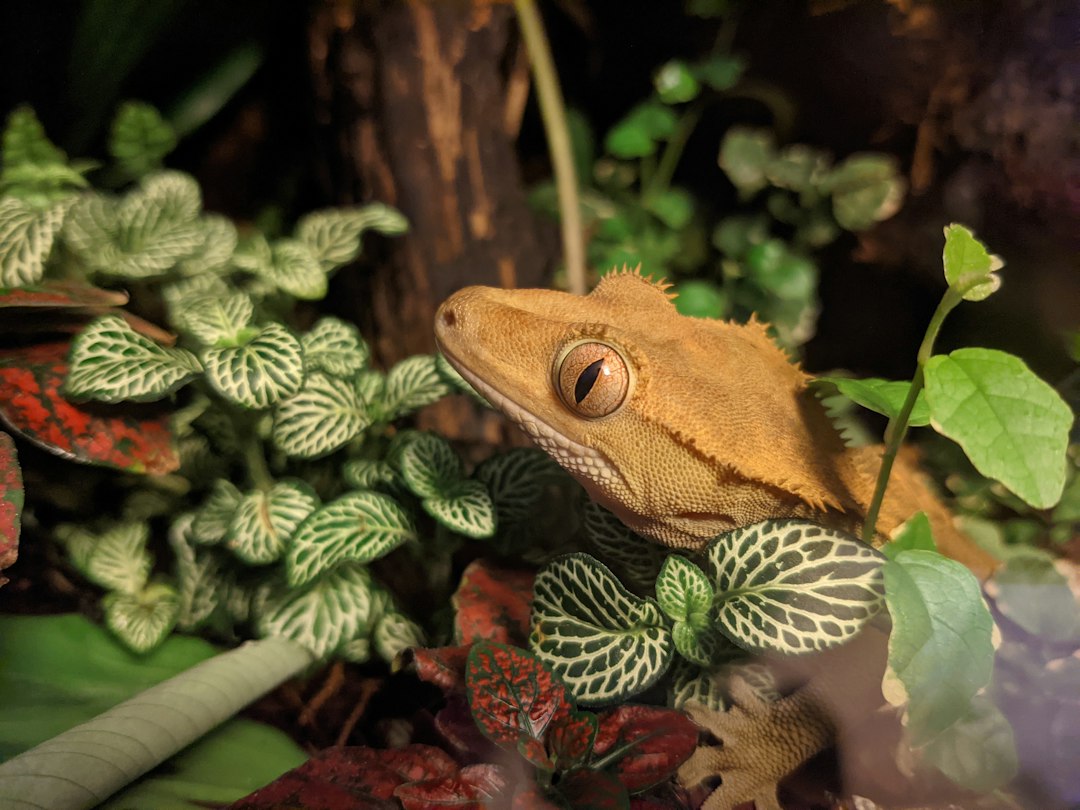
Photo by George Millson on Unsplash
Understanding Enrichment and Core Structures
The crested gecko is an arboreal species. In the wild it operates almost entirely off the ground, using elevated perches to thermoregulate passively within ambient temperature gradients and to exploit the patchy distribution of overripe fruit and insect prey in the forest midstory. That foraging ecology creates behavioral needs that don’t disappear when you put the animal in a terrarium.
When a crested gecko lacks climbing structures, it cannot engage in exploratory locomotion. Without varied hiding sites at multiple heights, it cannot select the microhabitat gradient it needs to feel secure. Without visual complexity - layered foliage, variable branch angles, surfaces of different texture - it cannot perform the risk-assessment behaviors that govern normal daily activity. Chronic low-grade stress in reptiles is associated with suppressed immune function, reduced appetite, poor body condition, and reproductive failure in breeding animals. Research surveyed in the Applied Animal Behaviour Science journal consistently identifies environmental complexity as a primary variable in captive reptile welfare outcomes.
In practice, a gecko that stays in one spot for days, shows minimal nighttime activity, and refuses food despite correct temperature and humidity is frequently signaling an enrichment deficit rather than a health problem. The good news is that a standard 18×18×36-inch tall terrarium with thoughtfully chosen decorations can meet essentially all the behavioral needs of a single adult. What matters is not the cost of the decor but how well each item addresses a specific behavioral function.
Vertical real estate is the single most important dimension of a crested gecko enclosure. These geckos move up and down more than horizontally, prefer to perch in the upper third of the enclosure, and descend to forage and drink. A tall terrarium with no usable vertical pathways is essentially wasted height.
Natural branches provide the best foundation for climbing structure. Mopani wood, grapevine, and cork bark rounds offer the surface texture that crested gecko lamellae grip most effectively, while smooth resin props or uniform-diameter plastic perches underperform. Branch diameters should vary - a mix of thick perches roughly matching the gecko’s body width and thinner climbing surfaces forces grip and balance adjustments that engage the animal actively. This is functional behavioral complexity built into the structure of the enclosure, not cosmetic diversity.
The Exo Terra Jungle Vine, Large, Multi (PT3086) fills a role rigid branches cannot: bridging gaps between anchor pieces at angles impossible to achieve with wood alone. Because the vine is flexible, you can route it at a shallow diagonal from a lower cork piece to a mid-height platform, creating a continuous travel path across the enclosure’s mid-zone. Crested geckos take to flexible vines quickly and will use them as regular travel routes once they learn the layout.
The key placement principle: at least one uninterrupted pathway should exist from the enclosure floor to the upper perch zone using only the structures you have installed. If reaching the upper zone requires the gecko to jump with no intermediate surface, you have a routing gap, and the upper zone may go largely unused.
Enrichment Materials and Installation
Security is a prerequisite for all other enrichment to function. A crested gecko that feels exposed will not feed confidently, will not explore, and will spend its active time in stress-flight mode. Hides and visual barriers are not optional extras; they are the reason the animal can behave normally at all.
Cork bark is the material of choice and has been standard practice among experienced keepers for decades. It is lightweight, holds surface humidity without waterlogging, resists fungal colonization in properly ventilated enclosures, and its irregular texture closely approximates the tree bark this species encounters in its native habitat. Cork rounds mounted at mid-height or upper-enclosure positions function as naturalistic hides with useful climbing surfaces. Cork flats placed against the back wall create an enclosed shelter that gives the gecko the “covered overhead” sensation critical for a species with aerial predation pressure in the wild.
Dense foliage handles visual security in the upper and mid zones. Live plants - pothos (Epipremnum aureum), bromeliads, and Peperomia species - thrive under humid crested gecko conditions and provide genuine, shifting concealment as the gecko or air currents move the leaves. An enclosure where the gecko is always fully visible from all angles fails to replicate any aspect of a forest canopy, and a gecko in that situation is aware of it.
For an elevated resting platform that also provides partial cover, the Zoo Med Repti Hammock Small - (14.5” Long x 10” Wide) - Pack of 2 is one of the most consistently adopted pieces of crested gecko furniture available. The surface provides secure footing for the gecko, the elevated position matches the arboreal resting preference of the species, and positioning it adjacent to dense foliage gives the gecko a spot combining height, stability, and visual cover simultaneously. Many keepers observe a gecko claiming the hammock as its primary daytime rest site within the first week of installation.
For a detailed look at how substrate options interact with plant choices and moisture retention, our guide on best substrates for crested geckos covers the decision from drainage layers through to substrate depth.
A common design error in crested gecko setups is concentrating enrichment in the upper zone and leaving the middle third sparse. This produces a binary environment: the gecko is either at the highest perch or on the ground. The mid-zone - roughly between 12 and 24 inches from the floor in a 36-inch enclosure - is where most active navigation, foraging movement, and route exploration happen. An empty mid-zone means a gecko that commutes between two fixed endpoints rather than genuinely exploring.
A Zoo Med Repti Hammock Small placed at roughly one-third height functions as a transition platform: a natural pause point on the travel route between the ground and the upper perch. Two hammocks at staggered heights create a small vertical network that meaningfully increases route complexity. Angling each hammock slightly rather than mounting it perfectly flat makes the gecko engage its balance actively when using the surface.
The Exo Terra Jungle Vine, Large, Multi (PT3086) connects mid-zone elements into a coherent travel network. Running a vine at a gentle diagonal from a lower cork piece to a hammock, then continuing to an upper branch, gives the gecko a single arboreal highway without dead ends or forced reorientation. Include some steep vine runs and some shallow ones - varied angles engage grip and balance systems differently, replicating the complex branch geometry of a forest understory. Avoid packing the mid-zone so tightly that the gecko cannot cross open air; navigable complexity requires both structure and open space.
Lighting and Photoperiods
Crested geckos are crepuscular and nocturnal, with their most active window beginning at dusk. Lighting’s primary enrichment role is therefore regulating the biological clock and, in planted enclosures, sustaining the plant layer that provides ongoing physical enrichment value - not providing a basking gradient as it would for a diurnal species.
A consistent photoperiod governs when all other enrichment gets used. A gecko on an irregular or constantly-on light schedule will have a disrupted circadian rhythm, with consequences including off-schedule feeding, reduced nighttime exploration, and apparent daytime restlessness. The solution is a timer and a fixed schedule: 12 hours on / 12 hours off during summer months, shifting to a 10-on / 14-off split in winter to reflect natural New Caledonian seasonal variation.
For live-planted enclosures, adequate plant lighting is non-negotiable. Plants that fail under insufficient light take their enrichment value with them as they decline. The Exo Terra Forest Canopy LED, Reptile Terrarium Lighting is designed for reptile terrariums and supports both tropical plant growth and a naturalistic visual environment. As an LED fixture, the heat it adds at the lid is worth factoring into your thermal management plan - particularly in an arboreal enclosure where the gecko spends much of its time near the top. For how lighting interacts with temperature and humidity, the full breakdown is in our crested gecko humidity and temperature management guide.
Setting Up Your Enclosure
Use this sequence when building a new setup or auditing an existing one. The order matters because each layer constrains placement of the next.
-
Lay the substrate first. For a bioactive build, install the drainage layer, mesh separator, and soil mix before adding any structure above. For a simpler non-bioactive setup, 2–3 inches of coconut fiber gives the gecko a functional resting surface while retaining humidity. Establishing substrate depth first determines true usable interior height, which affects every placement decision above it.
-
Place the largest anchor pieces. Thick cork bark rounds, large mopani wood branches, and any background panels go in before anything else - they are the hardest items to reposition once the build fills in. Orient the primary anchor piece at a diagonal so it spans from the lower zone into the mid-zone; one piece that creates a climbing route across multiple height zones is more valuable than two disconnected pieces.
-
Connect the primary climbing route. Use the Exo Terra Jungle Vine, Large, Multi (PT3086) to bridge any gaps in the primary route. Route the vine at varied angles rather than perfect horizontals; diagonal paths encourage more active navigation and better replicate the branch geometry of a forest understory.
-
Install mid-height platforms. Place the Zoo Med Repti Hammock Small - (14.5” Long x 10” Wide) - Pack of 2 at roughly the one-third and two-thirds height marks if using both units. Angle each slightly and position it adjacent to a vine run or cork piece so the gecko encounters the platform mid-route rather than as a separate destination requiring a jump.
-
Add plants and foliage. Place larger moisture-tolerant plants like pothos at lower levels and bromeliads at mid-height. For artificial foliage, cluster pieces in groups of three or more rather than distributing them evenly across the enclosure - clustered foliage creates genuine visual cover, while evenly spaced artificial plants provide almost no security value.
-
Mount the lighting and set the timer. Install the Exo Terra Forest Canopy LED, Reptile Terrarium Lighting on the enclosure lid and confirm that light penetrates to the lower two-thirds of the build for plant health. Set the photoperiod timer before introducing the gecko so the schedule is established on day one.
-
Audit routes before adding the gecko. Trace at least three distinct paths from the enclosure floor to the upper perch zone using only the installed structures. If only one route exists, add a second vine run or reposition a platform. Three or more independent pathways is the practical minimum for a genuinely complex arboreal environment.
Decoration Types at a Glance
The table below maps each major decoration category to its primary enrichment function. A complete setup includes at least one item from each row. If your current enclosure is missing an entire category, that is the first gap to address before adding more of what you already have.
| Decoration Type | Primary Enrichment Value | Humidity Benefit | Maintenance | Best Position |
|---|---|---|---|---|
| Cork bark round or tube | Hide and climbing surface | Moderate | Low | Mid to upper zone |
| Natural branch (mopani, grapevine) | Climbing and grip variety | Low | Low | Diagonal, full height span |
| Flexible vine (Exo Terra Jungle Vine) | Route connection and path complexity | Low | Low | Between anchor pieces |
| Mesh hammock (Zoo Med Repti Hammock) | Elevated resting platform | Low | Low (rinse monthly) | Mid to upper zone |
| Live plants (pothos, bromeliad) | Cover, humidity buffering, sensory novelty | High | Medium | Lower to mid zone |
| Artificial foliage | Visual cover | None | Very low | Upper zone fill |
| LED terrarium light (Exo Terra Forest Canopy LED) | Photoperiod regulation and plant support | None | Very low | Enclosure lid |
A thoughtfully enriched crested gecko is a different animal to observe than one in a bare setup. It moves, explores, and rests in patterns that reflect its biology rather than the limitations of its environment. The three key products that deliver real value are the Zoo Med Repti Hammock Small - (14.5” Long x 10” Wide) - Pack of 2 for elevated resting platforms, the Exo Terra Jungle Vine, Large, Multi (PT3086) for navigational complexity across mid-air gaps, and the Exo Terra Forest Canopy LED, Reptile Terrarium Lighting to sustain the plant layer and photoperiod regulation the rest of the setup depends on.
Start with whatever is most absent from your current build. If the gecko has no elevated hides, add the hammock first. If hides exist but no connecting pathways, add the vine. If live plants are failing under inadequate light, address the light source before replacing the plants. Visible improvements in behavioral activity typically follow within one to two weeks of addressing the primary gap.
Common Mistakes to Avoid
Placing all hides at floor level
The most common setup failure is a single hide at ground level. Crested geckos are arboreal and rest at height during the day; a floor-level hide covers only one behavioral context, and it is not the context this species prioritizes. Provide a minimum of two hides at different heights, with at least one positioned in the upper third of the enclosure. A gecko with only a floor-level option will either use it in an unnatural resting posture or lack real resting security entirely.
Over-packing until movement is obstructed
Dense enrichment is better than sparse enrichment, but an enclosure packed so tightly that the gecko cannot navigate freely is counterproductive. The animal needs negative space - open air to cross during active locomotion. If your gecko can travel from one corner of the enclosure to the other without ever passing through open air, the setup is over-decorated. Concentrate density in functional zones: foliage cover around hides, vine routes connecting platforms. Leave clear airspace between zones.
Treating the mid-zone as empty filler space
An enclosure with a rich upper perch and nothing meaningful in the middle third produces a gecko that uses the top and the floor and nowhere in between. A single Zoo Med Repti Hammock Small at mid-height is often enough to convert a two-point environment into one where the animal uses the full vertical range. Mid-height enrichment is the cheapest and most impactful upgrade most crested gecko enclosures can receive.
Skipping a consistent photoperiod
This mistake is less visible than decoration choices but equally consequential. The Association of Reptilian and Amphibian Veterinarians identifies photoperiod management as a core husbandry variable for captive reptile behavioral health. A crested gecko under continuous illumination or an irregular schedule will show reduced nighttime activity, disrupted feeding rhythms, and reduced engagement with all enrichment elements regardless of how well the enclosure is decorated. A plug-in timer costs less than any single decoration and delivers more consistent behavioral benefit than almost any decor addition.
Frequently Asked Questions
Do crested geckos actually use enrichment, or will they sit in one spot regardless?
A gecko sitting motionless during the day in a well-enriched enclosure is behaving normally - crested geckos are nocturnal, and their active window begins after lights go out. What matters is whether the animal uses multiple zones during nighttime hours. A properly enriched setup with connected climbing routes, hammocks, and varied foliage will show active nighttime movement across several zones. If your gecko is also inactive after lights go out, the issue is more likely temperature, humidity, or health. Verify parameters and weigh the animal before concluding that more decor is the answer.
How many hides does a single crested gecko need?
Two functional hides is the practical minimum, and placement matters as much as quantity. One hide in the upper third of the enclosure and one at mid-height covers the two resting contexts this species prioritizes most. Crested geckos are arboreal and will consistently choose height over floor position when both are available. A third hide at ground level is a useful addition for juveniles but should never replace the elevated options.
Can I use artificial plants instead of live ones?
Yes, and for most non-bioactive setups artificial plants are the more practical choice. High-quality silk plants provide genuine visual cover, need no maintenance beyond periodic rinsing, and introduce no pests or soil contaminants. Their main limitation is that they offer no humidity buffering and provide no sensory novelty over time because they never change. A hybrid approach works well: one or two live pothos or bromeliads in key cover zones plus artificial foliage for density elsewhere. This captures the functional benefits of live plants where they matter most without committing to a full planted build.
How often should I rearrange the enclosure?
Keep permanent features stable - main climbing routes, primary hides, and the substrate layer should stay in roughly the same configuration. Crested geckos learn enclosure layouts and use spatial knowledge for navigation and escape responses; repeatedly disrupting core structure causes stress rather than enrichment. What you can rotate every six to eight weeks without harm is supplementary decor: secondary vine routes, small foliage clusters, and ledge positions that are not the gecko’s primary resting site. When a full teardown is necessary for cleaning, rebuild core structure in approximately the same configuration to shorten the recovery period.
Related Reading
- Best Substrates for Crested Geckos - How to select and layer substrate for both bioactive and non-bioactive crested gecko enclosures.
- Crested Gecko Humidity and Temperature Management Guide - Managing the environmental parameters that allow enrichment elements to function correctly.
Bookmark this guide for the next time you work through enclosure enrichment and decorations for crested gecko behavior and mental health, and use the related resources below to keep improving your setup. —