Breeding crested geckos complete guide from courtship through hatchling care
This post contains affiliate links. As an Amazon Associate, I earn from qualifying purchases at no extra cost to you.
Crested geckos are famous for breeding easily, and that reputation is exactly why so many first-time breeders get into trouble. Two healthy adults in a warm room will often produce eggs without much encouragement. The hard part is everything around that: keeping a female in good condition through repeated clutches, incubating eggs at stable temperatures for months, raising hatchlings that weigh less than a AA battery, and finding homes for the offspring afterward.
My position is simple. Breeding crested geckos is a reasonable project for a keeper who already has solid husbandry habits, a scale, a plan for every baby, and a budget for a vet visit. It is a poor project for someone hoping to offset the cost of a hobby. Hatchling prices vary widely by morph, and feed, supplies, and electricity add up across a long incubation.
This guide walks the full cycle in order: deciding whether to breed, confirming your animals are ready, pairing and courtship, egg laying, incubation, and the first months of hatchling care.
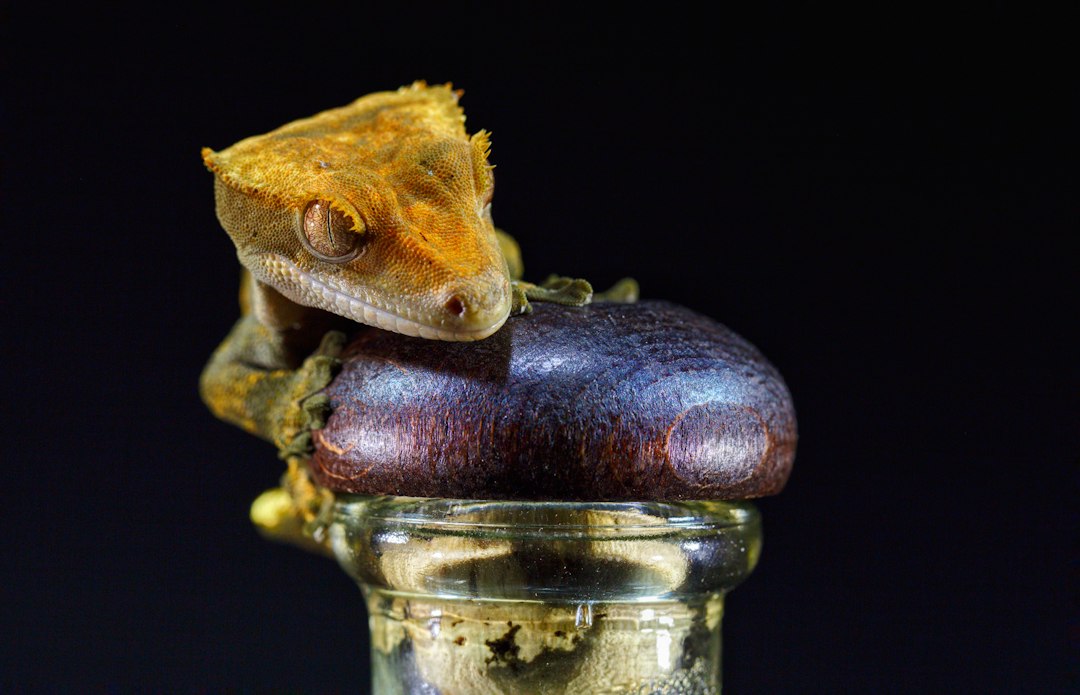
Photo by Andrey Tikhonovskiy on Unsplash
Is Breeding Crested Geckos Worth It?
Start with the honest math. A typical female can lay a pair of eggs roughly every four to six weeks during a breeding season. Over a season that is a meaningful number of babies, and every one of them needs its own enclosure, daily feeding, and eventually a buyer or a permanent home of yours.
Costs you should plan for before pairing anything:
- Incubation setup: a reliable incubator or a stable, monitored cabinet, plus containers and medium.
- Hatchling housing: small tubs or enclosures, one per baby, because crested geckos housed together can nip tails and compete for food.
- Food and supplements: a complete powdered diet, plus insects for variety if you choose to offer them.
- Veterinary reserve: egg binding and calcium problems in breeding females are real risks, and an exotics vet is not cheap.
- Time: daily checks on females, eggs, and every hatchling.
The market is the other half of the equation. Common morphs sell for modest prices, and a flooded market means slow sales. If you do not have a clear plan to sell or keep every baby, do not start. Responsible breeders also commit to accurate listings, honest sexing, and not shipping fragile animals in bad weather.
Genetics matter before you commit to a pairing, too. Some popular traits behave unpredictably or carry known welfare concerns when doubled up, and the crested gecko genetics and color morph guide covers how to read a pairing before you create it. A reasonable rule is to breed for health, structure, and temperament first, and color second.
If after all of that you still want to proceed, the rest of this guide is the practical path.
Breeding Crested Geckos: Age, Weight, and Health Checks
Breeding too early is the most common way to shorten a female’s life. Egg production draws heavily on her calcium and body mass, so readiness should be judged by weight and condition, not by how old she looks.
Weight and age targets
Most experienced breeders and veterinary-minded keepers use these rough benchmarks:
| Factor | Female | Male |
|---|---|---|
| Minimum weight to pair | About 35 to 40 g, with many breeders preferring more | About 30 to 35 g |
| Typical minimum age | Around 18 months to 2 years | Around 12 to 18 months |
| Body condition | Full tail base, no visible hip bones | Full tail base, healthy appetite |
| Health history | No unresolved shedding, stool, or respiratory issues | Same |
Weight is the number to trust. A heavy-feeling gecko that is actually carrying fat is different from one that is genuinely mature and well muscled. Use a gram scale weekly, and compare trends rather than a single reading. If you need a scale, see the best gram scales for weighing geckos for what to look for.
A pre-breeding health check
Before pairing, confirm both animals have clean vents, formed stools, clear eyes, intact toes and tails (a missing tail is fine, but infected stumps are not), and no history of metabolic bone disease. Signs like a kinked spine, soft jaw, or a bowed pelvis disqualify a female outright, because a deformed pelvis makes passing eggs dangerous. If you are unsure, an exotics vet visit and a fecal test cost far less than losing a female mid-clutch. The Association of Reptile and Amphibian Veterinarians keeps a directory and resources for finding a reptile vet that is a good starting point.
Feed the female like a laying female
Calcium is the central nutritional issue. Offer a quality complete diet as the staple, such as Repashy Crested Gecko Diet in Banana, and keep a dish of plain calcium without D3 available in the enclosure so she can self-regulate. Many keepers also offer gut-loaded insects for extra protein. The details of calcium and vitamin choices are in the supplement guide for crested gecko nutrition, but the principle is to build body mass and mineral reserves well before the first pairing, not after eggs show up.
Pairing, Courtship, and Spotting a Gravid Female
Housing for pairing
Never house two males together. Male crested geckos fight, and injuries can be serious. A male can be introduced to one female or rotated among several females in separate enclosures. Many breeders keep every animal in its own enclosure and introduce the male temporarily, which makes it easier to track who bred when and to protect a female from constant attention.
The environment should be stable and comfortable. Crested geckos do best with daytime room temperatures in the low to mid 70s Fahrenheit and humidity that spikes after misting then dries between sessions, as detailed in the crested gecko humidity and temperature guide. Temperatures above the low 80s stress this species, and heat stress is worse for a gravid female. A digital hygrometer thermometer such as the Govee H5075 Bluetooth hygrometer thermometer lets you track temperature and humidity trends through its Bluetooth app, which is useful when you are watching for overnight spikes.
What courtship looks like
When introduced, a receptive pair may show a few behaviors:
- The male approaches and may vibrate or bob his tail.
- He may produce a chirping or barking sound.
- He grips the female’s neck or the skin behind her head and aligns his body to hers.
- The female either accepts or moves away.
Breeding itself is brief. If the female runs, hides, or fights, separate them and try again after a few days. Do not force pairings. Watch for neck bites that break skin, since those can become infected.
You can leave a pair together for a day or two, then separate them. Female crested geckos can store sperm, so a single successful mating may fertilize several clutches over months, though many breeders reintroduce the male periodically to keep fertility reliable.
Recognizing a gravid female
Roughly three to five weeks after mating, a gravid female often shows visible white or pale eggs through her belly skin, sometimes called “pulling” eggs. She may also eat more, then eat less near laying, and start digging at the substrate. A healthy gravid female stays alert and active. A female that is lethargic, straining without laying, or has a swollen abdomen and drooping posture needs a vet immediately.
Egg Laying and Incubation for Breeding Crested Geckos
Give her a place to lay
A female will lay eggs in the enclosure substrate if there is somewhere suitable, but a dedicated lay bin makes retrieval easier and reduces the chance she lays in a dry spot and loses the eggs. A small container filled with a few inches of moist, loose substrate such as coco fiber or sphagnum moss, with a hole cut for access, works well. Keep it damp but not soggy. Clutches are usually two eggs, laid in a shallow hole she digs and then covers.
How to incubate crested gecko eggs, step by step
Eggs should be removed from the lay bin carefully and incubated separately. Follow these steps:
- Mark the top. Before moving an egg, use a pencil to mark a small dot on the top surface. Keep that orientation throughout. Do not rotate the egg, because shifting an egg can detach the embryo.
- Prepare the container. Use a small deli cup or similar container with a lid, with a few ventilation holes. Fill it with a barely damp medium such as perlite, vermiculite, or a commercial incubation substrate. Squeeze a handful: you want a damp feel but no drips.
- Set the egg gently. Make a shallow depression and nestle the egg so it is about halfway buried or just sitting stable, with the marked side up.
- Hold stable temperature. Target roughly 72 to 78 degrees Fahrenheit. Cooler temperatures lengthen incubation and warmer temperatures shorten it, but sustained heat above the low 80s risks losing the clutch.
- Monitor, do not open constantly. Place a probe near the container and check temperature and humidity daily. Open the lid briefly every few days for fresh air exchange.
- Check fertility. After a couple of weeks, a fertile egg looks white, firm, and chalky, and with a flashlight you may see red veins or a pink glow. A yellowing, collapsing, or moldy egg is usually infertile or failed.
- Wait for hatching. Expect roughly 60 to 120 days depending on temperature. Eggs often slightly dimple or sweat as hatching nears.
Safety note: If you use a heated incubator, plug it into a protected outlet, keep it away from flammables, and confirm the thermostat is working before the first egg goes in. A failed thermostat can overheat an enclosed box fast. For heat control options, see the reptile thermostat guide.
Incubation environment choices
Some keepers use a purpose-built reptile incubator. Others use a room kept in the right range or a wine cooler fitted with a thermostat. The choice matters less than stability. A cheap setup that holds within a degree or two is better than an expensive one that swings. Place a second thermometer in the egg container, since the air in the incubator and the air next to the eggs can differ.
A common error is chasing humidity too aggressively. Eggs should not sit in water, and the medium should feel only slightly damp. If condensation drips from the lid, let the container breathe for a day.
Hatchling Care for Crested Gecko Babies
The hatching process
Eggs begin to slit, and the hatchling may take 24 to 48 hours to fully emerge. Do not pull it out or help unless it is clearly stuck and you have advice from an experienced breeder or vet. Leave it in the container until it has absorbed its yolk and starts moving freely. A hatchling is usually about 2 to 3 g and a few inches long including the tail.
Hatchling housing
Rear hatchlings separately. The usual approach is a small tub or a compact enclosure with paper towel substrate, which lets you monitor stool and prevents accidental ingestion of loose bedding. Provide:
- Fake or live foliage, cork flats, or egg crate for climbing and cover.
- A very shallow water dish and light misting once or twice a day.
- A small feeding dish or bottle cap for food, placed low and easy to reach.
For growing juveniles, a glass terrarium with plenty of foliage can work well. A compact option such as the Exo Terra Glass Small Terrarium Kit is worth considering for a single juvenile, but check the listed dimensions against the animal’s size, and add clutter so a tiny gecko can find food and water quickly. Many breeders keep fresh hatchlings in tubs for the first weeks and graduate them once they are eating reliably and feel sturdy.
Feeding babies
Offer a complete prepared diet mixed to a smooth, thick consistency, fresh every day or every other day, and remove uneaten food within a day. A staple like the Repashy banana flavor works as a baseline, and you can rotate flavors to encourage interest. Some hatchlings do not eat for the first few days because they are still using yolk reserves, but if a baby has not eaten after a week, review temperature, humidity, and food freshness first. For serving sizes and frequency by age, the crested gecko feeding schedule guide breaks down portions.
Weigh weekly
A scale tells you about hatchling health before behavior does. Weigh each baby weekly and write the number down. Steady gains are the goal. A baby that stalls or drops should get a husbandry audit and, if the trend continues, a vet visit. The crested gecko weight loss guide covers when a drop warrants professional attention.
Sexing and rehoming
Males typically show hemipenal bulges and a row of visible pores at the vent when they reach a few months of age and sufficient size, while females have a flat underside. Do not guess early. Many breeders hold babies until they are eating well and around 8 to 15 grams or more before rehoming, because very small animals are fragile and harder to sex accurately. Provide buyers with care instructions, feeding information, and honest weights.
Common Breeding Mistakes and Problems to Avoid
Most failed breeding projects trace back to a short list of errors. Here are the ones that cause the most harm and how to avoid them.
Breeding underweight females. This is the biggest mistake. A female below the target weight may lay eggs but pay for it with calcium depletion, weight loss, or egg binding. If a female looks thin or her tail base is shrinking after a clutch, give her a rest instead of repairing her with another pairing.
Skipping rest periods. Constant laying wears a female down. Many breeders limit the number of clutches per season and give females recovery time, with attention to weight and body condition. The crested gecko body condition score guide helps you judge when she is ready.
Overheating the eggs. Incubators fail, and a warm room in summer can climb quickly. Verify temperature with two thermometers and keep a monitoring device on the eggs, such as the Govee unit mentioned above. If you notice a spike, move eggs to a cooler place immediately.
Rotating or flipping eggs. Unlike some bird or reptile eggs, crested gecko eggs should not be turned. Mark the top and keep it up.
Too wet an incubation medium. Eggs sitting in water can swell, mold, or drown embryos. A damp medium is enough.
Housing hatchlings together. Babies housed together can compete for food and injure each other. Raise them individually.
Ignoring signs of illness in a gravid female. Lethargy, straining, or a distended belly are emergencies. Egg binding can be fatal without veterinary treatment. The Merck Veterinary Manual’s reptile section provides authoritative background on reproductive problems in reptiles, though it is no substitute for an exam.
Having no buyers. Do not breed without a plan. The cheapest fix is to start with one clutch, see how quickly you can place babies, then decide whether to continue.
Frequently Asked Questions
How often do crested geckos lay eggs?
A healthy female typically lays a clutch of two eggs every 30 to 45 days during a breeding season, and some keepers see laying throughout much of the year in warm homes. That pace can drain a female quickly, so many breeders pause pairing, offer extra food, and let her recover between clutches. Watch her weight: if it drops after laying and does not rebound, stop breeding and focus on nutrition. You can also separate the male for longer stretches, since sperm storage may allow additional fertile clutches without new pairings.
How long do crested gecko eggs take to hatch?
Incubation usually runs about 60 to 120 days. Temperatures around the mid 70s tend to land in the middle of that range, while cooler incubation stretches the time and warmer incubation shortens it. Do not chase speed with heat, because sustained temperatures in the low 80s can kill embryos or cause deformities. Mark the laying date, record temperatures, and be patient. Dimpling or slight collapse near the end is common, so avoid discarding an egg unless it molds, smells bad, or turns clearly discolored.
Can I breed crested geckos without an incubator?
Yes, if you can keep a room or container steady in the low to mid 70s. Many keepers incubate in a cabinet or on a shelf in a climate-controlled room, using a probe to confirm temperatures. The risk is swings: a cold night or hot afternoon can slow development or kill the clutch. A simple thermostat-controlled incubator removes most of that guesswork. If your home fluctuates, an incubator is a worthwhile investment rather than a luxury.
When can hatchlings go to new homes?
Wait until each baby is eating on its own, gaining weight, and large enough to handle transport and sexing with confidence. Many breeders use a minimum weight of roughly 5 to 8 g, and some wait longer for fragile morphs. Send buyers feeding and humidity guidance, and be honest about sex and any known issues. Selling too early increases the risk of failure to thrive and unhappy buyers, which can damage your reputation.
Your Next Step Before Pairing Anything
Breeding crested geckos is manageable when you treat it as a long project, not a quick pairing. Confirm that your female meets weight and condition targets, set up a stable incubation spot, prepare individual housing for every hatchling, and decide in advance where the babies will go. Then start small, with one pair and one clutch, and judge the process before scaling.
Your best next action today is to weigh your adult geckos and log the numbers for a few weeks. If the female is still climbing toward target weight, delay pairing and build her condition first. A patient start produces healthier eggs, stronger hatchlings, and fewer emergencies.
If this guide helped, bookmark it for the next breeding season and leave a comment with the questions you want covered next.