Ball python care guide for first-time snake owners
This post contains affiliate links. As an Amazon Associate, I earn from qualifying purchases at no extra cost to you.
Ball pythons are often marketed as the perfect entry point for aspiring snake keepers, but this reputation for being a beginner species is frequently misunderstood. While these snakes are generally docile and manageable in size, their physiological requirements for humidity and temperature are precise and unforgiving. A ball python care guide for first-time snake owners must emphasize that success is not about the snake being easy to care for, but rather about the keeper being diligent in maintaining a specific tropical microclimate. If you fail to provide the correct environment, these animals will stop eating, struggle with painful sheds, and develop respiratory infections that can be difficult to treat.
The primary challenge for a new keeper is the transition from seeing a pet as a decorative object to viewing it as a biological system that requires constant monitoring. You cannot simply put a snake in a glass box with a heat lamp and expect it to thrive. You must actively manage the gradient of heat and the saturation of the air. To ensure you are starting on the right foot, you need to pick up a Reptile Thermometer and Humidity Gauge 2PCS Digital Hygrometer before your snake even arrives. This tool is the single most important investment for verifying that your enclosure meets the biological needs of your new pet.
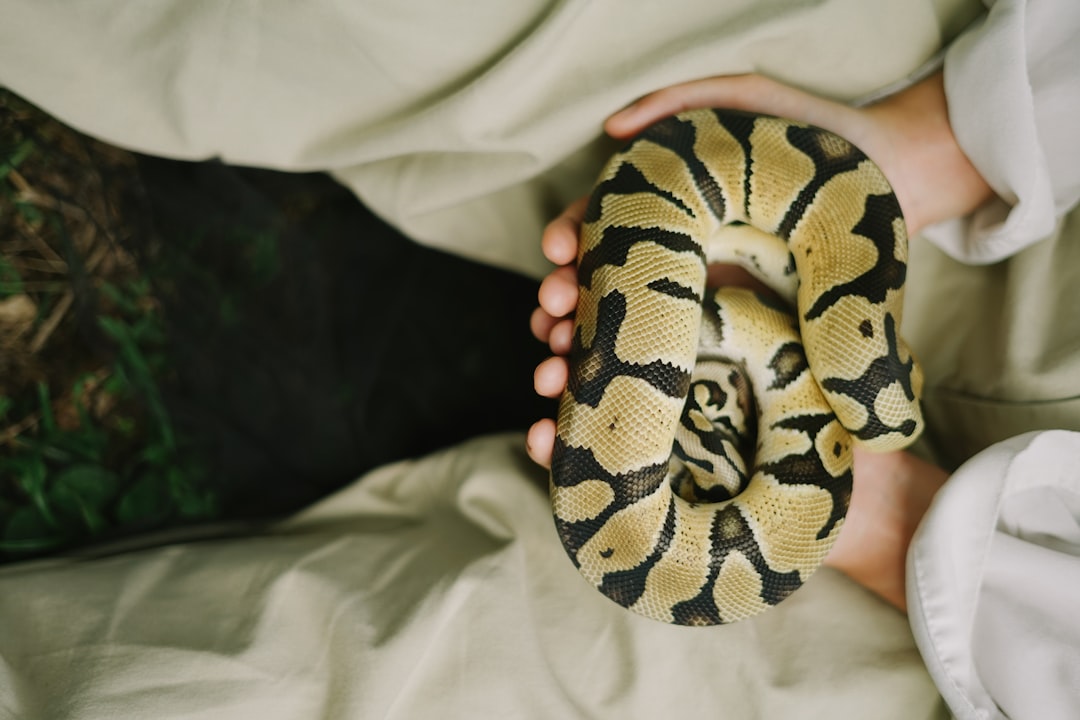
Photo by Rizky Sabriansyah on Unsplash
Choosing the Right Enclosure: A Ball Python Care Guide for First-Time Snake Owners
The enclosure is the foundation of your snake’s health. For decades, the standard recommendation was a 40 gallon glass breeder tank, but modern husbandry standards have shifted toward larger, more secure housing that better retains heat and humidity. A full grown adult ball python should ideally be housed in a 4x2x2 foot enclosure. This size provides enough room for the snake to stretch out fully and allows for a proper thermal gradient, which is the range of temperatures from one side of the tank to the other.
Glass tanks are popular because they are widely available, but they are notoriously poor at insulating. Heat escapes through the glass, and the mesh screen tops allow humidity to evaporate almost instantly. If you choose a glass tank, you will likely need to cover most of the screen top with HVAC tape or aluminum foil to trap moisture. A far superior option for a first time owner is a PVC enclosure. PVC panels are excellent insulators, meaning your heating elements will not have to work as hard, and the solid top keeps humidity levels stable without constant misting.
Regardless of the material, security is paramount. Ball pythons are surprisingly strong and are known as escape artists. Any lid or door must be equipped with locking clips or a keyed lock. A snake that escapes its enclosure is at risk of dehydration, injury from household pets, or getting stuck in dangerous appliances. When selecting your enclosure, prioritize floor space over height. While ball pythons will occasionally climb if provided with sturdy branches, they are primarily terrestrial animals that spend most of their time in burrows or under leaf litter.
Substrate choice also plays a critical role in enclosure management. You should avoid cedar and pine shavings, as the oils in these woods are toxic to reptiles. Instead, use moisture-retentive substrates like coco husk, cypress mulch, or a soil-based bioactive mix. These materials help maintain the ambient humidity required for healthy respiratory function. If you find your humidity dropping too low, you can grab a bag of Sukh Sphagnum Moss for Reptiles Terrarium Reptiles Moss and mix it into the substrate or place it inside your snake’s hides to create localized humidity pockets.
Perfecting Heat and Lighting Parameters
Ball pythons are ectotherms, meaning they rely on their environment to regulate their body temperature. In a captive setting, you must provide a warm side and a cool side so the snake can move between them as needed. The warm side should feature a basking spot of 88 to 92 degrees Fahrenheit, while the cool side should stay between 75 and 80 degrees Fahrenheit. Temperatures should never drop below 75 degrees, as prolonged exposure to cold can suppress the snake’s immune system and lead to digestive failure.
Safety Warning: All heating elements must be connected to a high quality thermostat. Unregulated heat sources, such as heat mats or ceramic heat emitters, can easily reach temperatures exceeding 120 degrees Fahrenheit, which will cause severe thermal burns or even death. Additionally, ensure your home has functioning smoke detectors and CO detectors, as any electrical equipment carries a minimal but present risk of malfunction. If you are uncomfortable with basic electrical setup or notice frayed wiring, consult a professional or an experienced keeper.
For overhead heating, Deep Heat Projectors (DHPs) or Halogen Flood Lamps are the current gold standard. These sources provide Infrared-A and Infrared-B, which penetrate deep into the muscle tissue of the snake, much like the sun does in the wild. If you use a light-emitting heat source, it must be turned off at night to maintain a proper circadian rhythm. For nighttime heat, a Ceramic Heat Emitter (CHE) or a Radiant Heat Panel (RHP) can be used, as these produce heat without light.
Lighting is often overlooked in ball python care, but it is beneficial for the animal’s well being. While ball pythons can survive without supplemental UVB lighting, providing a low strength UVB tube (such as a 5 percent or 6 percent T5 HO lamp) can aid in Vitamin D3 synthesis and encourage natural behaviors. The light should be on a 12 hour on, 12 hour off cycle. This mimics the natural day-night transition and helps the snake stay oriented to its environment. Always ensure that any heat lamps are housed in a protective cage if they are inside the enclosure to prevent the snake from wrapping around the hot bulb.
Humidity and Hydration Strategy
Humidity is perhaps the most misunderstood aspect of ball python husbandry. These snakes are native to Central and Western Africa, where they spend much of their time in humid microclimates like abandoned termite mounds. In captivity, you must maintain an ambient humidity level of 60 percent to 80 percent. If the humidity stays consistently below 50 percent, the snake will likely experience stuck shed (dysecdysis) and may eventually develop a respiratory infection.
To manage this, you’ll need a reliable way to measure moisture. Using the Reptile Thermometer and Humidity Gauge 2PCS Digital Hygrometer allows you to see real time data for both the warm and cool ends of the enclosure. It is common for the warm side to appear drier because warm air holds more moisture, so always check the cool side for a more accurate reading of the ambient humidity. If you are struggling to keep the levels up, do not simply soak the substrate until it is dripping wet. Standing water can lead to scale rot, a bacterial infection on the snake’s belly.
Instead of heavy misting, focus on substrate depth and moisture retention. A layer of three to four inches of substrate allows you to pour water into the corners of the tank. This saturates the bottom layers of the substrate while keeping the top layer dry, allowing moisture to evaporate slowly over several days. You should also provide a large water bowl that the snake can fully submerge in. Placing the water bowl closer to the heat source can also help increase evaporation and boost humidity.
During a shed cycle, you will notice your snake’s skin becoming dull and their eyes turning a milky blue. This is a critical time to ensure humidity is at the higher end of the range. You can pick up a bag of Sukh Sphagnum Moss for Reptiles Terrarium Reptiles Moss and create a “humid hide.” This is a standard hide box filled with damp moss that provides a 100 percent humidity environment. This allows the snake to self regulate its hydration and ensures the old skin comes off in one complete piece, including the clear scales covering the eyes, known as eye caps.
Feeding and Prey Management
Ball pythons are carnivores that primarily eat rodents. As a first time owner, you should aim to feed frozen-thawed (F/T) prey rather than live animals. Feeding live rodents poses a significant risk to your snake; a frightened rat can bite or claw a snake, leading to severe injuries or infections. Frozen-thawed prey is safer, more convenient to store, and eliminates the risk of parasites that live rodents might carry.
The size of the prey should be roughly 10 percent to 15 percent of the snake’s body weight, or approximately the same width as the widest part of the snake’s body. Hatchlings typically start on hopper mice or rat pups, while adults usually take small or medium rats. It is generally better to feed one appropriately sized rat rather than multiple smaller mice, as rats are more nutritionally dense. You should establish a feeding schedule of once every 7 to 10 days for juveniles and once every 14 to 21 days for adults.
When it is time to feed, thaw the rodent in the refrigerator overnight or in a sealed bag in cold water. Once thawed, warm the prey to approximately 100 degrees Fahrenheit using warm water or a heat lamp. This mimics the body heat of a living animal, which triggers the snake’s heat-sensing pits. To deliver the meal safely, you’ll need to grab a pair of Snake Feeding Tongs 15 Inch Reptile Feeding Tongs. These tongs allow you to wiggle the prey to simulate movement while keeping your hands at a safe distance from the snake’s strike zone.
Do not handle your snake for at least 48 hours after it has eaten. Moving the snake too soon can cause stress and lead to regurgitation, which is a serious medical issue that can damage the snake’s esophagus. If your snake refuses a meal, do not panic. Ball pythons are famous for “hunger strikes,” which can be caused by seasonal changes, breeding instincts, or, most commonly, a slight error in husbandry. If the snake is not losing significant weight, simply wait until the next scheduled feeding day and try again.
Common Mistakes to Avoid in Your Ball Python Care Guide for First-Time Snake Owners
One of the most frequent errors new keepers make is over-handling their snake during the first few weeks. When you bring a new ball python home, it is stressed from the journey and the new environment. You must resist the urge to hold the snake until it has successfully eaten at least two consecutive meals in its new enclosure. This “settling in” period is vital for the snake’s long term health and feeding response. A snake that feels insecure will not eat, and a snake that does not eat will eventually become weak and ill.
Another common mistake is the use of “red lights” for nighttime viewing. Many pet stores claim that reptiles cannot see red light, but research from organizations like the Association of Reptilian and Amphibian Veterinarians (ARAV) suggests that these lights can actually disrupt the animal’s sleep patterns and cause stress. If you need to see your snake at night, use a dim flashlight or a specialized low-intensity moonlight bulb that is designed to be used sparingly. Ideally, the enclosure should be completely dark at night to mimic the snake’s natural environment.
Underestimating the importance of hides is a third major pitfall. A ball python needs to feel compressed and hidden to feel safe. A common error is providing hides that are too large or have multiple openings. You should provide at least two identical, snug-fitting hides: one on the warm side and one on the cool side. The hide should be small enough that the snake’s body touches the sides when it is coiled up inside. Without these secure retreats, the snake will remain in a state of high stress, which often leads to the aforementioned feeding strikes.
Finally, many beginners rely on cheap, analog dial thermometers and hygrometers that stick to the side of the tank. These devices are notoriously inaccurate and often fail to measure the conditions where the snake actually lives (on the floor). They also use adhesive backings that can come loose; if the adhesive sticks to your snake’s skin, it can cause catastrophic injuries. Always use digital probes or infrared temperature guns to get accurate readings of the surfaces your snake is touching.
Step-by-Step Enclosure Setup
Setting up the habitat correctly before the snake arrives is the best way to ensure a smooth transition. Follow these steps to prepare the environment:
- Sanitize the Enclosure: Even if the tank is brand new, wipe it down with a reptile-safe disinfectant or a 10 percent bleach solution. Rinse it thoroughly and allow it to air dry completely to ensure no fumes remain.
- Install Heating and Thermostats: Place your heat mat or mount your overhead heating elements. Plug them into your thermostat and set the probe directly on the surface where the heat is most intense. Secure the probe with a plastic clip or a small amount of hot glue (never use tape).
- Add Substrate and Moisture: Layer your chosen substrate to a depth of at least three inches. If you are using Sukh Sphagnum Moss for Reptiles Terrarium Reptiles Moss, soak it in treated water, wring it out so it is damp but not dripping, and mix it into the areas where you want higher humidity.
- Place Hides and Clutter: Position one hide on the hot side and one on the cool side. Add “clutter” such as artificial plants, cork bark, or branches. This breaks up the line of sight and makes the snake feel less exposed when moving around the enclosure.
- Monitor for 48 Hours: Turn on all systems and let the enclosure run for at least two days before adding the snake. Use your Reptile Thermometer and Humidity Gauge 2PCS Digital Hygrometer to ensure the temperature gradient and humidity levels are stable. Adjust the thermostat or ventilation as needed during this testing period.
FAQ
Why is my ball python not eating?
Feeding strikes are common and are usually a symptom of environmental stress. First, check your temperatures and humidity using a digital gauge; even a few degrees of difference can shut down a snake’s digestive system. Ensure the snake has enough tight-fitting hides and that the enclosure is not in a high-traffic area of your home. If the husbandry is perfect, the snake may be in “blue” (preparing to shed) or may be reacting to seasonal changes. As long as the snake is not losing more than 10 percent of its body weight, continue to offer food once a week and avoid handling until it accepts a meal.
How often should I clean the enclosure?
You should perform “spot cleaning” daily, which involves removing any urates (solid white pee) or feces as soon as you see them. A full deep clean should occur every four to six weeks. During a deep clean, you should remove all substrate, scrub the entire enclosure with a reptile-safe disinfectant, and sanitize all hides and water bowls. For more information on maintaining reptile health, you can consult resources like the Chicago Herpetological Society, which provides detailed husbandry standards. Regular cleaning prevents the buildup of bacteria and ammonia, which can cause skin infections and respiratory distress.
Can I house two ball pythons together?
No, ball pythons are solitary animals and should never be cohabitated. Forcing two snakes to share an enclosure leads to chronic stress, as they will compete for the best basking spots and hides. What might look like “cuddling” is actually a dominant snake laying on top of a submissive one to steal heat or security. Cohabitation also increases the risk of injury during feeding and makes it impossible to monitor which snake has produced waste or which one might be ill. Each snake requires its own dedicated 4x2x2 enclosure to live a healthy, stress-free life.
Conclusion
Successfully keeping a ball python requires a commitment to detail and a willingness to monitor environmental variables daily. By focusing on a high-quality enclosure, precise thermal gradients, and consistent humidity, you provide the foundation your snake needs to thrive for its 20 to 30 year lifespan. Remember that tools like the Snake Feeding Tongs 15 Inch Reptile Feeding Tongs are not just conveniences but essential components of a safe husbandry routine. Stay observant, keep your records updated, and always prioritize the biological needs of the animal over the aesthetic of the enclosure.
Be sure to bookmark this guide for future reference as your snake grows and its needs evolve.